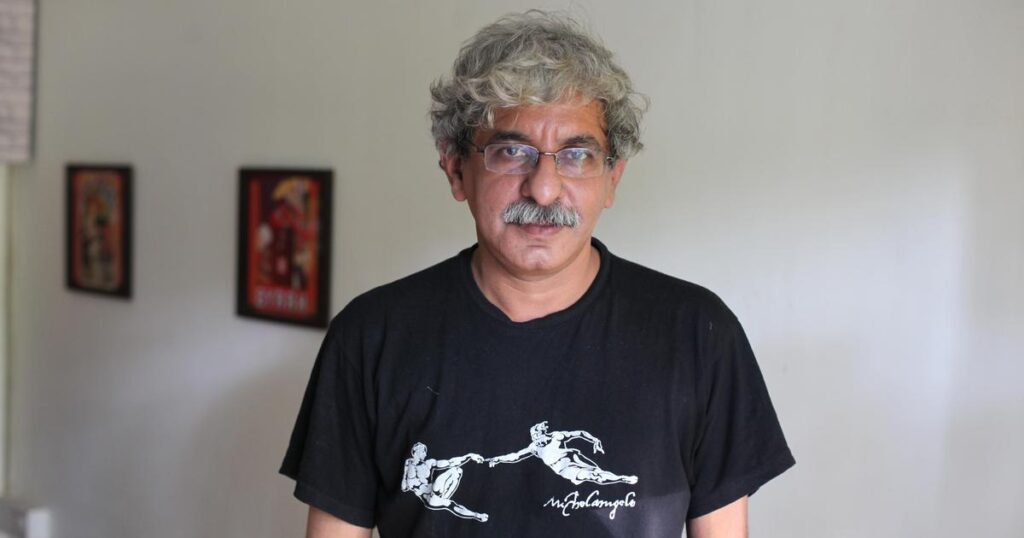
When Sriram Raghavan’s war drama Ikkis released, conversations weren’t limited to its emotional storytelling. A disclaimer at the end of the film — describing Pakistan as “not trustworthy” — sparked heated debate online.
Now, months after the film’s release, the director has admitted that the addition was not something he personally supported.
“I Have Decided Not to Talk About It”
In a recent interaction with The Wire, Raghavan addressed the controversy — albeit cautiously.
The filmmaker revealed that many people had asked him about the disclaimer, but suggested the matter wasn’t entirely in his hands. He hinted that certain decisions were “givens” beyond his control, choosing not to elaborate further.
While he avoided direct confrontation, one thing was clear: he wasn’t fully comfortable with the final inclusion.
Drawing a Parallel With ‘Badlapur’
To explain his position, Raghavan pointed to an earlier experience from Badlapur.
He recalled how a music video was added at the end of that film at the insistence of producer Dinesh Vijan. According to Raghavan, the video disrupted the mood and emotional closure he had built throughout the narrative.
“Ikkis is also produced by the same producer,” he noted, adding that while he shares a strong working relationship with Vijan and appreciates the creative freedom given to him, the disclaimer wasn’t something he was personally happy about.
The statement subtly confirms what many had speculated — that the addition may not have originated from the director’s own creative instinct.
What the Disclaimer Said — And Why It Sparked Debate
The Hindi disclaimer suggested that the humane portrayal of Pakistani Brigadier K.M. Nisaar — played by Jaideep Ahlawat — was an exception, and went on to describe Pakistan as untrustworthy, referencing alleged violations of the Geneva Convention and urging citizens to remain alert.
The message quickly drew polarized reactions.
Some viewers supported the sentiment, arguing that the film is rooted in the 1971 India–Pakistan war and reflects historical tensions. Others felt the text undercut the film’s nuanced portrayal of humanity across borders — especially given that one of the emotional high points involves a Pakistani brigadier respectfully interacting with the father of an Indian martyr.
The contrast between the film’s humanistic storytelling and the strong wording of the disclaimer became the central flashpoint.
About ‘Ikkis’
“Ikkis” is a biographical war drama based on the life of Second Lieutenant Arun Khetarpal, the youngest recipient of the Param Vir Chakra. Set during the Battle of Basantar in the 1971 India–Pakistan War, the film marks the big-screen debut of Agastya Nanda and also features Jaideep Ahlawat, Simar Bhatia, and veteran actor Dharmendra in one of his final roles.
Produced under Maddock Films, the movie was praised for its restrained storytelling, emotional depth, and performances. However, it also faced criticism from some quarters for portraying certain Pakistani characters with empathy — a creative choice that the disclaimer appeared to counterbalance.
The Larger Conversation
War films often walk a tightrope between patriotism and perspective. “Ikkis” attempted to focus on sacrifice, bravery, and the personal cost of conflict. But the disclaimer debate shows how even a few lines of text can shift public interpretation.
Raghavan’s comments suggest that filmmaking is sometimes a negotiation between vision and external expectations. And while he has chosen not to dwell publicly on the issue, his subtle admission speaks volumes.
Final Words
“Ikkis” was meant to honour a young war hero and revisit a defining chapter of history. Instead, it also became part of a broader conversation about artistic control and political messaging.
Sriram Raghavan may not want to revisit the controversy — but his candid reflection reveals something important: even acclaimed directors don’t always have the final word.
And in cinema, sometimes what appears after the final frame can spark as much debate as the story itself.