The legal chapter around Ranveer Singh and his controversial stage moment seems to be reaching its final stretch. The Karnataka High Court has indicated that it is ready to dispose of the plea filed by the actor, who had approached the court seeking to quash an FIR registered against him. While the case may not drag on much longer, the court has made it clear that the matter won’t close quietly without a message attached to it.
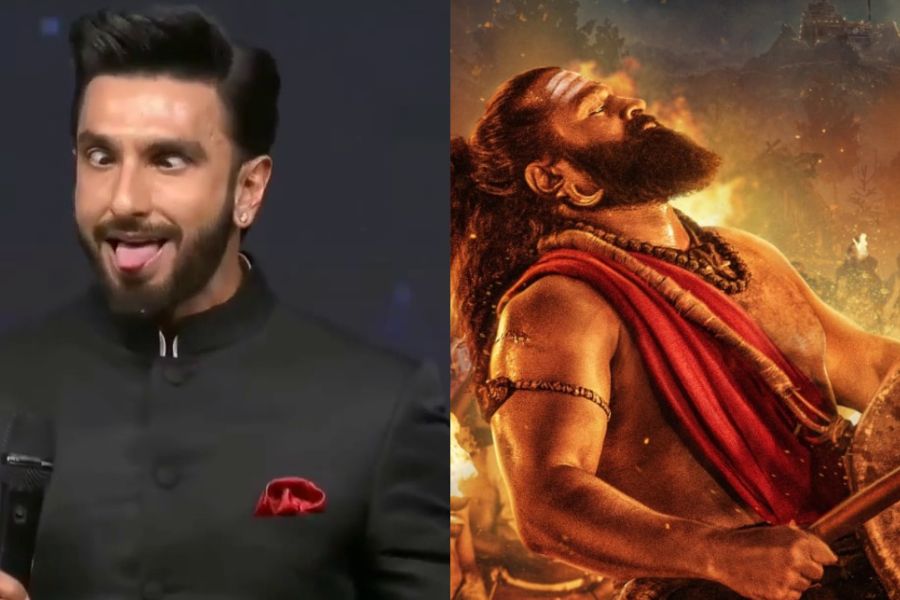
The controversy dates back to last year’s International Film Festival of India in Goa, where Ranveer, while praising Rishab Shetty, recreated a moment inspired by Kantara Chapter 1. What was meant as appreciation quickly turned into backlash after he referred to the ‘daiva’ as a ghost and mimicked the expression on stage. For many, especially from Dakshina Kannada, this wasn’t just a performance reference — it touched a deeply respected cultural and religious belief linked to ‘Chavunda Daiva’.
Following the incident, a complaint was filed claiming that the act had hurt religious sentiments, leading to the FIR against the actor. Ranveer later issued a public apology and moved the court, hoping to put an end to the legal proceedings. His legal team maintained that there was no intention to offend, and that the gesture was meant purely as admiration for the performance.
However, the courtroom discussions show that the issue goes beyond just intent. The complainant’s side strongly pushed for a warning to be included in the final order, arguing that celebrities carry influence and their words can have wider impact. The court seemed to agree to an extent, with Justice M Nagaprasanna noting that Ranveer’s conduct required some level of admonition, even if the case is eventually closed.
An interesting twist in the proceedings came with Ranveer’s affidavit, where he expressed willingness to visit the Chamundi Hill Temple as a gesture of respect. While that might have sounded like a straightforward resolution, the lack of a fixed timeline became a point of debate. The actor cited scheduling and security concerns, but the complainant’s counsel argued that such a visit should be clearly time-bound to ensure accountability.
The court has now stepped in to bridge that gap. It indicated that while disposing of the case, it would formally record a timeline, reportedly asking the actor to complete the temple visit within four weeks. That small detail shows how the court is trying to balance closure with a symbolic act of responsibility.
What started as a brief on-stage moment has now turned into a larger conversation about cultural sensitivity and public accountability. In today’s hyper-connected environment, even a few seconds of performance can carry consequences far beyond the stage. For Ranveer, this episode may soon be legally resolved, but it also serves as a reminder of how closely public figures are watched — and how quickly intent can be interpreted differently.
With the court set to pass its final order soon, this long-running issue is likely to wrap up, but the discussion it sparked around respect, representation, and responsibility is not going away anytime soon.