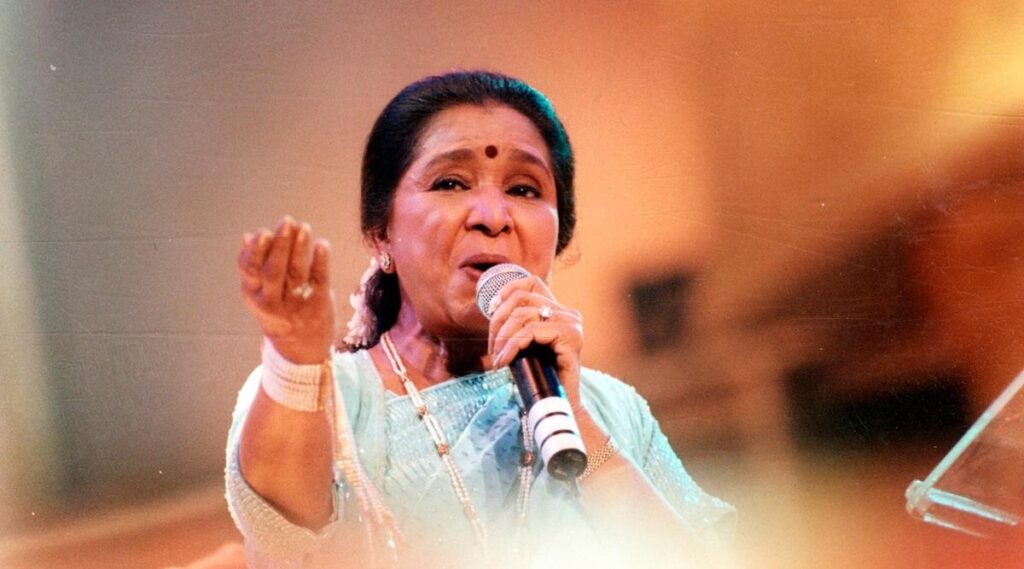
India has lost one of its most defining voices. Legendary playback singer Asha Bhosle passed away at the age of 92 on April 12, bringing an emotional close to a career that shaped decades of Hindi cinema and music culture.
She had been admitted to Breach Candy Hospital after suffering from extreme exhaustion and a chest infection. Her son Anand Bhosle confirmed the news, while doctors later revealed that the cause of death was multiorgan failure.
The final rites are scheduled to take place on April 13 at Shivaji Park in Mumbai. Fans and well-wishers will be able to pay their last respects earlier in the day at Casa Grande, Lower Parel.
A Voice That Defined Generations
Asha Bhosle wasn’t just a singer — she was a phenomenon. From the playful energy of Dum Maro Dum to the seductive charm of Piya Tu Ab To Aaja, her voice had a range that few could match. She moved effortlessly across genres — cabaret, classical, pop, ghazals — long before versatility became a trend.
Across a career spanning over six decades, she recorded thousands of songs in multiple Indian languages, becoming one of the most recorded artists in history. Her work didn’t just follow trends — it often set them.
Awards, Recognition, And Global Reach
Her contribution wasn’t limited to India. In 1997, she became one of the first Indian singers to receive a Grammy nomination, marking her presence on the global stage. A few years later, she was honoured with the prestigious Dadasaheb Phalke Award in 2000 — a recognition reserved for legends who shape the industry.
Even in her later years, Asha Bhosle stayed relevant. She collaborated with new-age musicians, performed internationally, and remained a cultural bridge between generations of listeners.
The Family Behind The Legend
Born into the iconic Mangeshkar family, she was the daughter of Deenanath Mangeshkar and the younger sister of Lata Mangeshkar. Despite growing up in a musical household, her journey wasn’t easy — she carved her own identity in an industry where comparisons were constant.
Her personal life saw its share of ups and downs. She had three children — Anand, Hemant, and Varsha — from her first marriage to Ganpatrao Bhosle, and later married the legendary composer R. D. Burman, a collaboration that produced some of Bollywood’s most iconic songs.
Her granddaughter, Zanai Bhosle, had recently shared an update about her health, calling her a symbol of “hope” and “never giving up” — words that now feel even more poignant.
More Than Music — A Lasting Legacy
What made Asha Bhosle truly special wasn’t just her voice — it was her adaptability. From the golden era of Bollywood to the remix generation, she stayed relevant without losing her identity.
In 2013, she even stepped into acting with Mai, proving once again that age was never a limitation for her.
Her passing marks not just the loss of a singer, but the fading of an entire era of Indian music — one where melody, emotion, and individuality came together effortlessly.
The voice may have fallen silent, but it will continue to echo through generations.