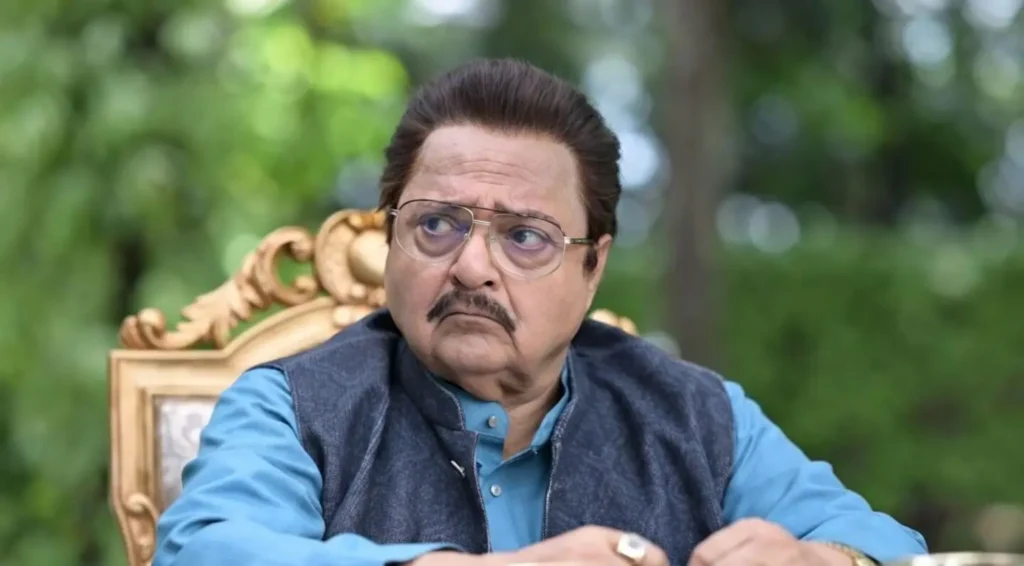
Veteran actor Rakesh Bedi has revisited one of the biggest successes of his career, claiming that the 1981 romantic drama Ek Duuje Ke Liye was a bigger hit than Dhurandhar. Speaking at the 57th International Film Festival of India (IFFI) in Goa, the actor also recalled an unexpected consequence of playing a villain in the Kamal Haasan and Rati Agnihotri-starrer: receiving death threats from angry viewers. His comments offer an interesting look at how audience reactions and the meaning of box-office success have changed over the decades.
Rakesh Bedi Explains Why Ek Duuje Ke Liye Was Bigger
During a press conference at IFFI 2026, Bedi discussed the massive popularity of Dhurandhar and compared it with the response to his earlier film. He explained that Ek Duuje Ke Liye enjoyed extraordinary theatrical longevity, reportedly running for four to five years across different cities in India.
“I was a part of Ek Duuje Ke Liye, which today’s generation cannot imagine the success it had. It was a bigger hit than Dhurandhar.”
Bedi also acknowledged that Dhurandhar has benefited from the reach of social media, which allows a film’s popularity to spread across the world almost instantly. The 1981 film achieved its popularity without that digital infrastructure, making the audience response particularly memorable for him.
Why Rakesh Bedi Received Death Threats
One of Bedi’s most surprising revelations concerned his character Chakram in Ek Duuje Ke Liye. The actor played a comic villain whose actions contributed to the tragic ending involving the lead characters, Vasu and Sapna.
Audiences became so emotionally invested in the story that some viewers blamed Bedi personally for what happened to the fictional couple. Recalling those reactions, he revealed that threatening letters would arrive at his home.
He said, “In that film, I was a comic kind of a villain; the hero and the heroine die because of me. As a result, I used to get death threats in the form of letters.”
The actor even recalled the threatening messages, saying people would write, “Aapko maar daalenge. Aapki wajah se yeh log mar gaye.”
Dhurandhar Has Brought Bedi a New Wave of Popularity
Despite considering his 1981 film a bigger hit, Bedi praised the extraordinary response to Dhurandhar. His portrayal of Jameel Jamali in Aditya Dhar’s film has introduced him to another generation of viewers and brought renewed attention to his career.
He also described the film’s success as unparalleled, admitting that he had not experienced such a volume of popularity in the previous 10–15 years. Interestingly, Bedi placed Dhurandhar among major cinematic milestones alongside Mughal-E-Azam (1960) and Sholay (1975), reflecting just how significant the response has been.
His comparison is ultimately a personal assessment of two different eras of cinema. While Ek Duuje Ke Liye left a lasting impression through its long theatrical run, Dhurandhar has demonstrated the enormous reach of contemporary Indian cinema.