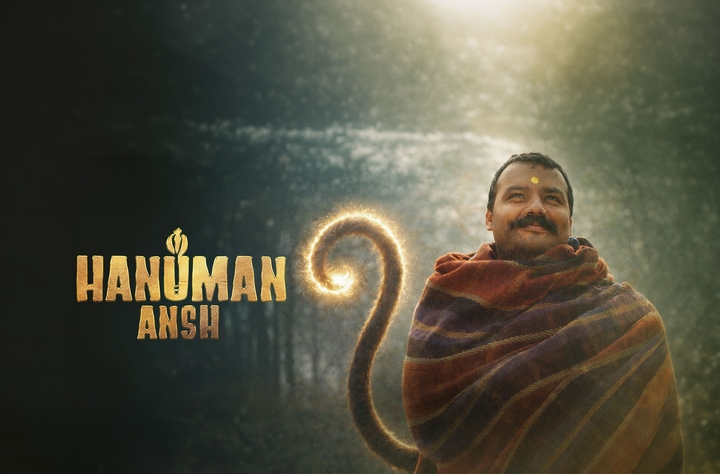
Hanuman Ansh may have become a box-office talking point, but its music has quietly emerged as one of the biggest reasons the film continues to connect with audiences. The film, based on the journey of saint Neem Karoli Baba, uses devotional songs and regional sounds to build an atmosphere that feels closely tied to its subject. Behind that sound is a group of musicians who approached the project less like a conventional film assignment and more like a collective creative effort.
Director Dr Vishal Chaturvedi, who is himself a trained musician and also sings and composes, believes the music became special because it stayed close to its roots. “The stars of the success are musicians and their honest and rooted compositions.” That philosophy runs through several songs in the film, which draw from Awadhi, Braj and Bundeli influences instead of relying entirely on the polished sound associated with mainstream Hindi film music.
The soundtrack brings together Sadhu Tiwari, Rishi Pathak, Dhirendra Mulkalwar, Shreyas Dharmadhikari and visually impaired singer-composer Suneel Lodhi. The film also uses two tracks by American vocalist Krishna Das, adding another devotional voice to a soundtrack that otherwise leans strongly into Indian regional musical traditions.
Sadhu Tiwari On The Songs That Went Viral
Among the musicians associated with Hanuman Ansh, Sadhu Tiwari has contributed several of the tracks that have found a particularly strong response. He composed five songs for the film, including Parvati, Bajrang Banka and Aavagaman, building them around relatively minimal arrangements and regional flavour.
Speaking about the creative process, Tiwari said, “I composed multiple tracks but knew which would suit the film and they got selected. They were composed with minimal music and regional flavour. I was not here just as a singer-lyricist-composer; we all worked owning the project. What happened thereafter is Baba’s blessings. I knew they would be liked but such virality is just magical.”
That approach is important to understanding why the soundtrack feels different from a typical commercial film album. The songs do not appear to be designed simply around elaborate production or a conventional playback formula, with the voices and devotional character often taking centre stage. Tracks such as Parvati, Bajrang Banka and Aavagaman instead use simplicity as part of their identity.
Tiwari also has a longstanding connection with Chaturvedi. Their association goes back to Gulaab Gang in 2014, when Tiwari sang Mauj Ki Malhare while Chaturvedi was working on Anubhav Sinha’s production. That collaboration eventually grew into a relationship that continued into other projects, eventually bringing the two together again for Hanuman Ansh.
Tiwari recalled that experience by saying, “That day I decided that I will use this voice, and we have also collaborated for another indie project. I honestly believe he is one of the top 10 voices in the Indian film industry.”
Rishi Pathak Wanted The Music To Stand On Its Own
Rishi Pathak has another unusual connection to the film because his contribution extends beyond music. He has also worked as a line-producer on Hanuman Ansh and is involved with three songs, including Jai Hanuman, Vaishnav Jan To and Ram Bhajan Ki Or.
Pathak has known Chaturvedi for years and had already collaborated with him musically through his Hanuman Chalisa Club. For Hanuman Ansh, that familiarity translated into several different creative responsibilities, but he insists that the songs were selected because they worked for the film rather than because of personal relationships.
“I am associated with the project from the start, and with Vishalji have worked together for years and musically jammed too for his Hanuman Chalisa Club. I co-wrote and composed Jai Hanuman, sung and recomposed Vaishnav Jan To and wrote-composed Ram Bhajan Ki Or. Nothing in the film is due to personal relations, and probably due to this professionalism the film and its music connected with people.”
That distinction is significant for a soundtrack assembled by several musicians. Instead of one composer controlling the entire album, the film brings together different musical voices and allows each contributor to add a particular texture.
Pathak’s journey also includes independent music and film work outside Hanuman Ansh. Hailing from Sitamarhi in Bihar, he has worked on several indie projects and also composed and sung for R Madhavan’s Rocketry, although his songs were ultimately removed from that film.
Why The Regional Sound Matters
For Chaturvedi, the language of the songs was as important as the compositions themselves. The director believes the use of regional dialects helped the music carry the cultural atmosphere of the story instead of making the devotional material feel disconnected from its setting.
“The songs are in Awadhi, Braj and Bundeli boli and part of culture. Its mithas (sweetness), mitti ki khushboo and soul probably reached the heart. Sadhu’s raw voice, Rishi’s khuli awaaz and deep composition, Suneel’s full of life voice, Krishna Das’s soaked in devotion compositions which we used as it is, and Dhirendra’s background music and song – that we used last moment – all are the hero of the film,” Vishal said.
That description also explains the unusually broad range of voices on the album. Sadhu Tiwari brings a raw vocal quality, Pathak contributes what Chaturvedi calls a “khuli awaaz,” while Suneel Lodhi adds his own distinctive presence. Krishna Das’s devotional compositions were used as they were, while Dhirendra Mulkalwar contributed both background music and a song that was added at a later stage.
The result is a soundtrack that works as part of the film’s world rather than functioning only as a collection of standalone commercial numbers. The regional vocabulary, devotional themes and comparatively earthy arrangements reinforce the story’s connection to Neem Karoli Baba and the cultural setting around the film.
Chaturvedi’s own musical background also makes his involvement more hands-on than that of a director simply approving songs. He has received musical training from Bhatkhande Sanskriti Vishwavidyalaya in Lucknow and has continued to work as a singer alongside filmmaking.
His recent singing credits include Parajay and Dhain Dhain for Tigmanshu Dhulia’s Ghamasaan. That musical experience gives him a direct understanding of how voice, composition and storytelling need to work together, which appears to have influenced the sound of Hanuman Ansh.
The Music Has Become Part Of Hanuman Ansh’s Identity
The success of Hanuman Ansh has created an interesting situation for its soundtrack. Instead of the film’s songs simply supporting the theatrical release, several tracks have developed their own visibility and become part of the conversation around the movie.
That is particularly notable for a film whose music could easily have been treated as a secondary element. The creative team instead made regional language, devotional feeling and vocal character central to the album, giving the songs a distinct identity before the audience even considers the larger commercial performance of the movie.
There is also a certain consistency in how the musicians describe their work. Tiwari speaks about minimal music and regional flavour, Pathak emphasizes professionalism and collective ownership, while Chaturvedi points to the sweetness of the language and the cultural roots of the compositions. Their comments ultimately point toward the same idea: the music was built to belong to the world of Hanuman Ansh.
For a film centred on Neem Karoli Baba, that connection matters. The soundtrack does not have to compete with the story by becoming louder or more elaborate; instead, it draws attention through devotional voices, familiar linguistic textures and compositions that feel grounded in the culture being portrayed.
As Hanuman Ansh continues its theatrical journey, its music has already secured a place in the film’s identity. The box-office numbers may tell one part of the story, but the songs explain another: sometimes an audience connects with a film through the sound that stays with them after they leave the theatre.
Hanuman Ansh Music Q&A
Who composed the music for Hanuman Ansh?
The film features music from several singer-composers, including Sadhu Tiwari, Rishi Pathak, Dhirendra Mulkalwar, Shreyas Dharmadhikari and Suneel Lodhi.
Which Hanuman Ansh songs did Sadhu Tiwari compose?
Sadhu Tiwari composed five tracks for the film, including Parvati, Bajrang Banka and Aavagaman.
What languages are used in Hanuman Ansh songs?
According to director Vishal Chaturvedi, the songs use Awadhi, Braj and Bundeli boli, connecting the soundtrack with regional culture.
Who composed Ram Bhajan Ki Or?
Rishi Pathak wrote and composed Ram Bhajan Ki Or for Hanuman Ansh.
Is Krishna Das featured in Hanuman Ansh?
Yes. The film uses two devotional tracks by American vocalist Krishna Das.
Why has Hanuman Ansh’s music connected with audiences?
The filmmakers and musicians attribute the response to the rooted nature of the compositions, regional language, devotional themes and distinctive voices used throughout the soundtrack.