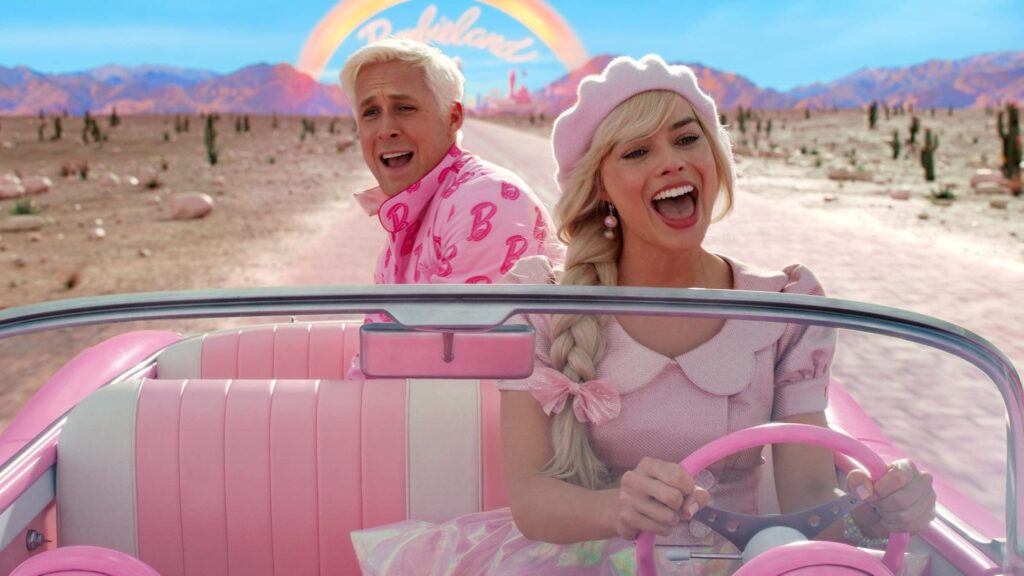
Three years after Barbie turned pink into a global box-office phenomenon, the future of its sequel has suddenly become one of Hollywood’s biggest questions. Greta Gerwig, Margot Robbie, Ryan Gosling and Noah Baumbach are all connected to a potential follow-up, but negotiations with Warner Bros. have stalled over compensation. The situation has become serious enough that the studio has only a limited window to get the project moving before the rights situation with Mattel becomes a much bigger problem.
The stakes are enormous because the 2023 film was not simply another successful studio release. Directed by Gerwig and starring Robbie as Barbie and Gosling as Ken, the movie crossed $1.4 billion worldwide and became Warner Bros.’ highest-grossing film in history, according to the supplied report. The original movie also helped transform Barbie’s cultural presence far beyond the cinema, making the question of a sequel much bigger than a normal Hollywood contract negotiation.
Barbie 2 Is Stuck Over Talent Deals
The proposed sequel has become tangled in negotiations involving Gerwig, Baumbach, Robbie and Gosling. Gerwig and Baumbach are understood to have an idea for another Barbie movie, but the creative team has not moved forward without completed agreements. That means Warner Bros. has a potential story and the people capable of making it, but no deal that allows the sequel to formally take shape.
According to the supplied report, Warner Bros. has made more than six offers during the past three years, with each one rejected. The studio’s latest proposal, made late in the spring, was described by one studio source as the largest offer Warner Bros. had ever made for a filmmaking team and its stars, with one source characterising it as “life-changing money.” Another deal source disputed that comparison, arguing that the overall package could be historic without each individual person’s compensation reaching an unprecedented level.
The disagreement appears to be particularly focused on back-end compensation. Sources cited in the report said the creative team is comfortable with the upfront salaries being discussed but wants stronger participation in the movie’s eventual financial performance. The team is not seeking first-dollar gross, meaning they would not be paid from box-office revenue before the studio recoups its costs, but the overall package would still represent a substantial increase from the first film.
Ryan Gosling’s reported asking price has also become part of the conversation, with the actor said to be seeking $20 million to return as Ken. Robbie’s compensation from the first Barbie was projected at around $50 million when salary and back-end participation were combined, although a studio source said her eventual compensation would be “well ahead” of that figure. Gerwig also earned tens of millions from the first movie, creating an unusually expensive starting point for negotiations on a second film.
Why Warner Bros. Cannot Wait Forever
The most pressing issue is not simply whether Warner Bros. wants another Barbie. The studio has a limited period in which to put another film into active development before the rights connected to the iconic doll could revert to Mattel, according to the report. If that happens without the existing creative team attached, Mattel would face the possibility of developing a completely fresh version rather than building directly from Gerwig’s film.
That would be an extraordinary outcome considering how successful the first movie became. Barbie was released in July 2023 and arrived as part of the year’s biggest cultural conversation, eventually becoming a global phenomenon rather than merely a profitable studio film. Its success also gave Mattel Films a major early victory as the company expanded its ambitions beyond toys and into entertainment.
The irony is that Warner Bros. may have had a different negotiating position when the original film was being developed. The first contracts reportedly did not include sequel obligations, and Gerwig did not want to commit herself to a follow-up at the time. Another source suggested that it would have been unusual for the studio to insist on such an option because Gerwig had directed relatively few films and had not previously taken on a major piece of intellectual property on this scale.
What looked like a reasonable decision before Barbie became a $1.4 billion blockbuster now looks dramatically different. Warner Bros. effectively allowed the filmmakers to establish the value of the franchise before securing a guaranteed path back to the sequel. The studio must now negotiate with a creative team whose market value has risen significantly since the original movie was made.
Mattel Has Plenty At Stake Too
The uncertainty is not only a Warner Bros. problem. Mattel also has a strong commercial reason to want the original creative team back, particularly because the company’s studio ambitions received a major boost from Barbie. The film proved that a toy brand could become the foundation for a major theatrical event when the right filmmakers and performers were given enough creative freedom.
There is also a broader business consideration surrounding the Barbie brand itself. The surge in Barbie-related sales that accompanied the 2023 movie has cooled, according to the supplied report, while Mattel’s marketing strategy is placing renewed emphasis on Barbie as a fashion icon. A sequel featuring Robbie would provide an obvious opportunity to reconnect the movie franchise with the toy business and its fashion-oriented identity.
That makes the timing especially awkward. Mattel has an agreement with Warner Bros., but the studio still needs the filmmakers and stars to make the next chapter happen. A completely new Barbie movie could eventually be made without Gerwig and her team, but it would lose the immediate continuity and cultural goodwill created by the original.
For Mattel, that is a risky trade-off. The first Barbie worked partly because audiences were not simply watching an advertisement for a doll; they were watching an auteur-driven comedy that used the brand to explore identity, relationships, gender expectations and modern culture. Recreating that balance without the people who established it would be difficult.
David Zaslav Is Under Pressure
At the centre of the dispute is Warner Bros. Discovery CEO David Zaslav, who has reportedly taken a firm position during the negotiations. The supplied report describes significant frustration among rival executives and other industry insiders who believe the financial demands are justified by what the team delivered with the first movie. Some questioned why a sequel to Warner Bros.’ biggest movie ever would not be considered a priority for shareholders.
The criticism comes at an especially complicated moment for Warner Bros. Discovery. The company is dealing with the proposed $111 billion acquisition by Paramount Skydance, which is currently tied up in an antitrust fight brought by U.S. states and the Writers Guild of America. A federal judge has paused the merger process, and Paramount has agreed that the transaction will not close until after an antitrust trial or June 1, 2027, whichever comes first.
That uncertainty could make the Barbie negotiations even more consequential. If David Ellison’s Paramount Skydance ultimately takes control of Warner Bros. Discovery, the report suggests he could potentially revisit the franchise and bring the original creative team back into the fold. One source speculated that a Barbie deal could become one of the first major moves under Ellison if the acquisition succeeds.
For now, however, that remains hypothetical. Warner Bros. and Paramount continue to operate separately while the legal process surrounding the proposed merger plays out. The immediate Barbie problem still belongs to the current Warner Bros. leadership.
Could Barbie Really Be Rebooted?
A full reboot would be the most dramatic possible outcome, but it is also the one that makes the least obvious creative sense right now. The original movie created a distinctive world and a version of Barbie that became inseparable from Robbie’s performance and Gerwig’s direction. Starting again with different filmmakers could preserve the Mattel property but would not necessarily preserve what made the 2023 film special.
The more likely question is whether both sides eventually decide that the sequel is too valuable to leave on the table. Warner Bros. has an obvious financial incentive to make the movie, while Mattel has a brand incentive to keep the franchise connected to the momentum created by the first film. Gerwig, Robbie, Gosling and Baumbach also have strong negotiating leverage because audiences already know what their collaboration produced.
The problem is timing. A sequel could take years to develop, write, shoot and release, meaning Warner Bros. cannot treat the negotiations as something that can be resolved indefinitely later. If the rights deadline approaches without agreements, the studio and Mattel could be forced to make a decision that seemed unthinkable after the first movie became a worldwide sensation.
For now, Barbie 2 is not officially dead. It is caught in a very Hollywood kind of battle: the studio wants the world’s biggest Barbie story to continue, the creative team knows exactly how valuable its contribution has become, and Mattel is waiting for the people at the negotiating table to find a way forward.
Why is the Barbie sequel in trouble?
The potential sequel is facing stalled negotiations between Warner Bros. and the creative team behind the original film, including Greta Gerwig, Noah Baumbach, Margot Robbie and Ryan Gosling. The main disagreement involves the financial terms of a new deal, particularly back-end participation.
Who is expected to return for Barbie 2?
Greta Gerwig and Noah Baumbach are connected to the sequel’s creative development, while Margot Robbie and Ryan Gosling are part of the negotiations to return. The report says Gerwig and Baumbach already have an idea for another Barbie film.
How much did Barbie make worldwide?
The 2023 Barbie movie earned more than $1.4 billion globally and became Warner Bros.’ highest-grossing movie in its history, according to the supplied report.
Why does Mattel need the sequel to move forward?
Mattel has a major interest in extending the success of the Barbie film franchise after the original movie became a huge cultural and commercial success. A sequel with the original team could also support the company’s renewed fashion-focused strategy for the Barbie brand.
What happens if Warner Bros. misses the rights deadline?
According to the supplied report, the rights could revert to Mattel if Warner Bros. does not put another Barbie film into active development within the required window. Mattel would then face the possibility of a full reboot rather than directly continuing Gerwig’s version.
Could David Ellison revive Barbie 2?
Possibly, but this remains speculation. If Paramount Skydance’s proposed acquisition of Warner Bros. Discovery ultimately succeeds, the report suggests David Ellison could revisit the Barbie negotiations and potentially bring the original creative team back. The merger itself is currently delayed by an antitrust case.