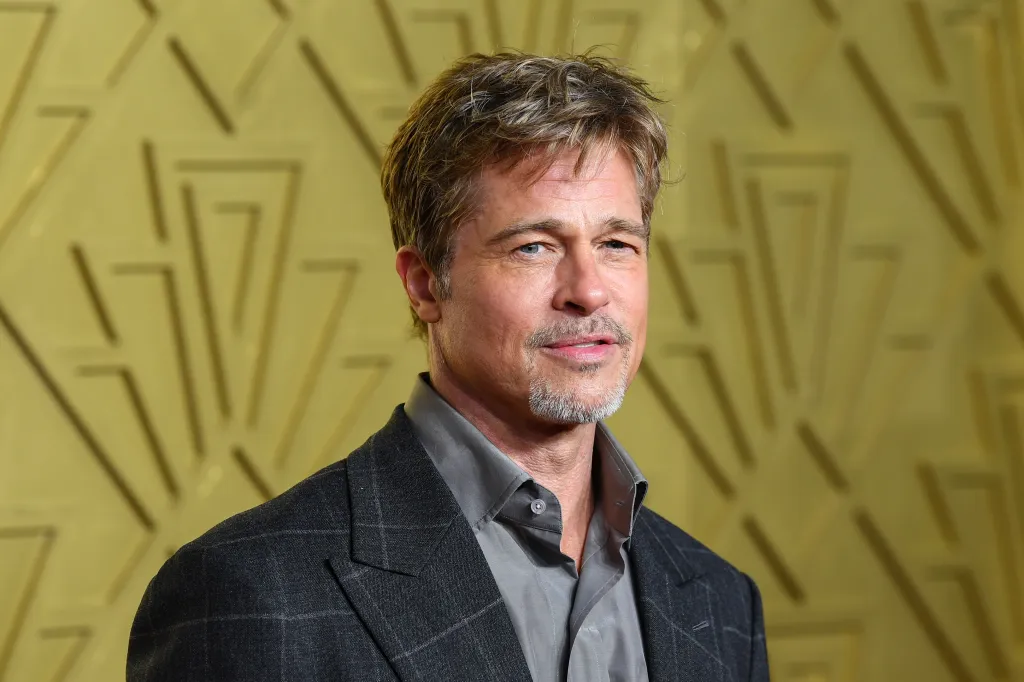
Brad Pitt isn’t joining the growing list of Hollywood voices taking an entirely negative view of artificial intelligence. The Oscar-winning actor believes AI, when treated as a filmmaking tool rather than a replacement for artists, could actually help revive the kind of mid-budget movies that have become increasingly difficult to finance. In a new Esquire cover story, Pitt specifically pointed to films in the $40 million to $90 million range as projects that could benefit from cheaper visual-effects production.
“There’s a lot of pushback against AI, but AI is going to be the very thing that, if used as a tool, is going to help these mid-budget films, $40 to 90 million-budgeted films, get made,” Pitt said.
His position, however, becomes considerably more complicated when the conversation moves from visual effects to actors themselves. Pitt is open to experimenting with AI-generated filmmaking, but he questions whether a digital recreation of an actor can truly reproduce the creative decisions and discoveries that happen during an actual performance.
That distinction is important because Hollywood’s AI debate has increasingly moved beyond questions about computer-generated imagery. The bigger fight concerns who owns an actor’s digital likeness, how performances can be reproduced and whether technology should supplement an artist’s work or eventually replace parts of it.
Pitt Sees AI As A Filmmaking Tool
Pitt’s argument starts with a problem filmmakers have been facing for years: visual effects can make smaller movies prohibitively expensive. A production might have an ambitious story and a strong cast, but sequences involving large-scale environments, creatures, destruction or digital doubles can quickly push the budget beyond what studios consider commercially comfortable.
His suggestion is that AI could change that calculation. If filmmakers can use emerging tools to reduce certain visual-effects costs without compromising the creative intent of the movie, projects that currently struggle to secure financing could become viable. For Pitt, that possibility makes AI less of a threat and more of a technological experiment that Hollywood should understand rather than simply reject.
At the same time, Pitt does not appear to see AI as something that should automatically be given control over an actor’s performance. When Esquire asked whether artificial intelligence could replicate one of his performances, he pointed to the person directing the process and the creative choices involved.
“Well, it depends on who’s creating it, you know? Who’s behind it, who’s telling the story. Who’s saying, ‘I want to see this emotion from him,’ and then being able to mine through whatever AI provides and going, ‘More in this direction,’ and tailoring it in that way. So they could, but the final product might not be my choices and what I found and discovered in the thing.”
That answer gets to the heart of Pitt’s concern. An AI system might be capable of reproducing his face, voice or physical mannerisms, but that does not necessarily mean it has reproduced the performance itself. Acting involves interpretation, instinct and choices made within a specific scene, and Pitt is questioning whether an artificial recreation could preserve that personal creative process.
The Actor Is More Wary Of Digital Replicas
Pitt also discussed another technology that has already become relatively familiar on major film sets: body scanning. Digital scans can be useful for visual effects, stunt sequences, battle scenes and de-aging, but they have also become a major point of discussion around actor consent, ownership and licensing.
Pitt revealed that he has been scanned repeatedly throughout his career and has historically tried to protect himself contractually by ensuring that he owns the scans and that they are destroyed after their intended use.
“They’re telling us all to … scan ourselves,” Pitt said. “I’ve been scanned for the last 20 years, and I’ve always put in my contract: I own them and I destroy them. I should have kept them! All this time I’ve always had them destroyed, because I’m paranoid Ozark boy.”
The comment highlights an unusual irony in the AI debate. Actors have been creating digital assets of themselves for years, long before generative AI became a mainstream concern, but those scans are now potentially more valuable because technology can use increasingly sophisticated digital representations of human beings.
Pitt’s comments suggest that the question is no longer simply whether studios can create a digital version of an actor. It is also about who controls that version, what permissions apply to it and whether an actor has a meaningful say in how their digital identity is used years after a scan was created.
The actor also revealed that he recently heard an AI-generated song that impressed him, although he noticed limitations in it. “I heard an AI song the other day that was pretty damn good,” Pitt said, before adding that “it had a repetitive nature to it. It’s not going to be the same as hearing her voice — a woman’s voice, a person’s voice.”
That observation mirrors his larger position on AI. Pitt appears interested in what the technology can accomplish, but he does not see technical imitation as automatically equivalent to human creativity.
Brad Pitt’s Next Movies Take Him In Two Directions
Pitt’s AI comments arrive at an interesting point in his career because his upcoming projects span very different kinds of filmmaking. His next major release is Heart of the Beast, in which he plays James Belmont, a retired U.S. Army Special Forces officer who becomes stranded in the Alaskan wilderness with his military working dog after a plane crash. The film is directed by David Ayer and is scheduled for release in September 2026.
Pitt is also returning as Cliff Booth in The Adventures of Cliff Booth, bringing back the character he played in Quentin Tarantino’s Once Upon a Time… in Hollywood. This time, however, Tarantino is not directing. He wrote the screenplay and gave David Fincher the opportunity to direct, reuniting Fincher and Pitt after their collaborations on Se7en, Fight Club and The Curious Case of Benjamin Button.
The project is being positioned as something slightly different from a conventional sequel. The story follows Cliff Booth in a new chapter of his life, with the character working as a Hollywood fixer, and the film is being made for Netflix. A first teaser was released during the Super Bowl in February, confirming Pitt’s return and giving audiences their first look at Fincher’s take on the character.
Pitt explained to Esquire that Tarantino’s decision not to direct his 10th film opened the door for Fincher. According to Pitt, Tarantino gave him permission to show the script to Fincher, and the director quickly agreed after reading it.
“Quentin gave me his blessing,” Pitt said. “Finch and I were on a plane and I gave him the script, and by the time we landed he said, ‘I’m doing it.’”
That collaboration gives The Adventures of Cliff Booth an intriguing connection to Pitt’s own career. The actor is not only returning to one of his most recognizable recent characters, but is doing so under the direction of a filmmaker with whom he has already created some of his most memorable work.
What Brad Pitt’s AI Comments Really Mean
Pitt’s position is more nuanced than simply being pro-AI or anti-AI. He sees a possible economic benefit for filmmakers if artificial intelligence can reduce the cost of certain technical processes, particularly on movies that sit between expensive studio tentpoles and smaller independent productions.
But his comments also draw a clear line around performance. If AI is used to recreate an actor, the question becomes whether the technology is supporting the original artist’s choices or generating something that merely looks and sounds like them.
That distinction could become increasingly important as Hollywood works out how digital replicas, body scans and generative systems fit into the filmmaking process. Pitt’s own experience of being scanned for two decades shows that the underlying issue did not begin with today’s AI boom; what has changed is how powerful those digital assets have become.
For now, Pitt seems willing to watch the experiment unfold. His comments suggest that the technology could help filmmakers make movies that might otherwise never receive financing, while also warning that a convincing digital imitation should not automatically be mistaken for the creative contribution of a real performer.
Brad Pitt And AI FAQs
What did Brad Pitt say about AI in movies?
Pitt said AI, if used as a filmmaking tool, could help more mid-budget movies with budgets between $40 million and $90 million get made, particularly by helping with expensive visual effects.
Does Brad Pitt support replacing actors with AI?
His comments show a more cautious position. Pitt acknowledged that AI could potentially reproduce his performance but questioned whether the resulting work would contain the choices and discoveries he made as an actor.
Has Brad Pitt been digitally scanned?
Yes. Pitt said he has been body-scanned for around 20 years and has traditionally included contractual provisions stating that he owns the scans and that they must be destroyed.
Why are body scans important in Hollywood?
Digital scans can be used for visual effects, stunt work, battle scenes and de-aging. As AI and digital-replica technology develop, control over those scans has become increasingly important to actors.
What is Brad Pitt’s next movie?
Pitt’s upcoming film Heart of the Beast sees him play a retired Special Forces officer stranded in Alaska with his military working dog after a plane crash.
Is Brad Pitt returning as Cliff Booth?
Yes. Pitt is reprising Cliff Booth in The Adventures of Cliff Booth, written by Quentin Tarantino and directed by David Fincher. The film is a Netflix project and continues the character’s story after Once Upon a Time… in Hollywood.