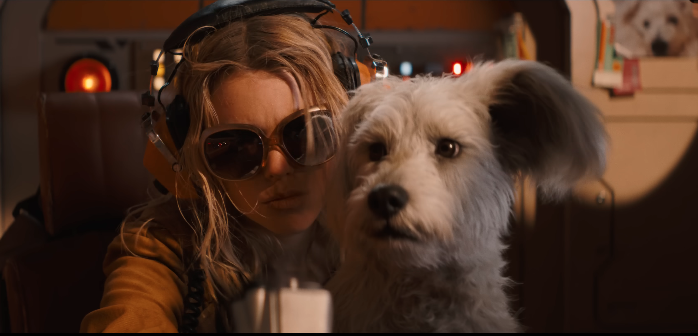
The new DC Universe is only one film old, yet Supergirl already feels like a very different kind of superhero movie. Instead of chasing the hopeful energy that made last year’s Superman such an entertaining reset, director Craig Gillespie takes the franchise toward a darker, space-faring adventure inspired by Tom King’s acclaimed Supergirl: Woman of Tomorrow. The result is visually ambitious and packed with action, but it doesn’t always find the emotional balance needed to make its heroine truly soar.
Milly Alcock steps into the spotlight as Kara Zor-El with confidence, giving the character a rougher and more impulsive personality than previous live-action versions. She isn’t portrayed as a polished superhero from the beginning. Instead, she’s stubborn, reckless and emotionally bruised, making this feel more like a personal journey than a traditional comic-book blockbuster. That approach has its strengths, although the film occasionally becomes so focused on its darker tone that it forgets to simply have fun.
Krypto and Jason Momoa steal attention whenever they appear
One surprise quickly becomes obvious throughout the film: Krypto remains one of the DC Universe’s most entertaining characters despite having surprisingly little screen time. The CGI dog makes an immediate impression during the opening scenes, bringing warmth and humour that the rest of the movie sometimes struggles to recreate. Once the story shifts into its revenge-driven adventure, Krypto is largely pushed into the background, returning mainly to motivate Kara’s mission rather than actively participating in it.
That decision feels like a missed opportunity because the character injected so much personality into Superman. Whenever Krypto appears, the movie instantly becomes lighter and more charming. The same can also be said for David Corenswet’s brief return as Superman. His limited scenes aren’t numerous enough to overshadow Alcock, but they remind audiences why his version of Clark Kent connected so well. His chemistry with Krypto remains one of the strongest elements in DC’s new cinematic universe.
Jason Momoa also walks away with some of the film’s biggest crowd-pleasing moments as Lobo. His loud, unpredictable performance adds energy every time he enters the screen, whether he’s fighting enemies or delivering sarcastic one-liners. Unfortunately, because this is still Kara’s story, Lobo never gets enough room to become more than an entertaining supporting character.
A revenge story wrapped inside a cosmic adventure
Rather than focusing on Earth, Supergirl spends most of its running time travelling across distant planets and alien worlds. The story follows Kara after she crosses paths with Ruthye, a young girl determined to hunt down the man responsible for murdering her parents. Their shared mission becomes even more personal after the villain Krem seriously injures Krypto, forcing Kara into a race against time while pursuing the same target.
The relationship between Kara and Ruthye forms the emotional centre of the movie. Their partnership clearly echoes classic revenge stories where an inexperienced young companion joins forces with an unlikely protector. While the dynamic creates several heartfelt moments, it never becomes as emotionally powerful as the screenplay seems to expect. Eve Ridley gives Ruthye sincerity, but the character often remains locked into a single emotional note for much of the journey before finally getting stronger material later in the film.
The movie constantly shifts between massive action sequences, strange alien locations and imaginative science-fiction creatures. Space pirates, dangerous bounty hunters, futuristic prisons and bizarre planets keep the adventure moving at a brisk pace. Visually there’s rarely a dull moment, although the nonstop spectacle sometimes overwhelms the quieter character scenes that could have helped audiences connect more deeply with Kara’s transformation.
Strong visuals can’t completely hide the story’s weaknesses
Craig Gillespie brings his trademark eye for unusual characters and distinctive visual style to the DC Universe. Many of the alien settings feel imaginative without becoming overly complicated, while Claudia Sarne’s orchestral score consistently adds emotional weight to several important scenes. One standout sequence revisiting Kara’s Kryptonian family proves especially effective, with David Krumholtz and Emily Beecham delivering one of the film’s most heartfelt moments despite speaking entirely in the Kryptonian language.
Where Supergirl struggles most is with its antagonist. Matthias Schoenaerts gives Krem an intimidating appearance, but the character rarely develops beyond being a straightforward villain whose primary purpose is pushing the heroes into action. The lack of emotional complexity makes several confrontations feel less impactful than they should have been, particularly during the film’s final stretch.
Fans expecting a traditional superhero adventure may also be surprised by just how long it takes before Kara fully embraces her iconic identity. The movie spends far more time exploring loss, survival and revenge than celebrating superhero heroics. Some viewers will appreciate that slower character-first approach, while others may find themselves waiting too long for the cape, the confidence and the larger-than-life moments usually associated with Supergirl.
Perhaps the biggest surprise arrives after the credits roll—or rather, doesn’t arrive at all. Unlike many recent superhero releases, Supergirl ends without a post-credit tease, bringing the story to a complete stop instead of immediately setting up another chapter. It feels unusual in today’s franchise-driven landscape, but it also allows the film to stand on its own, even if questions remain about where Kara’s journey goes next.
Supergirl isn’t as immediately satisfying as DC’s recent Superman, yet it introduces a promising new lead with Milly Alcock while expanding the studio’s growing universe in ambitious ways. Not every creative choice lands, and the darker tone occasionally works against the film’s emotional heart. Even so, strong performances, impressive world-building and memorable supporting turns from Jason Momoa, David Corenswet and, most importantly, Krypto ensure there’s enough here to keep DC fans invested in what comes next.
Rating: 3/5