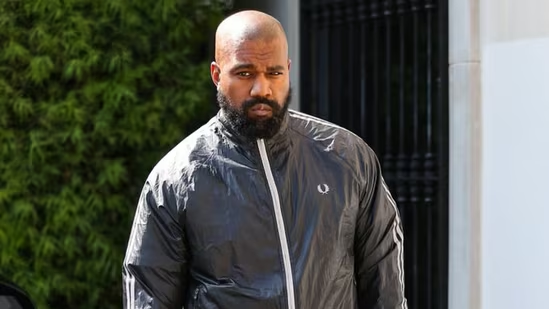
After years of controversy and public fallout, Kanye West has once again addressed the storm surrounding his antisemitic remarks — this time with an apology, denial, and a deeply personal explanation. The rapper, now legally known as Ye, has rejected accusations of being a Nazi and said his past behavior was influenced by untreated bipolar disorder, not hate or ideology.
The statement comes amid renewed backlash over his previously released song that praised Adolf Hitler, a move that reignited outrage across the music industry and beyond.
What Kanye West Said This Time
In an open letter published on Monday in The Wall Street Journal, West admitted to causing real harm through his words and actions. Titled “To Those I’ve Hurt,” the letter attempts to explain the mental state behind his most controversial moments while stopping short of using mental health as an excuse.
West described bipolar manic episodes as moments when judgment collapses. According to him, those episodes made him feel unusually clear-headed, even as he was spiraling. He said these “disconnected moments” often felt like out-of-body experiences — periods where poor decisions felt justified in the moment but devastating in hindsight.
Most notably, he directly addressed the accusations head-on, stating that he is neither a Nazi nor antisemitic and expressing regret over the pain he caused.
The Song That Crossed a Line
The controversy intensified after West released a song titled “Heil Hitler” in May last year — timed around the 80th anniversary of Nazi Germany’s defeat in World War II. The track was quickly banned by major music streaming platforms, though it continues to circulate online.
The fallout was swift and severe. Among other consequences, the song reportedly led to West losing his visa privileges to travel to Australia, further adding to the growing list of professional and personal setbacks he has faced in recent years.
This wasn’t an isolated incident but rather part of a pattern that has cost him fans, partnerships, and business deals across fashion, music, and entertainment.
A History of Apologies and Outrage
This isn’t the first time West has issued an apology. In late 2023, he publicly apologized to Jewish communities after previously declaring “I love Nazis” during a separate outburst.
Before that, in 2022, he sparked widespread backlash by wearing a “White Lives Matter” T-shirt — a slogan widely viewed as a racist provocation aimed at undermining the Black Lives Matter movement. The same year, he attended a private dinner with Donald Trump, where white nationalist Nick Fuentes was also present, deepening concerns about West’s associations.
Despite repeated apologies, critics have often questioned whether accountability has been matched with meaningful change.
Mental Health, Accountability, and Public Trust
In his latest letter, West attempted to strike a careful balance — acknowledging his bipolar disorder while clearly stating it does not excuse his actions. He said he is “deeply mortified” by what he did during manic episodes and claimed to be committed to treatment and accountability moving forward.
The rapper’s legacy remains complicated. He is one of the most decorated artists in music history, with 24 Grammy Awards to his name, yet his influence has increasingly been overshadowed by controversy rather than creativity.
Final Words
Kanye West’s latest apology feels more reflective than some of his past statements, but public trust is not easily rebuilt. While his admission of mental health struggles adds context, many believe the real test lies in sustained change — not just words.
For now, West’s message has reopened conversations around accountability, mental illness, and where society draws the line between explanation and responsibility. Whether this marks a turning point or another chapter in a long cycle of controversy remains to be seen.