Hollywood may be bracing for one of its most divisive returns. Paramount Pictures is close to securing a deal to distribute Rush Hour 4 — a move that would mark the most high-profile project yet for director Brett Ratner, who has spent years on the industry’s blacklist following sexual misconduct allegations.
Paramount’s Deal: High Stakes, Low Risk
If the agreement closes, Paramount will distribute the film but won’t be financing it, instead collecting a distribution fee. The studio’s cautious structure suggests awareness of the controversy surrounding Ratner, even as it steps toward reviving a billion-dollar global comedy franchise.
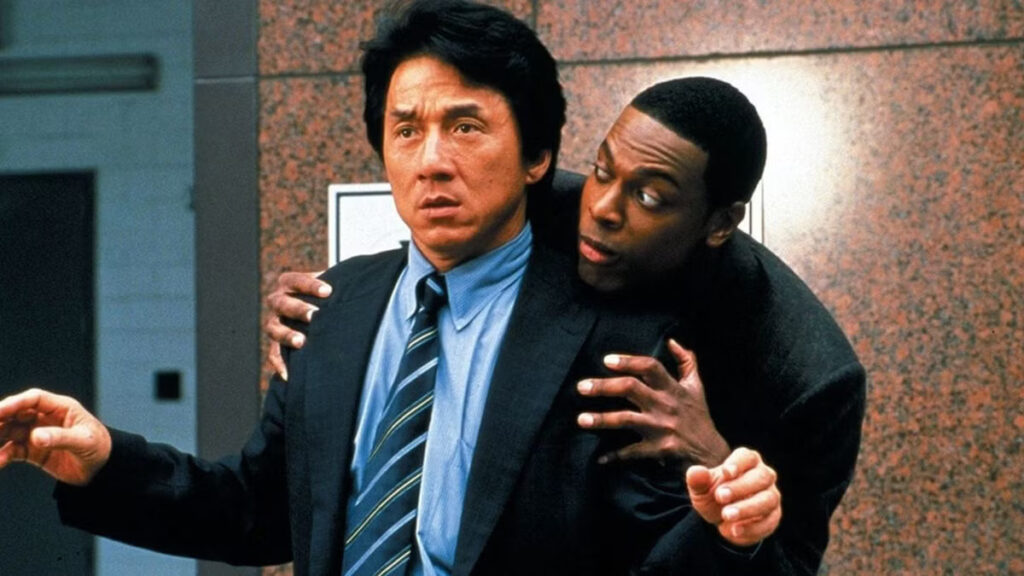
The sequel would reunite longtime stars Jackie Chan and Chris Tucker, now well into the veteran phase of their careers. Their original trilogy remains iconic — the first three Rush Hour films have earned over $500 million at the domestic box office alone, and more than $850 million worldwide, cementing the brand as a major late-90s/early-2000s staple.
Ratner’s Complicated Path Back
Ratner’s rise was once rapid: after cutting his teeth directing music videos, he broke through with the original Rush Hour in 1998, building the trilogy into one of Warner Bros.’ most profitable buddy-cop franchises.
But everything changed in 2017 when six women accused him of sexual misconduct in a Los Angeles Times investigation — including allegations of forced oral sex by actress Natasha Henstridge and an incident reported by Olivia Munn, who said Ratner masturbated in front of her when she was delivering food to his trailer early in her career. Ratner denied wrongdoing, but the fallout led to his swift exile from studio filmmaking.
Since then, no major studio has touched Rush Hour 4, despite Ratner and his partners quietly pitching it to multiple buyers — including Sony, Lionsgate, and even Paramount’s previous leadership. Warner Bros., which originally nurtured the franchise through New Line Cinema, had already allowed the rights to be licensed elsewhere.
A New Opening — And an Unexpected Political Push
Ratner’s re-entry into Hollywood started earlier this year when Amazon acquired his Melania Trump documentary, marking his first film credit since the allegations. The project reportedly involved cooperation from the former First Lady, and will be followed by a three-part docuseries.
Behind the scenes, the story takes an even more dramatic turn:
Reports suggest former President Donald Trump personally urged Paramount to revive Rush Hour — along with a reboot of Jean-Claude Van Damme’s Bloodsport — as part of broader conversations with Larry Ellison and David Ellison, whose company Skydance now owns Paramount. These discussions come amid the Ellisons’ interest in acquiring Warner Bros.
The political and corporate maneuvering adds another layer to Ratner’s unexpected re-emergence.
Industry Context: Why This Move Matters
A Rush Hour revival has clear commercial potential — nostalgia, global appeal, and the long-awaited return of Chan-Tucker chemistry. But bringing Ratner back into the mainstream opens the door to industry-wide debate over accountability, rehabilitation and whether audiences will embrace a filmmaker with unresolved public allegations.
Paramount stepping in as distributor signals both confidence in the franchise’s box-office power and awareness of the risks — financial, reputational and cultural.
Final Words
If finalized, Rush Hour 4 could become one of Hollywood’s most talked-about releases — not just for reuniting two beloved action stars, but for what it represents: a high-profile test case for how the industry handles controversial comebacks. For now, Paramount’s negotiations mark the closest the sequel has ever come to becoming real.