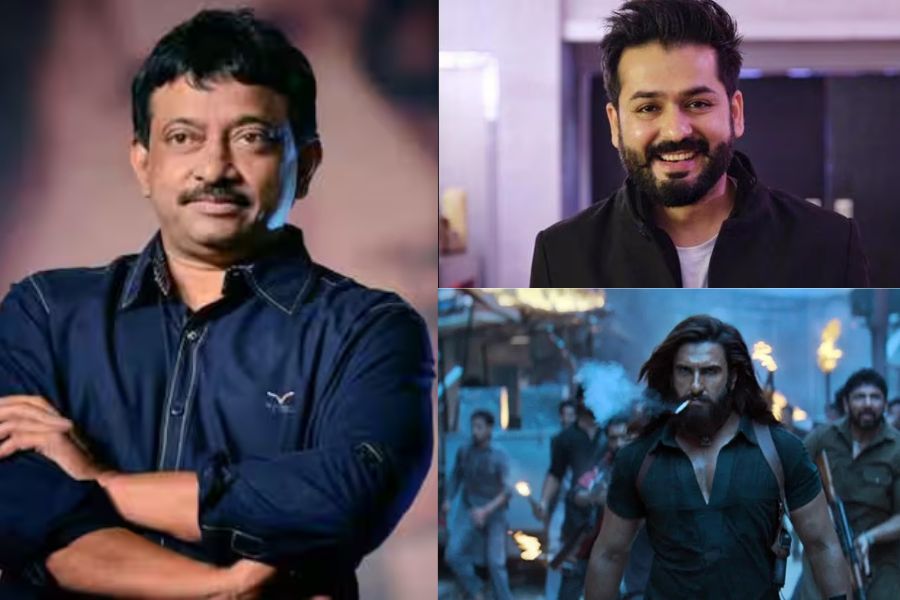
Aditya Dhar’s Dhurandhar is not just breaking box office records — it’s also winning over one of Indian cinema’s most outspoken filmmakers. Ram Gopal Varma has gone all out in praising the Ranveer Singh–led blockbuster, calling it nothing short of a game-changer for Indian cinema and hailing Dhar as a director who has redefined mainstream storytelling.
Taking to X, Varma shared a series of detailed posts that read less like a casual review and more like a manifesto on where Indian cinema should be heading next.
“Not a Film, But a Quantum Leap”
Varma didn’t mince words while describing his reaction to Dhurandhar. According to him, the film isn’t merely ambitious — it fundamentally alters the cinematic landscape.
He described Dhurandhar as a “quantum leap in Indian cinema”, stating that Aditya Dhar has single-handedly changed the future of filmmaking across industries, north and south alike. What impressed him most wasn’t just the scale, but the psychological grip of the film.
Varma noted that Dhar doesn’t simply direct scenes — he engineers states of mind, pulling both characters and viewers into a tense, irreversible journey from the very first frame.
A Film That Commands, Not Requests
One of Varma’s strongest observations was about the film’s tone. He pointed out that Dhurandhar doesn’t politely seek attention — it demands it. The silences, the sound design, and the staging all work together to create sustained pressure rather than surface-level spectacle.
According to Varma, the writing cuts sharply, the menace simmers beneath every scene, and when the film finally erupts, the impact feels brutal yet operatic — violence that feels grounded, uncomfortable, and real.
Performances That Linger
Varma also praised the performances, noting that the characters are not designed to be instantly likable. Instead, they stay with you long after the credits roll. He highlighted how the film trusts the audience to understand characters through scars and subtext, rather than spoon-feeding backstories.
This confidence, Varma argued, is what truly separates Dhurandhar from much of mainstream cinema — a belief that audiences are intelligent enough to engage with layered storytelling.
Redefining Mainstream Craft
On the technical front, Varma said Dhurandhar redraws the grammar of popular Indian cinema. From sound that stalks scenes instead of decorating them, to a camera that circles characters like a predator, every element serves the story’s intent.
Most notably, Varma praised how action is portrayed — not as stylised choreography for applause, but as ugly, justified, and unsettling, closer to real-world violence.
Aditya Dhar’s Emotional Reply
Aditya Dhar responded with an equally heartfelt note, calling Varma’s words overwhelming and deeply personal. He admitted that if Varma’s tweet were a film, he would have watched it “first day, first show.”
Dhar reflected on his early days in Mumbai, sharing that he once dreamed of working under Ram Gopal Varma. While that never happened directly, Dhar acknowledged that Varma’s films shaped his cinematic thinking — teaching him how to be fearless, disruptive, and unapologetic.
He confessed that being told Dhurandhar is a “quantum leap” feels surreal — and slightly terrifying — because of the expectations it now creates for whatever comes next.
A Full-Circle Moment
In his closing note, Dhar thanked Varma for inspiring an entire generation to believe that Indian cinema doesn’t need to dilute itself or mimic Hollywood to succeed. He described the praise as validation not just for Dhurandhar, but for a mindset that respects ambition and audience intelligence.
Varma later responded again, doubling down on his admiration and even listing lessons filmmakers can learn from Dhurandhar — cementing the exchange as one of the most talked-about filmmaker interactions of the year.
Final Words
With Dhurandhar crossing ₹450 crore in just 14 days, the film’s impact now goes beyond numbers. Endorsements like Ram Gopal Varma’s position it as a creative turning point, not just a commercial juggernaut.
Whether one agrees with Varma’s assessment or not, one thing is clear — Dhurandhar has sparked a conversation about ambition, craft, and the future of Indian cinema that won’t fade anytime soon.