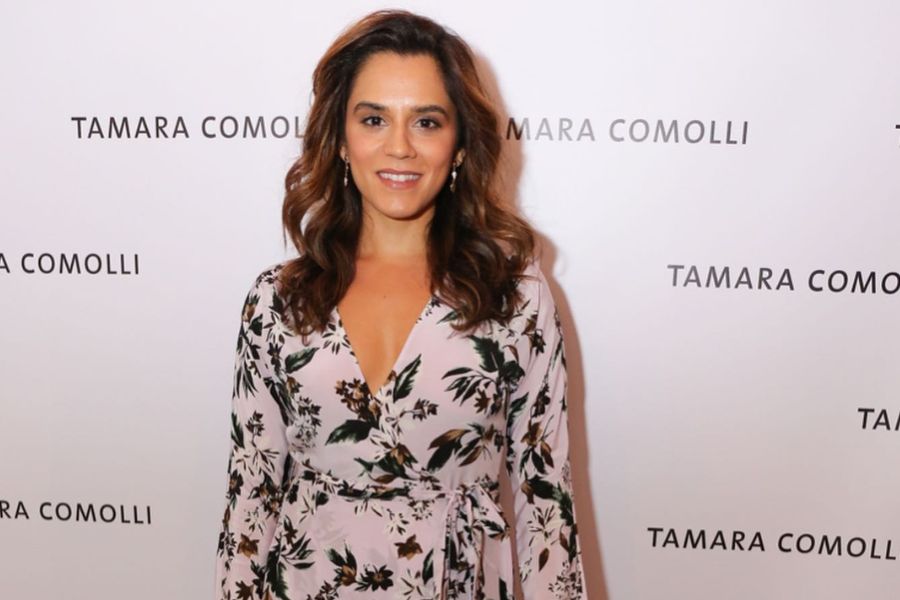
In an industry where image, identity, and perception often shape careers as much as talent does, actor Sepideh Moafi is opening up about a decision she made early on—one that quietly defined the path she would take in Hollywood.
Speaking recently, Moafi revealed that one of her first agents suggested she change her name to improve her chances of landing roles. It’s a suggestion many actors—especially those from diverse backgrounds—have heard over the years. But for Moafi, the answer was immediate and firm.
She refused.
And looking back now, it’s a choice she believes helped her build a career that feels authentic and fully her own.
A Defining Moment Right After Graduation
The conversation happened at a critical time—right after Moafi graduated from acting school and was preparing to enter the industry professionally.
For many young actors, that phase is filled with uncertainty. There’s pressure to fit in, to be “marketable,” and to make compromises that might open doors. Changing one’s name has historically been one of those compromises.
But Moafi didn’t see it that way.
Instead of viewing her name as something that needed adjustment, she saw the suggestion as a sign that the industry might not be ready to accept her as she was.
Her response was clear and unfiltered—she simply said no.
And that decision, while small on the surface, carried deeper implications about identity, representation, and self-worth.
The Bigger Conversation Around Names in Hollywood
Moafi’s experience is far from unique. For decades, actors—particularly those from non-Western or minority backgrounds—have been encouraged, or subtly pressured, to adopt names that are considered easier to pronounce or more “familiar” to mainstream audiences.
It’s a practice rooted in old industry norms, where accessibility was often prioritized over authenticity.
At the same time, Moafi is careful not to judge those who choose differently. She openly acknowledged that for many actors, the decision to change their name is complex and personal.
There’s no one-size-fits-all answer.
But for her, the idea of altering something so fundamental felt like giving up a part of herself before her career had even begun.
Choosing Authenticity Over Conformity
What stands out in Moafi’s reflection is how she frames that moment—not as a struggle, but as a turning point.
She recalls feeling like she was being asked to become someone else in order to succeed. And that’s where she drew the line.
Instead of adjusting to fit expectations, she chose to continue as she was—and trusted that the right opportunities would come.
And they did.
Her career didn’t stall. It didn’t shrink. In fact, it grew steadily, with roles that showcased both her range and individuality.
She describes it now as a “beautiful, varied career,” one that might not have unfolded the same way had she taken a different path early on.
From Early Roles to The Pitt Season 2
Over the years, Sepideh Moafi has built a strong presence on television, appearing in a range of projects that highlight her versatility.
She gained attention with roles in series like The Deuce and The L Word: Generation Q, where she brought depth and nuance to her characters.
More recently, she appeared in Black Bird, further expanding her reach across platforms.
Now, she’s stepping into a significant role in The Pitt Season 2.
In the upcoming season, Moafi plays Dr. Baran Al-Hashimi, an attending physician who temporarily takes over duties while Noah Wyle’s character, Dr. Michael Robinavitch, is away on sabbatical.
It’s a role that places her at the center of the narrative—another step forward in a career that continues to evolve.
Representation Is Changing—But Slowly
Moafi’s story also reflects a broader shift happening within the entertainment industry.
While there’s still work to be done, conversations around representation, identity, and inclusion are becoming more visible. Actors today have more space to embrace who they are, rather than reshape themselves to fit outdated standards.
But progress isn’t uniform.
Stories like Moafi’s serve as reminders that these pressures still exist—just in more subtle forms.
And that’s why her decision resonates. It’s not just about a name—it’s about ownership of identity in a space that has historically tried to redefine it.
A Career Built on Staying True
Looking at where she is now, it’s clear that Moafi’s choice didn’t limit her—it defined her.
By refusing to change her name, she set the tone for how she would approach her career: on her own terms, without compromise on who she is.
That mindset has carried through her work, her roles, and the way she speaks about the industry today.
In a field where many feel pressure to adapt, her story offers a different perspective—that sometimes, the most powerful move is simply staying the same.
And in doing so, letting the work speak for itself.