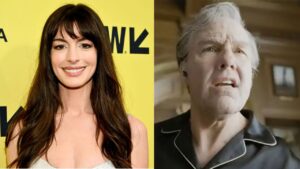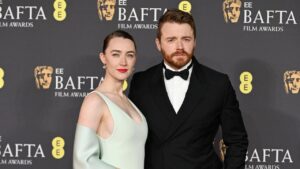
Director Mona Fastvold admits she was hesitant about one thing while making The Testament of Ann Lee — the genre itself. Calling it a musical didn’t come easily, even though music and movement sit at the heart of the film.
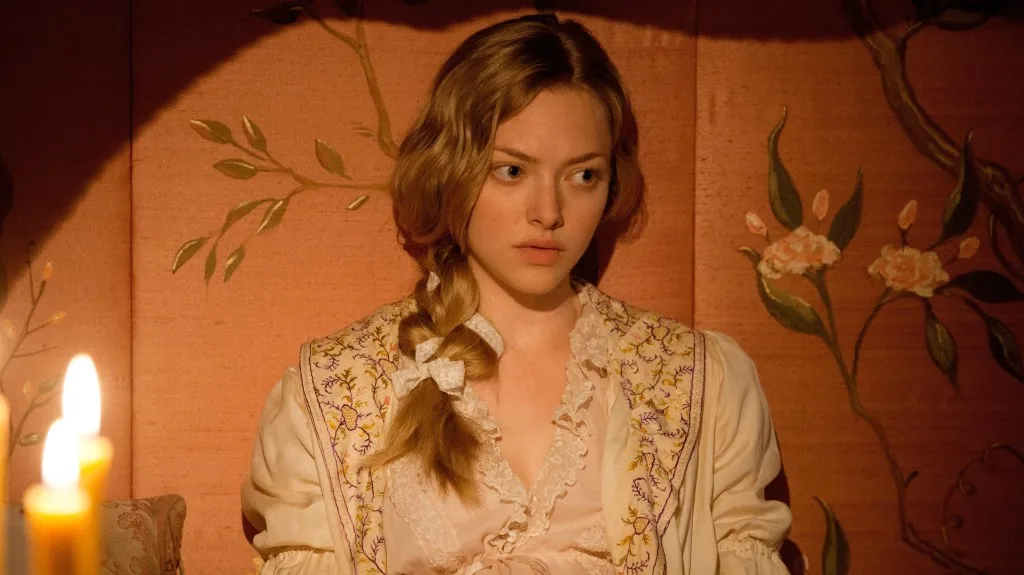
Premiering in Los Angeles this week, the Searchlight Pictures release stars Amanda Seyfried as Ann Lee, the 18th-century religious leader who founded the Shaker Movement and was believed by her followers to be the female Christ. Fastvold described Lee as “perhaps the first American feminist,” adding that it feels like a missed cultural moment that so few people today know her story.
Why This Film Resists the “Musical” Label
Fastvold, who co-wrote the film with her husband Brady Corbet, explained that she avoided calling it a musical for a long time — instead describing it as a “movement piece.”
The reason? Shaker worship itself.
According to Fastvold, the Shakers expressed faith through ecstatic song and physical movement, making music inseparable from daily life. “There’s no separation between the sound design and the music,” she explained, noting how the score blends with natural sounds like thunder, wind, rain, and even footsteps.
The result is something far removed from traditional musical conventions — no show-stopping numbers or songs that pause the narrative.
Music That Comes From Inside, Not Performance
Co-star Lewis Pullman echoed that sentiment, saying the film avoids the typical musical trope of characters suddenly bursting into song.
“The music is completely integrated into their world,” he said, adding that Fastvold allows the audience to sit with entire songs from beginning to end, without rushing or spectacle.
This philosophy also shaped Seyfried’s performance.
Amanda Seyfried Had to Unlearn Her Musical Training
Despite Seyfried’s strong musical background — including Mamma Mia! and Les Misérables — Fastvold wanted something entirely different.
Shaker singing, she explained, was not performance-based, but a form of prayer and emotional release. To find Ann Lee’s voice, Seyfried had to strip away polish and control.
“We cried, screamed, laughed, laid on the floor — everything,” Fastvold recalled. “She almost had to unlearn being pitch-perfect.”
Seyfried admitted she initially doubted herself when Fastvold approached her for the role. She couldn’t imagine the movement or hear the music in her head. Still, she trusted the director completely.
“I threw my whole body into it,” Seyfried said. “She has such a clear vision and such a nurturing way of working. I would do anything for her.”
A Cast and Creative Team Aligned on Vision
The film also features Thomasin McKenzie, Tim Blake Nelson, Stacy Martin, and Natalie Shinnick, among others. Behind the scenes, close collaboration between the composer, choreographer, and sound designer shaped the film’s immersive sonic identity.
Rather than asking whether The Testament of Ann Lee fits into a familiar genre, the creative team seems more interested in letting audiences experience it on its own terms.
Final Words
The Testament of Ann Lee isn’t trying to redefine the musical — it’s quietly stepping outside of it. With Amanda Seyfried delivering one of her most physically and emotionally committed performances, and Mona Fastvold crafting a deeply internal, spiritual soundscape, the film promises something rare: a musical that doesn’t perform for the audience, but invites them to listen.
The film releases in theatres on December 25.