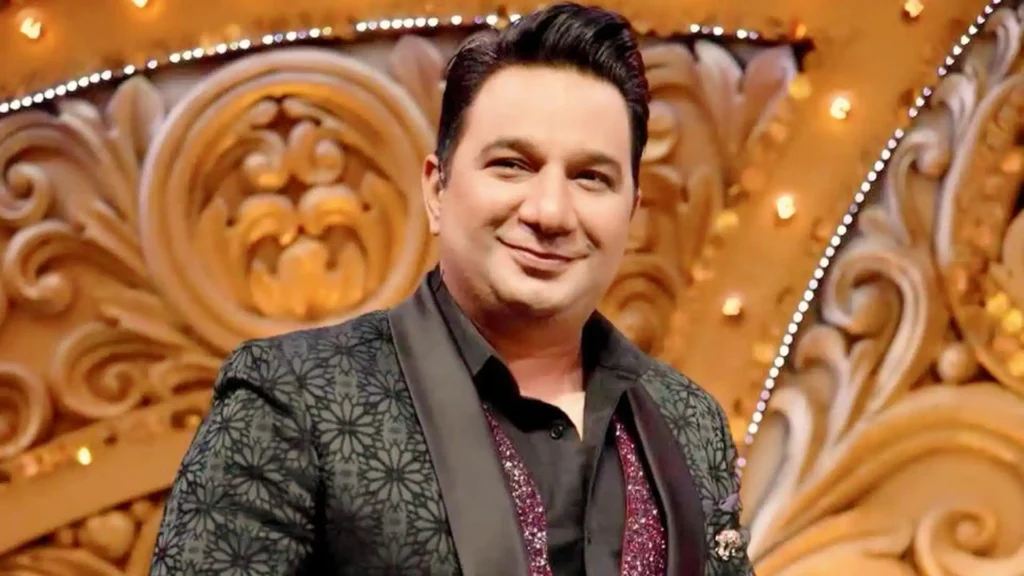
When comedy films have struggled to pull audiences into theatres in recent years, Welcome To The Jungle has managed to strike a different chord. Director Ahmed Khan believes the film succeeded because it stayed focused on entertaining families instead of chasing easy laughs. Rather than relying on loud humour or controversial jokes, the filmmaker says the team consciously chose a cleaner approach that could appeal to viewers across generations. That decision, according to him, became one of the biggest reasons behind the film’s warm response.
Speaking about what separated Welcome To The Jungle from many recent comedy releases, Ahmed Khan admitted that making people laugh is never straightforward because every viewer has a different sense of humour. Despite that challenge, the team remained committed to one clear philosophy throughout production. “Making people laugh is one of the hardest things as everyone has a different taste in comedy. We just kept one thing in mind that we will not delve into vulgarity, we won’t make demeaning jokes or do slapstick comedy. We went for the age group of 5 to 95, and it worked for us.”
Akshay Kumar and Raveena Tandon’s reunion came naturally
One of the biggest talking points around the film has been the reunion of Akshay Kumar and Raveena Tandon, a pair that audiences had not seen together on the big screen for many years. Their appearance together instantly became a nostalgic moment for longtime Bollywood fans, adding another layer of excitement before the film’s release. Ahmed Khan revealed that bringing them together wasn’t built around nostalgia alone, but around a character that he believed suited Raveena perfectly.
According to the filmmaker, Akshay Kumar had always been attached to the project from the beginning. When it came time to cast a powerful village woman, Raveena Tandon was the first name that came to his mind. Recalling how the conversation unfolded, Ahmed said, “Akshay Kumar was always associated with the film, and I had this one character of a strong village woman and I had Raveena Tandon in mind for it. So, I told Raveena that you and Akshay haven’t done a film together in years and both of them are very close friends of mine. They thought ki ab sab itna aage badh chuke hain ki kabhi na kabhi to kuch karna hi tha saath mein. So for the public’s sake and for them to enjoy it, they did it. Whatever they did though, was in the film’s context, it’s the audience who found their own take on it.”
The reunion quickly became one of the film’s most discussed moments online, with fans celebrating the return of an iconic on-screen pair. While audiences interpreted the scenes through the lens of nostalgia, Ahmed suggested that the performances were always designed to serve the story rather than simply revisit the past. That balance, he feels, helped the reunion feel organic instead of forced.
Managing a cast of more than 30 actors
Handling an ensemble featuring over 30 actors is rarely an easy task, especially in a comedy where timing and reactions are equally important. Ahmed Khan explained that the biggest challenge wasn’t giving everyone individual moments, but ensuring every performer felt like an important part of the larger narrative. Instead of building isolated character tracks, he looked for a structure that would naturally include everyone.
His solution was surprisingly simple. “I bifurcated them in mandlis of actors, crews, villagers and villains. Putting them together became easy after that. Also, I didn’t give individual scenes to anyone. Every scene had almost all of them reacting to the same situation, so no one was left out.”
The approach allowed every performer to contribute without disrupting the pace of the story. Rather than chasing separate spotlight moments, the film focused on group interactions, creating the large-scale comic situations that became a defining feature of the movie. It also helped maintain a consistent rhythm despite the unusually large ensemble.
Giving the Welcome franchise a fresh visual identity
The Welcome franchise has long been associated with director Anees Bazmee’s signature comic style, making comparisons almost unavoidable. Earlier, Akshay Kumar had credited Bazmee for shaping the franchise’s identity, but Ahmed Khan chose not to imitate that formula. Instead, he wanted the latest chapter to have its own personality while still respecting the series’ legacy.
Explaining the creative difference, Ahmed said, “Anees bhai’s flavour of humour is very different. He is a writer, I am not. His humour starts from his pen, mine comes on the camera straightaway. Welcome was always known for that niche Dubai, black suits, and glamour. I completely changed the palette and went neutral. I kept everybody in one uniform, so there was no hierarchy. I gave it a sepia tone, which is quite different from comedy films’ setting which is usually loud and colourful. I made a very serious looking comedy film. The action director in me also creeped up a little in that.”
That visual shift gave Welcome To The Jungle a noticeably different atmosphere from its predecessors. Instead of bright colours and glamorous styling traditionally associated with Bollywood comedies, the film leaned into earthy tones and a grounded visual palette. Combined with Ahmed Khan’s action background and ensemble staging, the result was a comedy that attempted to stand apart while keeping the franchise’s entertainment value intact.
The success of Welcome To The Jungle suggests that audiences are still willing to embrace theatrical comedies when the humour feels accessible and the storytelling remains rooted in characters rather than gimmicks. For Ahmed Khan, the film’s biggest achievement appears to be proving that a clean, family-friendly comedy can still connect with viewers across generations, even in an era where the genre faces tougher competition than ever before.