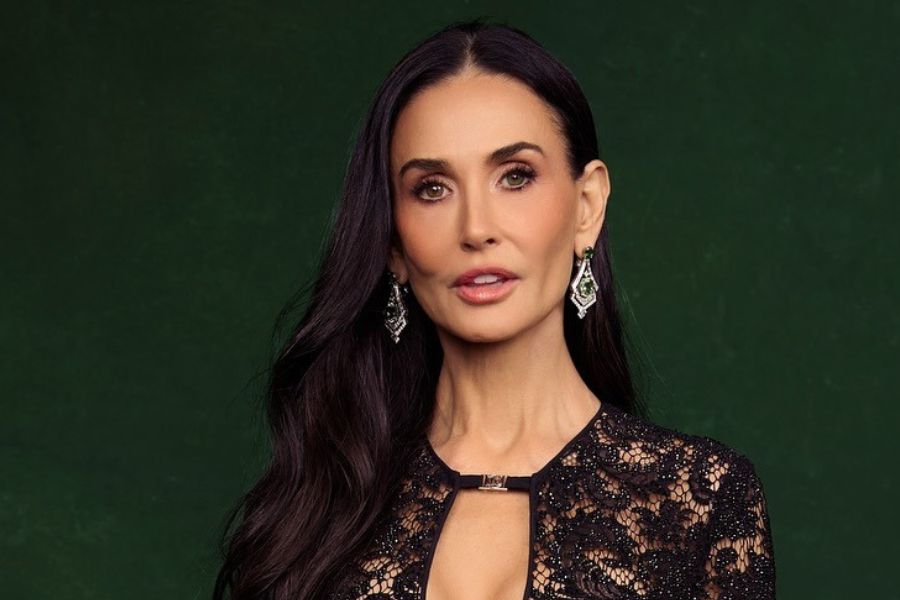
The conversation around artificial intelligence took center stage at the 2026 edition of the Cannes Film Festival even before the red carpet fully settled down. This time, it was Demi Moore who grabbed attention after speaking openly about how AI is already changing Hollywood and why the industry may have no option except learning how to live with it. Her comments arrived during the festival’s jury press conference on Tuesday and quickly became one of the most talked-about moments from the opening day.
Moore, who returned to Cannes after the strong response to her horror drama The Substance, sounded surprisingly calm about the future of AI in filmmaking. While many actors and creators continue warning about technology replacing artists, Moore took a different route. She admitted that AI is “already here” and trying to completely stop it would probably become a losing battle for the entertainment business. Instead, she suggested that studios and artists should look for smarter ways to work alongside the technology rather than constantly resisting it.
At the same time, the actress did not fully dismiss the dangers surrounding AI either. Moore openly admitted she is not sure whether the industry is currently doing enough to protect actors, writers, and creators from possible misuse. That part of her statement felt important because Hollywood is still recovering from the massive writers’ and actors’ strikes that partly revolved around AI concerns. Many performers remain worried about digital replicas, voice cloning, and studios owning scanned likeness rights without proper compensation.
Still, Moore strongly believes there is one thing machines can never fully copy. According to her, real art comes from emotion, spirit, and lived human experience rather than technical perfection. She explained that while AI may become useful in some creative areas, it cannot recreate the soul behind performance and storytelling. That emotional side of cinema, according to Moore, is what will always separate human-made art from computer-generated material. The audience at Cannes seemed to respond warmly to that thought because it balanced fear with optimism instead of leaning completely into panic.
The AI discussion was not the only politically charged topic raised during the press conference. Moore was also asked whether speaking openly about politics can damage careers in the movie business. The actress pushed back against the idea and argued that art loses its meaning when creators begin censoring themselves out of fear. She said expression is deeply connected to creativity, and removing honesty from filmmaking could shut down the very thing that allows artists to discover truth through cinema.
That wider debate continued when acclaimed South Korean filmmaker Park Chan-wook also shared his views during the conference. Park, who is serving as president of this year’s competition jury, said art and politics should not be treated like enemies. According to him, films can absolutely carry political ideas as long as those ideas are expressed artistically rather than turning into pure propaganda. His comments came months after heavy political controversies dominated conversations at the Berlin International Film Festival earlier this year.
This year’s Cannes jury itself is packed with globally respected names from across the film industry. Alongside Moore and Park, the panel includes Ruth Negga, Laura Wandel, Diego Céspedes, Isaach de Bankolé, Paul Laverty, Oscar-winning director Chloé Zhao and veteran Swedish actor Stellan Skarsgård. The lineup reflects Cannes’ continuing push toward international voices during a time when Hollywood itself is going through major uncertainty.
Interestingly, the festival has opened this year with fewer major Hollywood studio films compared to previous editions. Cannes chief Thierry Fremaux reportedly linked this shift to the wider instability inside the entertainment business after COVID disruptions, labor strikes, mergers, streaming expansion, and the growing AI conversation. In many ways, Moore’s comments ended up perfectly matching the mood hanging over Cannes this year — a film industry trying to figure out what the future even looks like anymore.
The festival officially kicked off Tuesday night with the premiere of The Electric Kiss, directed by Pierre Salvadori. While the glamour and premieres remain the face of Cannes, the real story this year may end up being the growing anxiety around how technology, streaming platforms, and changing audience habits are reshaping cinema faster than anyone expected.