For decades, Robin Hood has been the charming thief of folklore — the man in green who robbed the rich, protected the poor, and inspired generations of stories built around heroism and rebellion. Michael Sarnoski’s The Death of Robin Hood wants very little to do with that version of the legend. Instead of serving audiences another swashbuckling adventure packed with archery contests and triumphant speeches, the filmmaker strips away the mythology and asks an uncomfortable question: What if the man behind the legend wasn’t particularly heroic at all?
The result is one of the year’s most unexpected films. Quiet, mournful and almost stubbornly resistant to crowd-pleasing instincts, The Death of Robin Hood trades spectacle for introspection. It’s less interested in action than accountability, less concerned with legacy than guilt. Anchored by a deeply committed Hugh Jackman performance, this A24 drama won’t be everyone’s version of Robin Hood, but it may be one of the boldest reinterpretations the character has received on screen.
A Robin Hood Haunted by the Man He Became
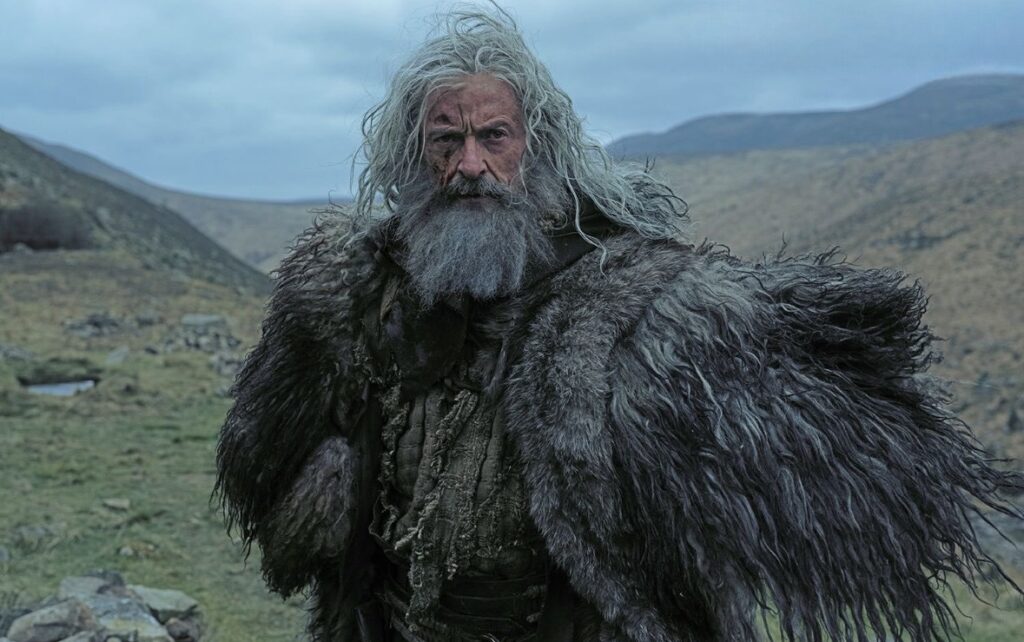
Set in 1247, Sarnoski introduces audiences to a version of Robin Hood that looks nothing like the romanticized outlaw immortalized through ballads and Hollywood adventures. Jackman, sporting long grey hair and a weathered face etched with regret, portrays a man exhausted by violence and disillusioned by the stories people tell about him.
This Robin isn’t stealing from corrupt rulers to uplift the poor. He isn’t leading merry men through Sherwood Forest with a grin and a clever one-liner. He has spent years surviving through war, pillaging and bloodshed, and the weight of those choices has finally caught up with him. The heroic reputation surrounding his name feels less like an honor and more like a lie he no longer has the strength to carry.
Sarnoski wastes no time dismantling expectations. In the opening scenes, Robin briefly shares food and shelter with a young drifter before shocking viewers with an act of brutal violence. It’s an introduction designed to unsettle anyone arriving with nostalgia attached to the character.
The film announces immediately that this isn’t about preserving myths. It’s about interrogating them.
Violence Gives Way to Reflection
The story initially appears to be heading toward a gritty revenge thriller.
Robin is approached by Little John, played by Bill Skarsgård, who asks for help protecting his family from enemies rooted in their shared past. What follows is arguably the film’s most intense sequence, a muddy and savage confrontation where bodies crash into one another with horrifying realism.
Faces are burned by flaming torches. Blades sink into flesh without mercy. The violence isn’t choreographed to excite; it exists to disturb.
Anyone expecting two hours of that relentless brutality, however, may be surprised.
After being gravely wounded during the conflict, Robin awakens inside a secluded priory overseen by Sister Brigid, played with remarkable restraint by Jodie Comer. From this point onward, The Death of Robin Hood slows dramatically. The battlefield is replaced by conversations, reflection and spiritual reckoning.
The shift may frustrate viewers hoping for a more conventional action film, but it’s also where Sarnoski reveals what truly interests him.
Hugh Jackman Delivers One of His Most Restrained Performances
Jackman has spent years proving his versatility across genres, but some of his strongest work often emerges when he abandons larger-than-life charisma for vulnerability.
Here, he gives Robin Hood very little to hide behind.
Gone is the swagger audiences associate with many interpretations of the outlaw. In its place sits a man consumed by self-loathing, questioning whether redemption remains possible after a lifetime of destructive choices.
Jackman doesn’t chase sympathy. Instead, he leans into discomfort. Robin is frequently closed off, bitter and difficult to understand. Even when the script withholds emotional explanations, the actor communicates decades of exhaustion through silence and subtle expressions.
It’s not a performance designed to win audiences over quickly.
But it’s difficult to look away from.
Jodie Comer complements that energy beautifully. Sister Brigid never becomes a romantic reward for Robin’s suffering, and the film deserves credit for resisting that familiar route. Their connection feels rooted in compassion rather than attraction, giving the story emotional texture without undermining its themes.
Faith Delaney also makes an impression as Margaret, Little John’s orphaned daughter. Her fragile bond with Robin injects occasional warmth into an otherwise sorrowful narrative. Murray Bartlett and Noah Jupe further enrich the ensemble, portraying individuals carrying their own burdens within this broken world.
Michael Sarnoski Chooses Soul Over Spectacle
Following the commercial success of A Quiet Place: Day One, many filmmakers might have embraced bigger budgets and safer opportunities.
Instead, Sarnoski returns to the intimate emotional territory that made Pig resonate so strongly with audiences and critics alike.
Like that earlier film, The Death of Robin Hood is less concerned with plot mechanics than emotional excavation. Characters speak carefully. Silences linger. Conversations about regret carry more weight than sword fights.
That approach won’t satisfy everyone.
At times, the film risks becoming trapped by its own melancholy. Robin’s despair remains relatively constant throughout the runtime, occasionally making the experience feel emotionally repetitive. There are stretches where viewers may admire the craftsmanship more than feel deeply invested in the destination.
Still, even when the narrative threatens to drift, Sarnoski’s conviction keeps it compelling.
Pat Scola’s 35mm cinematography bathes the film in muted browns, greys and earthy greens, creating a medieval landscape that feels tactile and unforgiving. Costume design favors rough fabrics and practical realism over fantasy embellishments. Jim Ghedi’s score quietly supports the film’s meditative atmosphere rather than dictating emotion.
Everything about the production reflects discipline and intention.
A Robin Hood Story Unlike Any Other
Perhaps the most admirable quality of The Death of Robin Hood is its refusal to become what audiences expect.
Modern cinema frequently repackages familiar intellectual property with slight cosmetic adjustments while preserving the same emotional beats underneath. Sarnoski does the opposite. He dismantles the fantasy surrounding one of literature’s most recognizable figures and rebuilds him as an aging man confronting the consequences of choices that legends conveniently ignore.
Whether audiences embrace that reinvention will likely depend on what they’re seeking.
Those hoping for crowd-pleasing adventure and heroic triumph may struggle with its deliberate pacing and persistent sadness. But viewers willing to meet the film on its own terms will discover a thoughtful meditation on guilt, identity and the stories people tell themselves to survive.
In an era where beloved characters are endlessly recycled for nostalgia, The Death of Robin Hood stands apart by daring to ask whether myths deserve scrutiny instead of celebration.
It’s a heavy film. Sometimes overwhelmingly so. Yet there’s something admirable about its seriousness, especially within the landscape of summer entertainment.
Michael Sarnoski doesn’t just kill the legend.
He forces it to look in the mirror first.
What Worked and What Didn’t
What worked most is Hugh Jackman’s quietly devastating performance and Sarnoski’s unwavering commitment to his vision. The film’s atmosphere is extraordinary, with every frame feeling weathered and lived-in. Jodie Comer brings grace and emotional intelligence to a role that could have easily slipped into cliché, while the supporting cast consistently elevates the material.
What doesn’t work quite as well is the film’s emotional rhythm. Its relentless solemnity occasionally becomes exhausting, and Robin himself remains intentionally elusive to the point of distance. The movie’s refusal to chase entertainment value is admirable, but there are moments when a touch more variation in tone might have deepened its impact.
Even so, The Death of Robin Hood emerges as one of the year’s most fascinating literary reimaginings. It won’t replace the classic version of Robin Hood in popular culture, nor does it want to.
Instead, it offers something rarer: a mature, uncompromising character study disguised as medieval folklore.
Rating: 4/5