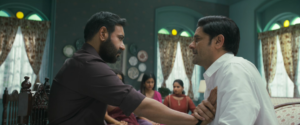
When Sam Raimi returns to R-rated horror after more than two decades, expectations naturally tilt toward blood, chaos, and visual excess. Send Help goes in a very different direction. Instead of leaning on gore, Raimi delivers a tightly controlled survival thriller that finds its real horror in corporate power games, gender politics, and bruised male ego.
Starring Rachel McAdams and Dylan O’Brien, the film blends workplace satire, psychological tension, and dark humor into a two-character pressure cooker. It’s less about monsters in the wild and more about the ones people already know too well.
The Setup
Linda Liddle is a familiar figure for anyone who’s ever been quietly competent at work. She’s efficient, smart, and patient—perhaps too patient. Promised a promotion that never materializes, Linda instead finds herself edged out by the company’s new CEO, Bradley Preston. Bradley isn’t just her boss; he’s the embodiment of privilege—smooth, smug, and completely untested.
Under the excuse of a crucial business trip to Bangkok, Linda is sent away in what quickly feels like a professional dead end. Then comes the real rupture: their private jet crashes, leaving Linda and Bradley stranded alone on a deserted island.
In one moment, boardroom hierarchies evaporate. Titles, money, and entitlement mean nothing when survival becomes the only currency that matters.
Survival, Power, and Control
Once isolated, the film slowly flips its power dynamic. Linda’s practicality, preparation, and instincts take over, while Bradley’s confidence begins to rot from the inside. The island becomes a stripped-down version of society—one where patriarchal authority no longer works, and adaptability decides who survives.
What follows isn’t a straightforward man-versus-nature story. It’s a psychological duel. Power shifts constantly, sometimes subtly, sometimes violently, as resentment, fear, and ego collide. Raimi allows this tension to simmer, turning everyday workplace dynamics into something genuinely unsettling.
Direction & Tone
Raimi approaches Send Help with surprising restraint. His signature visual style is present but never overpowering. Instead, he trusts the script and performances to carry the weight. The humor is dry, often uncomfortable, and sharply observant—especially when it skewers fragile masculinity and performative leadership.
The middle stretch slows slightly as the characters settle into island survival, but Raimi never loses control of the tone. When the film reaches its climax, it avoids spectacle in favor of emotional impact. It’s not the bloodiest ending Raimi could have delivered—but it’s arguably more disturbing because of how grounded it feels.
Performances
Rachel McAdams is the spine of Send Help. She charts Linda’s transformation with remarkable control—never turning her into a simplistic empowerment symbol. Linda’s strength grows organically, shaped by necessity rather than revenge. Small moments—scratching her name onto a handmade cup, building tools, making calculated choices—make her evolution believable and deeply human.
Dylan O’Brien delivers one of his most abrasive performances yet. As Bradley, he captures entitlement and resentment with frightening accuracy. The hostility beneath his charm never fully disappears, even when he’s injured and dependent. There’s a scene where Linda helps him despite his condition, and his contempt barely softens—a chilling reminder of how deeply ego can be wired.
Together, McAdams and O’Brien carry almost the entire film, sustaining tension through silence, glances, and shifting dominance rather than loud confrontations.
Final Verdict
Send Help may not satisfy viewers looking for Raimi at his goriest, but it lands somewhere more uncomfortable—and more relevant. This is a survival thriller that finds its horror in systems people recognize: workplace politics, power imbalance, and gendered control.
Sharp, darkly funny, and anchored by outstanding performances, Send Help proves that Raimi’s return to horror doesn’t need excess to make a point. Sometimes, the most disturbing monsters are the ones you’ve already worked for.