When Kantara released back in 2022, it wasn’t just a film — it was an experience. It connected deeply with Indian audiences because it spoke the language of our roots, culture, and faith. Now, Rishab Shetty is back again with Kantara Chapter 1, a prequel that goes deeper into the divine legend that started it all. This movie doesn’t just revisit the world of Daiva, Bhoota Kola, and human greed — it rebuilds it from the very beginning.
The movie is written, directed, and acted by Rishab Shetty himself, and you can feel his soul in every single frame. It’s raw, emotional, spiritual, and at times, very haunting. Just like the first film, it mixes local folklore with philosophy and nature worship — but this time the scale is bigger and more mythical.
⭐ Cast & Characters
- Rishab Shetty as the main lead, portraying the ancestor of the previous movie’s protagonist. He is more wild, raw, and divine this time.
- Sapthami Gowda returns again in a small but important role, connecting the story emotionally.
- Kishore Kumar G shines again as the king’s guard, but his character has a more mysterious depth.
- Achyuth Kumar, Pramod Shetty, and Manasi Sudhir play key supporting roles that make the movie’s emotional world more alive.
- The rest of the cast includes a mix of new faces who look perfect for the era the movie is set in — around 300-400 years before the first Kantara.
Each actor fits naturally into the setting. You don’t feel like you’re watching a movie — it feels like watching real people living through their faith, fear, and destiny.
🕉️ Synopsis (Spoiler-Free)
Kantara Chapter 1 takes us way back in time, when the land and forest were considered divine and sacred. This story is set in the 17th century, focusing on the origin of the Daiva, the divine protector worshipped in the first movie.
The movie starts with a beautiful but intense ritual scene. We see the connection between humans and gods, and how faith was the bridge between both worlds. The protagonist, played by Rishab Shetty, is a fierce and stubborn warrior — born in a tribe that believes in nature’s power more than anything. He doesn’t believe in rules made by kings, and his spirit is untamed like the forest itself.
As the story unfolds, a powerful kingdom nearby tries to claim the tribe’s land. The land is not just property — it’s sacred, it’s life, it’s divine. The hero stands up against the injustice, leading to a long and bloody conflict that shakes the entire region.
This conflict gives birth to the divine protector — the Panjurli Daiva — that we saw worshipped in the first movie. The film shows how this spirit was not just a god, but also a symbol of resistance and sacrifice.
There are no high-tech CGI creatures or fancy Hollywood action scenes — instead, the fight scenes are grounded, real, and emotional. The rituals, chants, and dances are shot beautifully, making the audience feel the divine energy on screen.
⚔️ Spoiler Section (Read Carefully!)
Okay, now let’s talk about the spoilers.
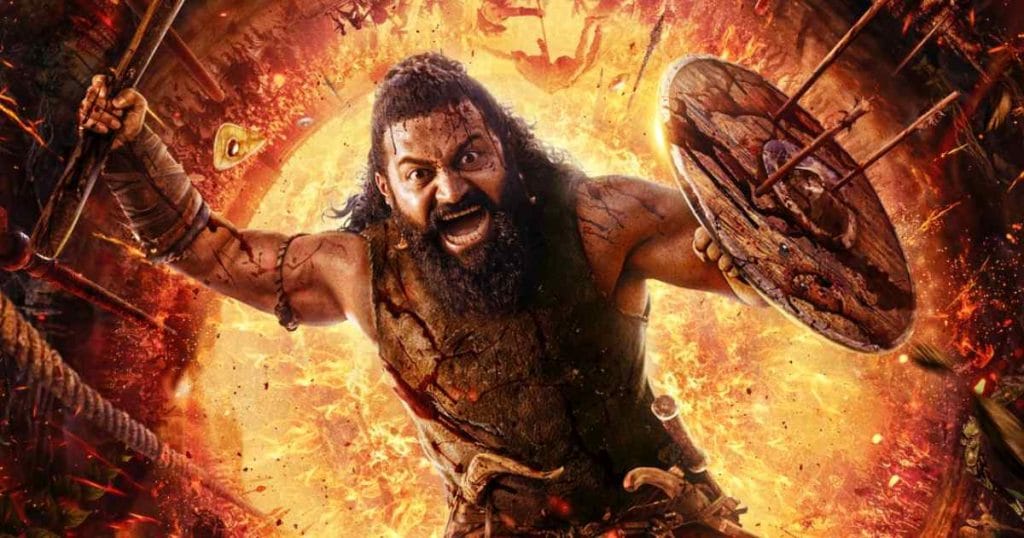
The movie’s second half reveals that the warrior played by Rishab Shetty is actually the first vessel of Panjurli Daiva. After losing his family and people in a brutal battle, he surrenders himself completely to the forest and the divine energy that protects it.
In a powerful and spine-chilling sequence, the warrior becomes one with the spirit. His transformation is both terrifying and divine — he becomes half-human, half-god. His eyes glow, his voice changes, and the whole forest seems to bow down. This scene is easily one of the most powerful in Indian cinema in recent years.
The final act is full of chaos and emotion. The warrior defeats the invaders, but pays the ultimate price. The Daiva blesses the tribe, promising to protect the land forever — but warns that one day, his descendant will again face the same test. This directly connects the movie to Kantara (2022), closing the circle perfectly.
The ending is spiritual, tragic, and beautiful all at once. You’ll leave the theatre with goosebumps.
🎥 Direction, Cinematography & Music
Rishab Shetty proves again that he’s not just a talented actor but also a visionary filmmaker. His attention to cultural details, rituals, and languages is mind-blowing. The camera work by Arvind S Kashyap deserves special mention — every frame looks like a painting. Whether it’s the mist rising from the forest or the fire dancing in the Bhoota Kola scene, it’s all captured with pure devotion.
The background score by Ajaneesh Loknath is on another level. The drums, chants, and tribal music literally shake your soul. When the Daiva appears, the sound feels divine and terrifying at the same time.
The editing is crisp, though some parts in the middle could’ve been shorter. Still, the slow pace gives you time to absorb the atmosphere.
💭 Themes & Symbolism
Kantara Chapter 1 is not just about gods and humans. It’s about the eternal struggle between greed and faith, man and nature, power and surrender.
The forest in the movie is not just a location — it’s a living being. It observes, breathes, and reacts. The message is clear: when man disrespects nature, the divine will rise to restore balance.
The movie also touches on the idea of legacy — how the actions of one generation echo into the next. You understand why the protagonist of the first film was destined to carry that same divine power.
Some scenes even hint at reincarnation and karma, showing that the cycle of devotion and destruction keeps repeating.
😶🌫️ What Works
- Brilliant world-building and storytelling
- Authentic depiction of rituals and traditions
- Goosebump-inducing climax
- Rishab Shetty’s outstanding performance and direction
- Breathtaking visuals and sound design
😕 What Doesn’t Work
- Slightly slow first half (especially before the major conflict begins)
- Some dialogues feel repetitive
- New viewers who haven’t seen Kantara (2022) might take time to connect
- A few editing cuts could’ve been smoother
But honestly, these are small issues compared to the emotional and spiritual impact the film creates.
🙌 Final Verdict
Kantara Chapter 1 is not a typical commercial film — it’s an experience that mixes history, spirituality, and cinema with rare honesty. It’s bold, emotional, and rooted deeply in Indian soil. Rishab Shetty has delivered something that will be remembered for a long time.
It’s not for everyone though. If you’re looking for a fast-paced action movie, you might find it too meditative. But if you want to feel cinema — to feel the drums, chants, and divine energy — this movie will stay with you long after it ends.
This is a story about faith, land, sacrifice, and destiny. It shows how divinity can be born from pain and courage. The visuals are haunting, the story is mythic, and the performance is godlike.
By the end, you’ll not only respect the character — you’ll start believing in the power of faith and the spirit of the forest.
⭐ Rating: 4.7 / 5
Kantara Chapter 1 is a visual poem written with fire, blood, and devotion. Don’t miss it on the big screen.