Carousel isn’t the kind of film that grabs you instantly. It circles its emotions, hesitates, sometimes overthinks itself — and yet, almost without warning, it gets under your skin. By the time it settles into its rhythm, you realise you’re watching a deeply felt relationship drama carried by two actors rarely given roles this layered, vulnerable, and quietly devastating.
Directed and written by Rachel Lambert, Carousel had its premiere at the Sundance Film Festival, and it feels very much like a Sundance film in temperament: intimate, emotionally observant, imperfect, and patient to a fault. It asks you to sit with discomfort before it rewards you with clarity.
The Core of the Story
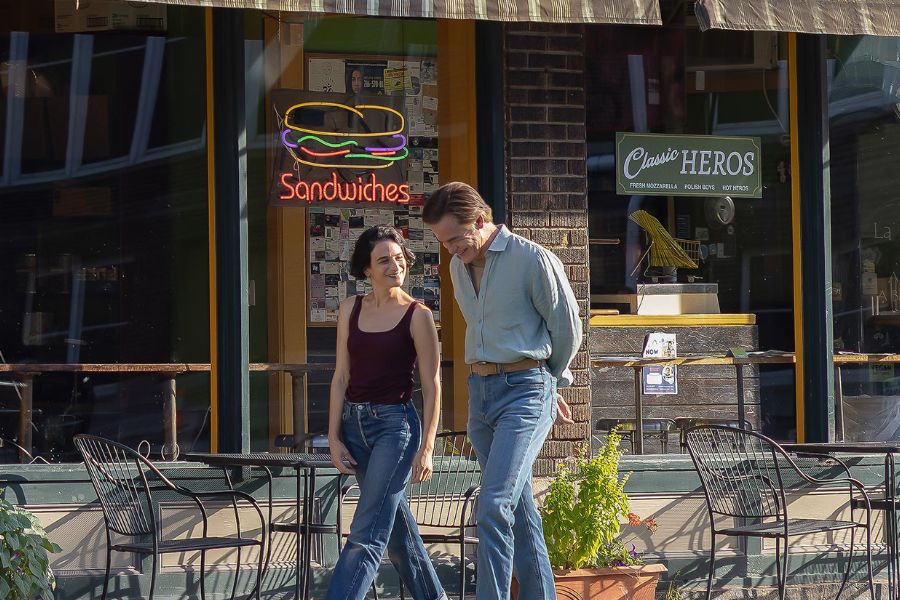
At its heart, Carousel follows Noah, a Cleveland-based doctor running a modest family clinic, and Rebecca, a high school teacher and debate coach whose life has taken her far from the ambitions she once held. Played by Chris Pine and Jenny Slate, the pair share a complicated past — former lovers whose relationship ended in resentment when Rebecca left town to chase a political career, while Noah stayed behind, married, and built a family.
Years later, their paths cross again through Noah’s teenage daughter Maya. What begins as an awkward reconnection slowly reopens old wounds, buried desires, and unresolved grief. The film isn’t interested in rekindling romance quickly. Instead, it examines the emotional baggage that accumulates with age — divorce, regret, parental responsibility, and the quiet fear of wanting too much, too late.
A Film That Takes Its Time — Sometimes Too Much
Carousel struggles early on with its own restraint. The opening stretch is weighed down by an overbearing musical score that insists on underlining every emotional beat. The metaphor of life as a carousel — rising and falling, spinning endlessly — is made clear far too loudly, robbing the audience of discovery. It’s the film’s most frustrating flaw, and one that nearly overwhelms its subtler strengths.
But once the film begins to strip itself down — when the music recedes and scenes are allowed to breathe — Carousel finds its voice.
The Turning Point: When the Film Truly Opens Up
Midway through, a long, quietly devastating exchange between Noah and Rebecca shifts everything. Shot mostly from an adjoining room, the scene unfolds with remarkable restraint, letting silences, glances, and half-finished thoughts do the heavy lifting. Anger, regret, longing, and emotional fatigue bleed into one another without a single melodramatic flourish.
It’s here that the film finally trusts its actors — and they reward that trust completely.
The scene doesn’t just deepen their relationship; it reorients the entire film. From this point on, Carousel stops circling its emotions and begins confronting them head-on.
Performances That Deserve Better Opportunities
Chris Pine delivers one of his most emotionally exposed performances in years. His Noah is a man conditioned to suppress pain — prioritising his daughter’s mental health, navigating a recent divorce, coping with professional uncertainty, and carrying unspoken grief tied to his father’s death. Pine plays him with exhaustion rather than angst, making the character’s eventual unraveling feel painfully earned.
Jenny Slate is equally compelling. Rebecca initially appears brittle, guarded, almost defensive — but Slate slowly peels back those layers to reveal a woman wrestling with the cost of her choices. There’s yearning in her performance, but also fear — of starting over, of reopening old scars, of admitting that ambition doesn’t always bring fulfilment.
Young Abby Ryder Fortson is outstanding as Maya, Noah’s daughter. Her portrayal of anxiety and depression is tender, raw, and deeply affecting. The father-daughter dynamic is one of the film’s quiet emotional anchors, grounding the romance in real, lived stakes.
The supporting cast — including Sam Waterston, Katey Sagal, and Dagmara Domińczyk — adds texture without ever overpowering the core relationships.
Direction, Visuals, and Mood
Shot on 35mm by Dustin Lane, Carousel has a soft, intimate visual language that complements its emotional tone. The Academy ratio framing enhances the sense of closeness and quiet observation, making everyday moments feel charged with meaning.
Rachel Lambert shows a keen eye for the details of daily life — awkward pauses, emotional misfires, conversations that trail off rather than resolve neatly. The film’s recurring theme of solitude is handled with empathy, even when the storytelling becomes overly careful.
What Worked / What Didn’t
What worked
- Deeply affecting performances from Chris Pine, Jenny Slate, and Abby Ryder Fortson
- A mature, perceptive look at love, regret, and emotional self-protection
- Intimate cinematography that enhances character-driven storytelling
- A final act that lands with grace and emotional clarity
What didn’t
- An intrusive musical score, especially in the opening act
- An overly oblique approach that delays emotional payoff
- A first half that asks too much patience from the viewer
Final Verdict
Carousel is a film that almost trips over its own sensitivity — but when it finally gets out of its own way, it becomes something quietly beautiful. It’s not sleek or crowd-pleasing, and it certainly isn’t effortless. But it is thoughtful, emotionally honest, and anchored by performances that linger long after the credits roll.
This is a film about hesitation — about the emotional walls we build to survive, and the risk involved in letting them fall. It takes its time getting there, but once it does, Carousel leaves you with a gentle, melancholic sense of hope.
🍿 A flawed but deeply felt relationship drama that rewards patience.