In a move that quietly signals where the entertainment industry is heading next, Taylor Swift has taken a serious legal step to lock down something far more personal than music — her own voice and identity. The timing isn’t random either. With AI tools getting sharper and more invasive, this feels less like paperwork and more like a warning shot to the tech world. And interestingly, she’s not the first to try this strategy — but she might be the one who makes it mainstream.
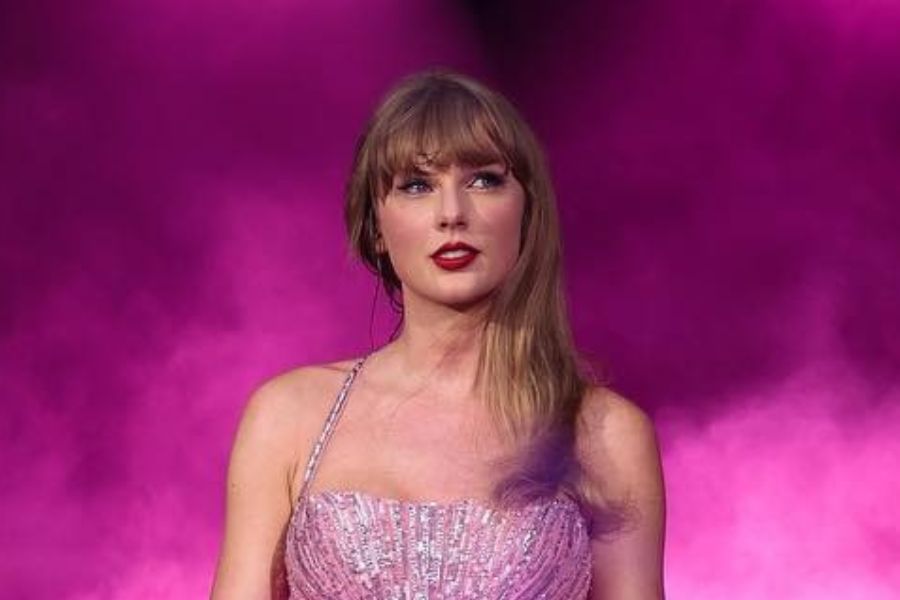
Over the past week, Swift’s company, TAS Rights Management, filed three trademark applications with the U.S. Patent & Trademark Office. Two of those filings focus entirely on her voice, specifically the phrases “Hey, it’s Taylor Swift” and “Hey, it’s Taylor.” It might sound simple on paper, but in today’s AI-driven content landscape, even a short voice clip can be cloned, manipulated, and spread across platforms without consent. The third filing goes even further, locking in a very specific visual — Swift holding a pink guitar, dressed in an iridescent bodysuit, standing on a pink-lit stage. That level of detail isn’t accidental; it’s clearly designed to make imitation legally risky.
What makes this more interesting is the bigger industry pattern forming behind the scenes. Matthew McConaughey has already experimented with this exact legal playbook. Back in 2025, he successfully secured multiple trademarks, including his iconic “Alright, alright, alright!” line from Dazed and Confused. At the time, it felt like a clever move. Now, with Swift stepping in, it looks more like the beginning of a trend — one where celebrities are trying to legally “own” their identity in ways that older laws never fully covered.
And honestly, there’s a reason this shift is happening now. Swift has already been one of the most visible victims of AI misuse. From deepfake images circulating online to unauthorized use of her likeness in AI-generated content, her digital identity has been repeatedly exploited. Even during the 2024 U.S. elections, manipulated images falsely suggested she supported Donald Trump, showing how quickly misinformation can spread when AI gets involved. These incidents aren’t isolated — they’re becoming part of a larger pattern that artists can no longer ignore.
Traditionally, laws around “right of publicity” were supposed to protect celebrities from this kind of misuse. But those laws mostly operate at the state level and don’t always offer fast or wide-reaching enforcement. Trademark law, on the other hand, works federally — which means stronger, broader legal action. That’s the real strategy here. By turning her voice and visual identity into registered trademarks, Swift’s legal team is essentially adding another layer of defense that could be used to challenge AI platforms directly.
What’s still unclear, though, is how this will play out in court. The “trademark yourself” approach hasn’t really been tested against AI-generated content yet. But if it works, it could change the rules for everyone — actors, musicians, influencers, even digital creators. Imagine a future where using someone’s voice or likeness without permission isn’t just unethical but instantly illegal under trademark law. That would completely reshape how AI tools operate.
For now, Swift’s move feels both protective and strategic. It’s not just about stopping misuse — it’s about setting a precedent. If this approach gains traction, we might see a wave of artists following the same path, turning their identity into something legally guarded like a brand. And in an era where AI can replicate almost anything, that might become less of an option and more of a necessity.