Rating: ★★★☆☆ (3/5)
There are filmmakers who tell love stories, and then there’s Imtiaz Ali, who turns love into memory, obsession, regret and destiny all at once. His characters rarely move on when life asks them to. Instead, they spend years carrying unfinished conversations and promises that refuse to fade. Main Vaapas Aaunga belongs firmly in that tradition.
Set against one of the darkest chapters in the subcontinent’s history, the film attempts to answer a difficult question: what happens to a love story that never gets the chance to end? The answer isn’t always easy to sit through. At times, the journey tests your patience. But when it finally reaches its emotional destination, Main Vaapas Aaunga reminds you why Imtiaz Ali continues to be one of the few filmmakers capable of making longing feel cinematic.
A Love Story Torn Apart by History
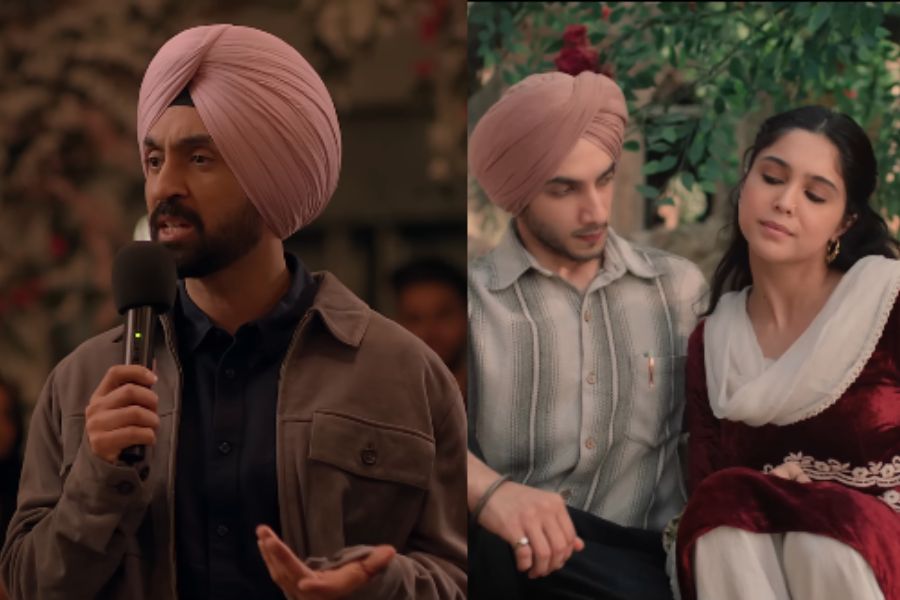
The film unfolds across two timelines separated by nearly eight decades. In pre-Partition India, Keenu, played by Vedang Raina, falls deeply in love with Jiya, portrayed by Sharvari. They are young, hopeful and aware of the realities surrounding them. Even as political tensions rise and uncertainty looms over their future, they continue to build a world of small promises and impossible dreams.
Their romance isn’t painted as some grand fairy tale untouched by reality. Instead, Imtiaz allows it to breathe through stolen moments, hesitant conversations and the quiet understanding that happiness may not last forever. That awareness gives their relationship an emotional fragility that works in the film’s favor.
Then history intervenes.
The Partition of India and Pakistan tears through their lives, separating families, identities and futures. What remains behind is an unfinished story that refuses to disappear with time.
In the present-day timeline, Naseeruddin Shah plays the older Keenu, now 95 years old and battling fading memories. Curiously, while he struggles to recognize the people around him, he remembers every detail about the girl he lost nearly 78 years ago.
It sounds improbable, perhaps even overly romantic. Yet this is precisely the emotional space where Imtiaz Ali operates best.
The Film Takes Too Long to Find Its Rhythm
The biggest hurdle Main Vaapas Aaunga faces is its pacing.
The first half moves at a noticeably measured pace, dedicating substantial time to establishing its timelines and emotional stakes. While character-building is necessary for stories of this scale, the film occasionally mistakes slowness for depth. Several scenes repeat emotional beats that audiences have already understood, creating stretches where the narrative feels stuck in place.
There are moments when you begin questioning where exactly the story is heading. The transitions between the younger and older versions of Keenu sometimes disrupt momentum rather than strengthen it. The screenplay seems hesitant to reveal its emotional hand too early, but the delayed payoff means viewers need patience.
This uneven rhythm is particularly noticeable because Imtiaz Ali’s strongest work often thrives on emotional urgency hidden beneath introspective storytelling. Here, the introspection occasionally overshadows narrative progression.
That said, the slower opening isn’t entirely without reward.
The time spent establishing Keenu and Jiya’s relationship allows audiences to understand the weight of what was lost once the story enters its more devastating territory.
The Cast Brings Warmth and Sincerity
Vedang Raina delivers one of his most assured performances to date. He captures youthful vulnerability without slipping into melodrama, making Keenu feel believable as someone experiencing love for the first time while confronting forces much larger than himself.
Sharvari complements him beautifully as Jiya. Her performance carries quiet resilience and tenderness, ensuring the character never exists merely as an object of nostalgia. Even within limited spaces, she leaves a lasting emotional impact.
Naseeruddin Shah once again proves why he remains among Indian cinema’s finest performers. His portrayal of an aging man clinging to fragments of an unfinished promise is understated yet deeply affecting. There is immense sadness in the way he navigates memory, confusion and longing without resorting to theatrical excess.
Diljit Dosanjh brings emotional accessibility to Nirvair, Keenu’s grandson. Initially positioned as an outsider trying to understand his grandfather’s fixation, Nirvair gradually becomes the audience’s emotional anchor. His growing determination to uncover the truth behind a decades-old heartbreak forms the film’s emotional backbone during its latter portions.
The chemistry between the ensemble allows the story’s more sentimental moments to land with authenticity.
When Imtiaz Ali Finally Breaks Your Heart
If the first half belongs to patience, the second half belongs to pain.
As Nirvair pieces together the fragments of Keenu and Jiya’s story, the emotional consequences of Partition begin revealing themselves with greater force. The losses become personal rather than historical statistics. Regret transforms into grief. Love becomes memory.
The film’s strongest passages emerge during this stretch.
Questions surrounding family histories, interrupted futures and promises left incomplete begin carrying tremendous emotional weight. Imtiaz Ali finally strips away the narrative hesitation that defined the earlier portions and leans fully into the aching humanity at the center of the story.
The search for closure evolves into something larger than romance. It becomes an attempt to restore dignity to emotions that history refused to acknowledge.
And then comes the ending.
Without revealing spoilers, the final act delivers the emotional release the film has been patiently building toward. It’s gentle rather than manipulative, heartbreaking without becoming exploitative. The closure feels earned precisely because of the years of longing attached to it.
You leave the theatre not remembering the stretches where the pacing faltered, but remembering the ache left behind by two people who simply wanted a future together.
Should You Watch Main Vaapas Aaunga?
Main Vaapas Aaunga isn’t among Imtiaz Ali’s most accessible films, nor is it his most consistently engaging. Its leisurely first half may frustrate viewers expecting immediate emotional payoff, and the screenplay occasionally struggles under the weight of its ambitions.
Yet beneath those flaws lies a sincere and deeply felt story about love surviving beyond memory, geography and time itself.
It’s a reminder that some relationships never really end. They simply wait for someone brave enough to finish the story.
For audiences willing to surrender to its rhythm, Main Vaapas Aaunga offers an affecting meditation on love and loss against the backdrop of Partition. It peaks later than it should, but when it finally arrives at its destination, it does so with grace, tenderness and a quiet emotional power that lingers long after the credits roll.