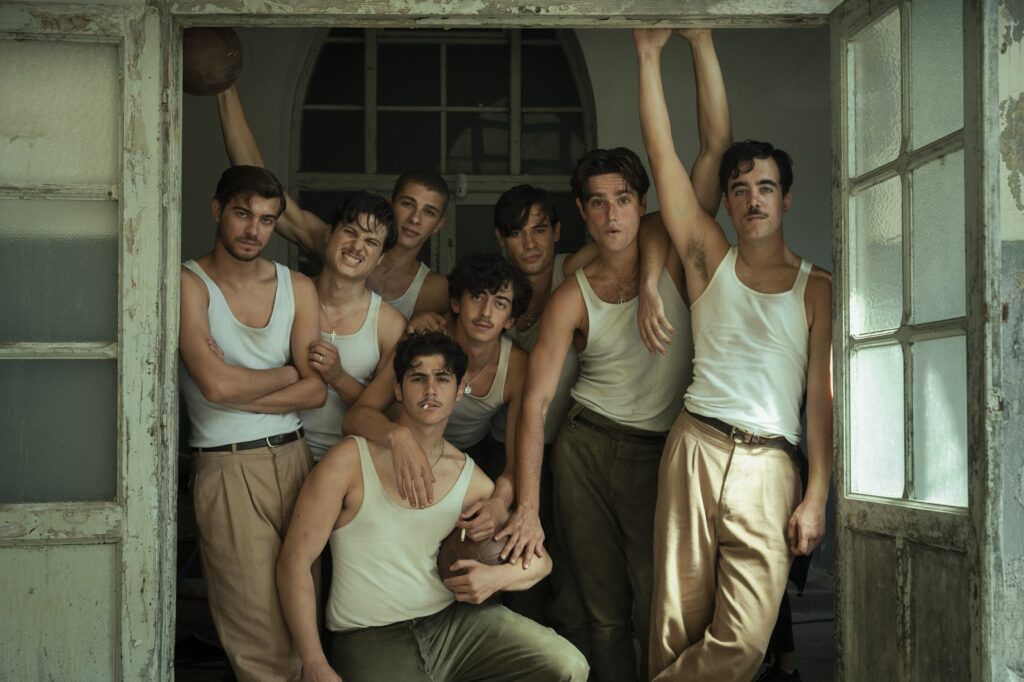
La Bola Negra turned into one of the biggest emotional moments at the Cannes Film Festival after premiering Thursday night to an enormous standing ovation that reportedly lasted nearly 20 minutes. The reaction instantly pushed the Spanish-language drama close to Cannes history, landing just behind the famous 22-minute ovation received by Pan’s Labyrinth almost two decades ago. Inside the Grand Théâtre Lumière, audiences reportedly erupted with applause as the credits rolled, creating one of the loudest receptions seen at this year’s festival so far.
Directed by filmmaking duo Javier Calvo and Javier Ambrossi, the movie tells an emotionally layered story following three different men living across separate time periods — 1932, 1937 and 2017. Their lives become connected through themes of sexuality, inheritance, repression and desire, all tied together by one of the unfinished final works of legendary Spanish poet Federico García Lorca. The emotional weight of the story clearly hit audiences hard during the premiere, especially given the film’s strong LGBTQ themes and political undertones.
Cannes Audience Responds Strongly to LGBTQ Themes and Political Message
One of the loudest reactions of the night reportedly came not during the film itself but during the directors’ speech afterward. Javier Ambrossi received another huge wave of applause after telling the audience, “To everyone who thinks that we’re gonna step back in our LGBTQ rights, I have bad news.” That moment apparently transformed the already emotional premiere into something even bigger, with many viewers connecting the film’s themes directly to ongoing political debates happening globally right now.
The movie stars Penélope Cruz alongside Spanish musician Guitarricadelafuente, Miguel Bernardeau and Glenn Close. Early reactions from Cannes critics are already heavily praising the performances, especially the emotional intensity carried through the interconnected timelines. The screenplay was written by Calvo and Ambrossi together with Alberto Conejero, while the movie was filmed over twelve weeks across multiple Spanish regions including Madrid, Andalusia, Cantabria and Castile-León.
Visually, the film also appears to have impressed audiences with its rich cinematography shot entirely on 35mm film by director of photography Gris Jordana. That old-school visual texture reportedly gives the drama a poetic and haunting atmosphere fitting for a story connected to Lorca’s unfinished work.
Spanish Cinema Continues Strong Cannes Presence
La Bola Negra also marks the first feature film from Calvo and Ambrossi since Holy Camp!. Since then, the duo became internationally recognized for the acclaimed series La Mesías, which screened at both San Sebastián and Sundance. Their return to feature filmmaking clearly arrived with massive expectations, and judging from the Cannes response, the film seems to have exceeded them almost instantly.
The project was produced through Movistar Plus+ and Suma Content Films alongside El Deseo, the production banner founded by acclaimed filmmaker Pedro Almodóvar. Spanish distributor Elastica will release the film domestically, while Goodfellas is handling international sales.
Cannes audiences are famous for giving long standing ovations, but a reaction approaching twenty minutes still remains extremely rare. That kind of reception usually signals a film that leaves a deep emotional mark on festival viewers, and “La Bola Negra” now suddenly feels like one of the biggest breakout international titles of the entire festival season.