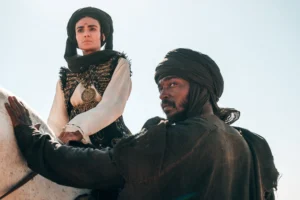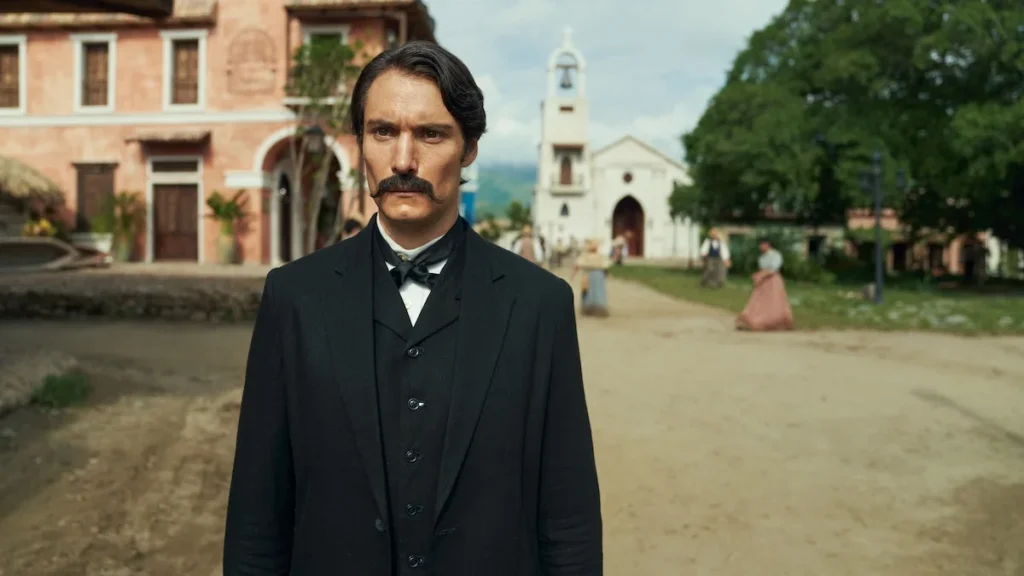
Netflix is finally getting ready to close one of its most ambitious international projects yet. After spending years bringing One Hundred Years of Solitude to the screen, the streamer has now confirmed that the second and final part of the series will arrive this August. But instead of ending things with a normal episode rollout, Netflix is doing something much bigger for the finale. The final chapter of the story is being treated almost like its own standalone film, which honestly fits the scale and emotion of the original novel.
The adaptation became one of Netflix’s most talked-about Latin American productions when the first eight episodes dropped back in late 2024. For decades, many people in the industry believed Gabriel García Márquez’s legendary novel simply could not be adapted properly because of how layered and expansive the story is. The book moves through generations, politics, war, heartbreak, and magical realism all at once, which made it feel impossible for screen treatment. Still, with support from García Márquez’s family, Netflix moved ahead and turned Macondo into a massive screen production filmed entirely in Colombia.
Part Two will begin streaming on August 5 with seven episodes releasing together. Those episodes will then lead into a separate grand finale episode premiering on August 26. According to Netflix executives and the creative team, the ending became so large during development that they realized a traditional final episode wouldn’t do justice to the novel’s emotional conclusion. Instead, the finale was expanded into a feature-length special designed to give the story a more cinematic goodbye.
The Final Chapter Is Being Treated Like Its Own Movie
Director Laura Mora, who handled several episodes across the adaptation, said the second part pushes the show into an even more emotional and cinematic space. She explained that each episode feels almost like its own film, with bigger storytelling ambition, stronger visuals, and deeper emotional weight than before. Mora also revealed the cast and crew spent nearly three years immersed in the world of Macondo, which made closing the story feel extremely personal for everyone involved. That emotional attachment seems to have shaped the scale of the ending.
The second half of the series will continue exploring the rise and collapse of the Buendía family while diving deeper into the transformation of Macondo itself. The story reportedly covers another fifty years of events, bringing new generations into focus while continuing the cycles of war, obsession, tragedy, and destiny that defined the first installment. Fans of the novel already know the later sections become even darker and more surreal, so it’ll be interesting seeing how Netflix handles those moments visually.
Netflix Latin America content executive Francisco Ramos said the creative team quickly understood the story needed more room than a standard episodic structure allowed. That is what eventually led to the feature-length conclusion directed by Mora. According to Ramos, the two parts together with the extended finale are meant to function as the complete audiovisual adaptation of García Márquez’s masterpiece rather than a traditional multi-season streaming series.
A Huge Moment for Colombian Storytelling on Global Streaming
Beyond the series itself, One Hundred Years of Solitude has become an important project for Colombia’s entertainment industry. The show was filmed entirely in the country with Bogotá-based Dynamo producing the adaptation. Netflix reportedly invested heavily into rebuilding locations, period design, and large-scale production work to capture the fictional town of Macondo in a believable way. That production scale created a major boost for local crews, artists, and technicians working in the region.
The adaptation also arrives during a period where Netflix is aggressively expanding international storytelling beyond Hollywood productions. Over the last few years, non-English-language shows have become some of the platform’s biggest global hits, and One Hundred Years of Solitude clearly sits inside that strategy. But unlike many fast-moving streaming projects, this series feels much slower, heavier, and more literary in tone. It doesn’t really chase trends. Instead, it leans fully into the emotional and political weight of García Márquez’s writing, which is probably why Netflix appears determined to give the ending a much grander sendoff than usual.