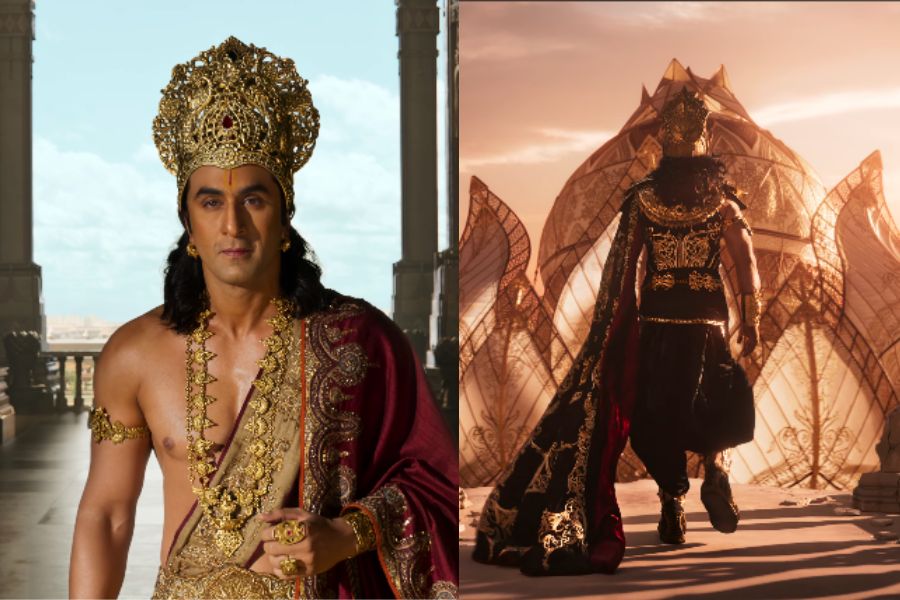
The scale of Ramayana has been the talking point for a while now, but its storytelling approach is starting to stand out just as much. In a recent reveal, Yash, who plays Ravana, confirmed that he doesn’t share any scenes with Ranbir Kapoor’s Ram in the first installment of the film.
At first, that sounds surprising. After all, the face-off between Ram and Ravana is the core of the epic. But the makers seem to be playing the long game here.
Speaking about the decision, Yash explained that the film is designed as a two-part saga, with each character getting space to establish their world before their paths collide. In the first part, both Ram and Ravana exist in separate narrative tracks — ruling their own kingdoms, building their arcs, and setting the emotional and political stakes.
That approach changes the rhythm completely. Instead of rushing into the central conflict, the film is focusing on groundwork — who these characters are, what drives them, and how their journeys evolve before they eventually meet. It’s a structure more common in large-scale franchises today, where character building comes before confrontation.
Even without sharing screen space, Yash had nothing but praise for Ranbir Kapoor. He mentioned that their interactions off-screen have been limited but respectful, with both actors clearly aware of the scale and ambition of what they’re part of. The tone, it seems, is collaborative rather than competitive.
And that ambition is visible in the casting as well. Directed by Nitesh Tiwari and backed by Namit Malhotra, Ramayana brings together a wide ensemble including Sai Pallavi, Sunny Deol, Ravie Dubey, Rakul Preet Singh, Vivek Oberoi, Lara Dutta, and Sheeba Chaddha. It’s a mix of mainstream stars and strong performers, hinting at a film that wants both reach and depth.
From a bigger perspective, this strategy could work in the film’s favour. Epic storytelling often struggles when it tries to compress too much into one film. By splitting the narrative and holding back the central clash, Ramayana is giving itself room to breathe — and possibly building anticipation for the second part.
The first installment is currently set for a 2026 release, with the follow-up expected in 2027. That gap suggests a planned arc rather than a rushed sequel.
For now, the idea is clear — don’t show everything at once. Build the worlds separately, let the audience invest in both sides, and then bring them together when the stakes feel earned.
If executed well, that slow-burn setup could make the eventual Ram vs Ravana showdown even more impactful than expected.