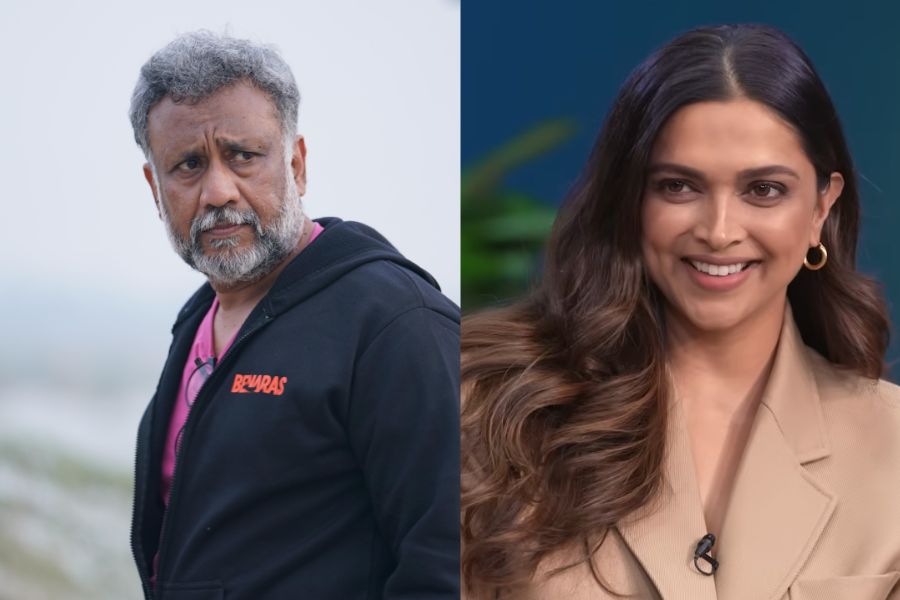
The conversation around fixed working hours in Bollywood refuses to die down. Nearly a year after the Deepika Padukone–eight-hour shift debate took over headlines, filmmaker Anubhav Sinha has now weighed in — and he’s not impressed with how the industry handled it.
Instead of turning professional disagreements into public spectacles, the director believes these matters are best sorted behind closed doors.
🎬 “If You’re Not Okay With It, Don’t Work Together”
Speaking in a recent interview, Anubhav kept it simple and practical. According to him, collaboration in cinema is built on mutual consent.
If an actor wants to work six or eight hours a day and a filmmaker disagrees, the solution isn’t outrage — it’s choice. Don’t collaborate. Move on. For him, it’s that straightforward.
His comment comes in the backdrop of the controversy surrounding Deepika Padukone, who reportedly requested shorter working hours after embracing motherhood — a move that triggered online debates about professionalism, privilege, and practicality in big-budget filmmaking.
But Anubhav isn’t buying the noise. He believes such disagreements don’t need prime-time discussions.
🎭 A Lesson From Mulk and Rishi Kapoor
To explain his stance, the director revisited his experience while working on Mulk with the late Rishi Kapoor.
Rishi Kapoor had made it clear early on that he preferred avoiding night shoots. Instead of escalating into tension, the team discussed it openly. They negotiated, agreed on limited night schedules, and moved forward smoothly. Even when the number of night shoots slightly increased, the matter stayed respectful and professional.
For Anubhav, that’s how filmmaking should function — through conversation, not controversy.
And he made it clear: when you truly want a particular actor in your film, you adjust. Cinema is teamwork, not ego management.
🎥 The Deepika–Spirit Fallout
The renewed debate stems from Deepika’s reported exit from Spirit, directed by Sandeep Reddy Vanga and headlined by Prabhas.
Industry chatter suggested creative differences and scheduling disagreements — including an eight-hour shift request — led to her departure. Eventually, Triptii Dimri stepped in, and the internet did what it does best: speculate.
What followed wasn’t just gossip about one film. It snowballed into a larger discussion about work-life balance in an industry known for unpredictable schedules, 12–14 hour shifts, and massive production pressure — especially in pan-India projects mounted on budgets running into hundreds of crores.
Anubhav’s view? If terms don’t align, both parties are free to walk away. Why turn it into a morality debate?
💡 Acting Is Physically Demanding — And It Shows
Interestingly, the filmmaker also touched upon the physical demands of acting. When faces appear on massive cinema screens, even slight fatigue becomes visible. Long, exhausting schedules don’t just affect comfort — they impact performance.
From that lens, discussions around working hours are practical concerns, not dramatic controversies.
📽 Where They Stand Today
Anubhav Sinha was recently in the spotlight for his courtroom drama Assi, mounted on a modest ₹30 crore budget. Though praised for its performances and socially relevant theme, the film reportedly collected around ₹7 crore in its opening week — underwhelming box office numbers despite critical appreciation.
Deepika, on the other hand, continues to headline major projects. After her sci-fi spectacle Kalki 2898 AD, she has King alongside Shah Rukh Khan in the pipeline and is also set to collaborate with Allu Arjun in an upcoming project directed by Atlee. Her slate clearly signals that the industry hasn’t slowed down for her.
⚖️ What This Debate Really Reflects
At its core, this isn’t just about one actress or one film.
It’s about an evolving industry. Bollywood is navigating changing work cultures, growing conversations around mental health, parenthood, and professional boundaries — while still trying to balance massive budgets and tight schedules.
Anubhav Sinha’s take doesn’t pick sides. It simply argues for maturity.
📝 Final Words
In an industry built on collaboration, disagreements are inevitable. But as Anubhav Sinha suggests, not every negotiation needs to become national news.
Sometimes, it’s just about two professionals sitting across a table, deciding whether they can work together — or respectfully choosing not to.
And maybe that’s the simplest solution Bollywood has been overlooking.