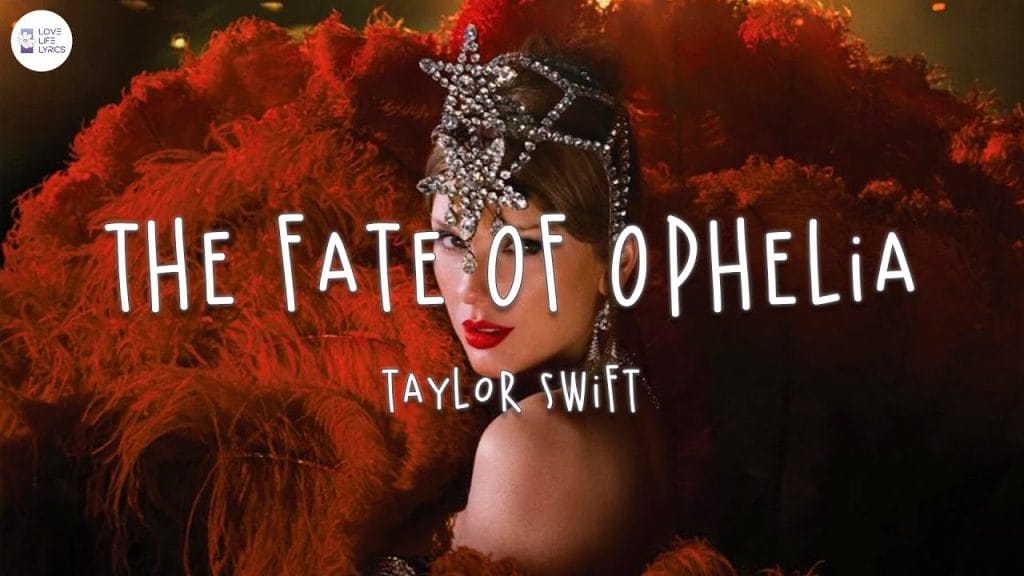
Taylor Swift has always been more than just a singer. She’s a storyteller, a poet, and in many ways, a modern-day Shakespeare when it comes to turning heartbreak, betrayal, and self-discovery into songs that cut right through the soul. When she released “The Fate of Ophelia”, fans knew it wasn’t just another song—it was something deeper, darker, and emotional, with layers of symbolism that felt like an echo from the past. The name Ophelia itself carries weight, reminding us of the tragic character from Hamlet, a girl destroyed by love, madness, and the cruelty of a world that never really listened to her cries.
Taylor’s song, however, doesn’t simply retell Ophelia’s story—it reclaims it. It’s like she takes Ophelia out of Shakespeare’s pages and gives her a new fate, one where she isn’t just a victim anymore. In true Taylor Swift style, the lyrics blend heartbreak with empowerment, sadness with rebirth, and nostalgia with new beginnings. And like most of her songs, it feels personal, as if Taylor herself had lived every line, every metaphor, every tear-filled verse.
The song starts soft, with that haunting piano melody that makes you feel like you’re standing beside a river at twilight. Taylor’s voice comes in, fragile yet strong, singing about a girl who “forgot how to swim while trying to save someone else.” It’s one of those lines that hits like a thunderbolt—because it’s not just about Ophelia drowning, it’s about every woman who’s ever lost herself while trying to keep someone else afloat. It’s about sacrifice, love, and how easily one can disappear in the shadow of another person’s story.
As the song continues, Taylor’s lyrics twist between dream and nightmare, beauty and tragedy. She writes, “They called her crazy when she started to cry, but no one asked her why.” That one line could describe not only Ophelia’s fate, but also the way society often treats women who show emotion—labeling them “dramatic,” “unstable,” or “too much.” It’s almost like Taylor is holding a mirror to her own past, remembering the times she was misjudged or misunderstood by the media and people who only saw the headlines, not the heart behind them.
The chorus feels like a storm breaking loose. Her voice rises, layered with violins and echoing drums, as she sings:
“But Ophelia didn’t drown this time,
She learned the river’s rhyme,
And when they came to find her ghost,
She was already dancing in the tide.”
It’s both tragic and victorious. The song transforms Ophelia from a symbol of weakness into a figure of strength. She doesn’t die in the water—she becomes one with it. She takes the thing that was meant to destroy her and turns it into her power. That’s pure Taylor Swift—turning pain into poetry, loss into legacy.
Some fans think the song is also autobiographical, like many of her works. The “river” could symbolize the music industry, or fame itself—a force that can either drown or carry you, depending on how you move with it. Taylor’s career has been full of moments where she was pushed under by public scrutiny or betrayal, but each time, she came back stronger. The “Ophelia” in the song might be her, but she’s also everyone who’s ever felt unseen, unvalued, or unloved.
The bridge is classic Swift—intense, emotional, and cinematic. She sings:
“He said he loved her, but he lied,
Left her flowers that never dried,
And in her hair, she wore goodbye,
Like a crown she never meant to find.”
You can almost see the scene—Ophelia, standing by the river, holding the weight of a love that was never real. But Taylor doesn’t leave her there. The final verse flips everything around: “Now she walks on water’s glass, reflections bow when she walks past.” It’s redemption. Ophelia has become something eternal, untouchable, divine.
Musically, “The Fate of Ophelia” feels like it belongs in the same emotional world as folklore and evermore. It’s stripped down, folk-inspired, but layered with modern electronic whispers that make it haunting and cinematic. The production feels alive—like you can hear raindrops, echoes, the distant hum of memories. It’s not just a song you listen to; it’s a song you feel.
Many listeners also noticed how Taylor used water imagery throughout the track. Water, in her songwriting, has always been symbolic—representing both destruction and rebirth. In Clean, she used it as a symbol for emotional healing; in The Lakes, it became a metaphor for isolation and artistic reflection. In The Fate of Ophelia, it’s both—a place of pain and a place of rebirth. The river that once drowned her becomes the same river that carries her to freedom.
Some fans even draw connections to Taylor’s past relationships and the way the media treated her. Just like Ophelia, Taylor was often painted as the “crazy” or “overdramatic” girl when she was simply telling her truth through songs. This track feels like her answer to that old narrative—a reclaiming of her voice and her story. She’s saying, “You thought I drowned, but I didn’t. I learned how to swim, how to rise, and how to turn your criticism into art.”
In interviews (or fan theories, depending on who you ask), some have suggested that “The Fate of Ophelia” might tie into Taylor’s larger storytelling universe—the same one that connects songs like Cardigan, August, and The Archer. Maybe Ophelia is another version of the same woman who keeps appearing in her songs—heartbroken yet unbroken, fragile yet fierce. Maybe she’s not just a historical or literary figure but a symbol of every woman’s journey through love, loss, and rediscovery.
What’s really powerful, though, is how Taylor gives Ophelia something Shakespeare never did: a choice. In Hamlet, Ophelia’s story ends in death and silence. In Taylor’s world, it ends in rebirth and voice. That’s the magic of her storytelling—she gives a new ending to old tragedies. She shows that even the softest voices can echo through time if they refuse to disappear quietly.
The final chorus repeats softly, like a fading heartbeat:
“Ophelia found her way to shore,
They don’t call her crazy anymore.”
It’s such a simple line, but it says everything. It’s about survival, about finding peace after chaos, about learning that sometimes, the most beautiful revenge is simply staying alive and shining.
In the end, “The Fate of Ophelia” is not just a song—it’s a statement. It’s Taylor Swift telling the world that women’s stories don’t have to end in tragedy. It’s her rewriting history, both hers and Ophelia’s, to show that heartbreak doesn’t define you—it refines you.
Fans around the world have already called it one of her most poetic works, a piece that blends literature, emotion, and modern introspection in a way only Taylor can. It feels like a song that belongs to no particular era but speaks to every generation that’s ever felt broken and wanted to rise again.
“The Fate of Ophelia” isn’t about dying—it’s about transforming. It’s about realizing that the same waters that tried to drown you can also carry you home. It’s haunting, beautiful, and painfully human—just like Taylor Swift herself.