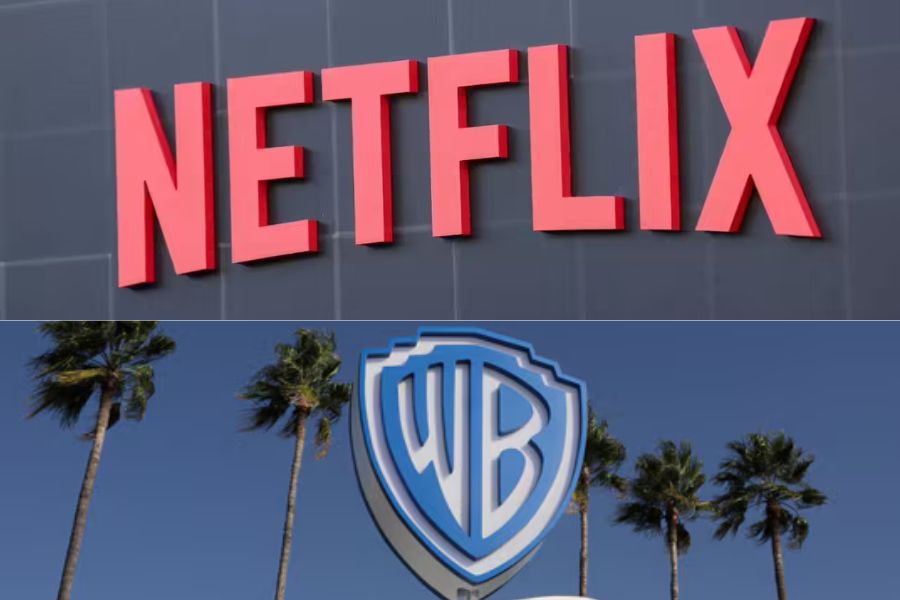
Netflix has officially shaken the entertainment world to its core. In a move that instantly became the biggest industry headline of the year, the streaming giant has locked in an $82.7 billion agreement to acquire Warner Bros. Discovery, including its legendary film and TV studios, HBO, and HBO Max.
The announcement has triggered a wave of conversation — and concern — across Hollywood. With Warner Bros historically being one of the strongest theatrical players, many are now wondering: What happens to the big-screen future of DC, Harry Potter, and other iconic franchises if Netflix is in charge?
🎬 A Landmark Deal That Rewrites Industry Power
Warner Bros. is home to some of the most influential film and TV properties ever created. Netflix’s acquisition brings massive storytelling worlds under one roof:
- Harry Potter
- Game of Thrones
- Friends
- Casablanca
- The Big Bang Theory
- DC Universe
- Plus Netflix originals like Stranger Things, Wednesday, Bridgerton, and Squid Game
It’s one of the most sweeping consolidations Hollywood has witnessed in decades, rivaling Disney buying Fox — but at an even higher dollar figure.
While the dotted line isn’t yet finalized, both companies announced the structure of the deal publicly, sending shockwaves through studio lots, talent agencies, and global box office analysts.
📩 Netflix Tries to Calm Its 82 Million Subscribers
Just hours after the news broke, Netflix issued a carefully crafted email to subscribers, attempting to reassure fans who immediately feared a streaming platform merger and the collapse of HBO Max.
The message begins by framing the acquisition as a union of two storytelling giants, then shifts into damage control:
“Nothing is changing today. Both streaming services will continue to operate separately,” the email states.
Netflix emphasised that the deal still requires regulatory and shareholder approvals — a process that could take months. Until then, both platforms will run independently, and subscribers will keep their current plans.
The note concludes by reminding viewers to “enjoy watching as much as you want” while the companies work through the formalities.
🎭 Why Fans Are Worried About Theatres
Netflix’s rise over the past decade dramatically accelerated the shift toward direct-to-streaming releases, convincing studios worldwide to bypass cinemas entirely. Filmmakers who once protected the theatrical window began experimenting with immediate digital debuts.
Now, with Netflix taking control of Warner Bros — the studio behind Barbie, The Dark Knight, Dune, The Matrix, IT, Mad Max, and countless Oscar-winning classics — moviegoers and insiders fear what this consolidation means for the future of the big-screen experience.
Will Netflix stick to WB’s long-standing theatrical-first model?
Or will it reshape one of Hollywood’s oldest studios to suit its streaming-forward identity?
That unanswered question is fueling the most heated conversations online.
🧠 Industry Shockwaves & What Comes Next
While the studios insist nothing changes “today,” the implications are enormous. HBO Max’s future branding, theater-first franchises, and Warner Bros’ global distribution model all hang in the balance.
Hollywood insiders note that:
- Regulators will examine the deal closely due to its size
- Filmmakers with theatrical contracts may seek clarification
- Competitors like Disney and Amazon are recalibrating their strategies
Meanwhile, fans are already envisioning crossovers, catalog expansions, and what it means when Hogwarts meets Hawkins on the same platform.
📝 Final Words
Netflix’s takeover of Warner Bros Discovery marks a transformative moment for global entertainment — one that blends excitement, uncertainty, nostalgia, and disruption in equal measure. The streamer says nothing will shift immediately, but the long-term future of theatrical releases, HBO Max, and the Warner Bros legacy is now in Netflix’s hands.
For an industry built on storytelling, this may be the biggest plot twist in years.