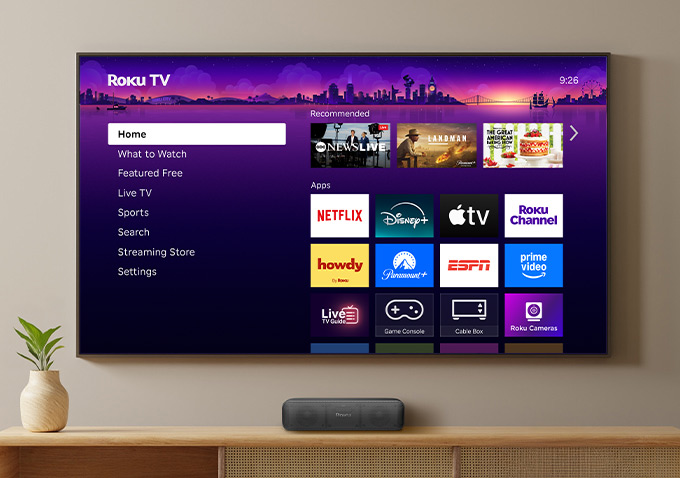
Fox Corp. is making its boldest move since the Disney asset sale, and it’s one that could fundamentally change its place in the streaming era. The media giant has announced plans to acquire Roku in a deal valued at approximately $22 billion, bringing together one of America’s largest libraries of live television content with one of the world’s biggest connected TV platforms.
For years, Fox has largely stayed away from the kind of all-in streaming strategies embraced by rivals like Disney, Warner Bros. Discovery and NBCUniversal. Instead, it leaned heavily on live sports, cable news and its ad-supported streaming service Tubi. Now, with this acquisition, the company appears ready to redefine itself for the next generation of television viewing.
If approved, the transaction would instantly give Fox direct access to more than 100 million global streaming households and transform it into one of the most influential players in the connected TV ecosystem.
Fox and Roku Join Forces in a $22 Billion Deal
Fox announced on Monday that it has agreed to acquire Roku for $160 per share through a combination of cash and Fox Class A common stock. The agreement gives Roku an enterprise valuation of roughly $22 billion, with both companies expecting the transaction to close during the first half of calendar year 2027.
The acquisition brings together Fox’s portfolio of assets, including the Fox broadcast network, Fox Sports, Fox News Channel and Tubi, with Roku’s streaming operating system, Roku Channel, advertising business, first-party consumer data and direct relationships with millions of viewers worldwide.
According to the companies, the combined entity would become the third-largest player in U.S. television by share of viewing on a pro-forma basis. That statistic alone highlights the scale of the proposed merger and why it could send shockwaves across the media industry.
Importantly, both companies stressed that Roku would continue operating as an open platform.
They said they remain “committed to continuing to operate Roku as an open, partner-friendly platform” and to maintaining the “ubiquitous” distribution of Fox content.
That reassurance is likely aimed at Roku’s existing partners, many of whom compete directly with Fox in the streaming landscape.
Why This Acquisition Matters for Fox
The proposed takeover represents the culmination of a strategy Fox has been carefully building since the sale of major 21st Century Fox assets to Disney in 2019.
Following that landmark deal, Fox emerged as a slimmer company centered around businesses that still attracted massive real-time audiences: news, sports and broadcast television. Unlike some of its competitors, it resisted launching an expensive subscription streaming service designed to compete head-on with Netflix.
Instead, it bought Tubi in 2020 for $440 million. At the time, the acquisition raised eyebrows, but the free ad-supported service has steadily expanded and now boasts more than 100 million monthly users.
Lachlan Murdoch, Executive Chair and CEO of Fox Corp., described the Roku acquisition as a natural next step.
“This is a defining moment for Fox, and a natural extension of the deliberate and focused strategy we have been executing for nearly a decade.”
He added that the combination would unite “the most valuable live content portfolio in video consumption with the preeminent streaming platform through which America watches it.”
“This combination will transform the scope of our company into high-growth verticals and yield a step change in our overall growth profile.”
Murdoch also acknowledged Roku’s achievements in helping shape the modern streaming landscape.
“Roku pioneered streaming TV and scaled it into a leading [connected TV] platform. Together, we intend to lead its next chapter.”
For Fox, the appeal goes beyond distribution. Roku offers valuable advertising technology, user engagement data and a direct line into households increasingly moving away from traditional cable subscriptions.
Roku’s Long Journey Leads to a New Chapter
Founded in 2002, Roku was among the earliest companies to recognise that television would eventually shift online. What started as a streaming device business evolved into a full-scale platform powering smart TVs, ad-supported channels and a significant digital advertising operation.
Despite intense competition from Amazon, Google, Samsung and Apple, Roku managed to retain its independence while steadily growing its audience.
Financially, the company finally reached an important milestone recently. After years of prioritising growth over profitability, Roku reported its first full-year profit in 2025. It generated net income of $88.4 million on revenue of $4.74 billion, representing a 15% increase year-over-year.
As of the end of March, Roku held $1.65 billion in cash and cash equivalents and carried no debt, making it an attractive target for a company seeking both scale and financial stability.
Anthony Wood, Roku’s founder, chairman and CEO, welcomed the transaction enthusiastically.
“Over the past two decades, we’ve built Roku into the leading TV streaming platform, reaching more than 100 million households globally and reshaping how people discover and enjoy entertainment. I’m incredibly proud of what our team has built, and the combination with Fox is an extraordinary opportunity to accelerate our vision, scale faster and innovate more aggressively for viewers, partners and advertisers.”
Wood will continue to play a role in the business after the deal closes and is expected to join Fox’s board of directors.
He also revealed that Roku’s board unanimously backed the transaction.
“After concluding its strategic review process that this transaction offers a significant premium to Roku shareholders while also providing them with the opportunity to participate in the compelling future upside of the combined company. I couldn’t be more excited about what we’ll accomplish together.”
What Happens Next?
Under the terms of the agreement, Fox will pay $96 per share in cash, amounting to approximately $14.2 billion, while also issuing 0.9693 shares of Fox Class A common stock for each outstanding Roku share.
Following completion of the deal, existing Fox shareholders are expected to own around 73% of the combined company, while legacy Roku shareholders would hold the remaining 27%.
To finance the transaction, Fox plans to use a combination of existing cash reserves and newly raised debt. The company has already secured $12 billion in fully committed bridge financing from Morgan Stanley.
Fox believes the merger will generate approximately $400 million in annual run-rate cost synergies, alongside what it described as “additional revenue upside.” The company also expects the acquisition to become accretive to free cash flow per share by the second full year after closing, which would be around 2029.
The deal still faces regulatory review and shareholder approvals before becoming official. But if it clears those hurdles, it could mark one of the most significant shifts in the modern media landscape.
For years, the streaming wars have largely been defined by who owns the content. Fox’s move suggests the next battle may be about who controls the platform through which audiences actually watch it. By combining Roku’s reach with Fox’s powerful live programming machine, the company isn’t just adapting to the future of television—it is trying to help shape what that future looks like.