India’s biggest cinematic gamble is aiming straight at the global stage. Producer Namit Malhotra has made it clear — Ramayana isn’t just another big-budget film, it’s being designed to stand shoulder-to-shoulder with the world’s biggest franchises.
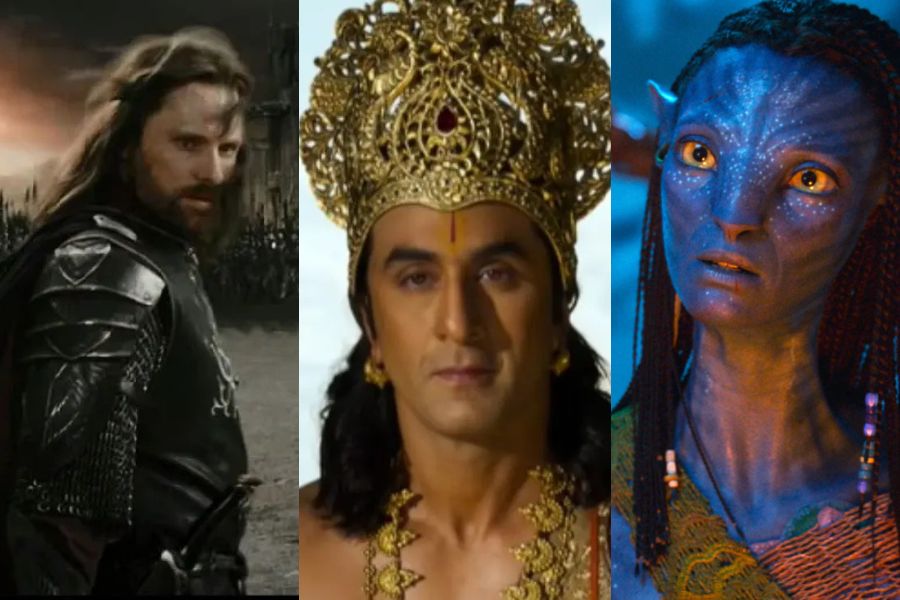
In a recent interaction, Malhotra compared the scale and ambition of Ramayana to global giants like The Lord of the Rings and Avatar. But his argument goes deeper than just scale.
According to him, while those films set benchmarks in spectacle and storytelling, Ramayana actually draws from a much older epic tradition. In his words, the Indian mythological story predates many modern cinematic universes, and that legacy is what the team is trying to translate onto screen — with both visual grandeur and emotional depth.
That’s where the film’s vision stands out.
Malhotra explained that the goal isn’t just to create large-scale visuals, but to balance them with a strong emotional journey. If The Lord of the Rings defines epic storytelling and Avatar represents immersive emotional worlds, Ramayana is trying to merge both — spectacle with soul.
The comparison with Avatar also comes from a cultural angle. The very word “Avatar” originates from the Indian concept of “Avtar,” which ties directly into the story of Lord Ram — an incarnation of Vishnu. That connection gives Ramayana a thematic edge that global audiences may find both fresh and rooted in ancient storytelling.
And the scale backs that ambition.
The two-part film is reportedly mounted on a staggering ₹4000 crore budget — easily making it one of the most expensive projects ever attempted in Indian cinema. Directed by Nitesh Tiwari, the project is being positioned not just as a film, but as a cinematic event.
The casting reflects that intent. Ranbir Kapoor steps into the role of Lord Ram, while Yash takes on Ravana. Sai Pallavi plays Sita, with Ravi Dubey as Lakshman and Sunny Deol as Hanuman.
Another major highlight is the music. The film brings together A. R. Rahman and Hans Zimmer — a rare collaboration that signals how seriously the makers are treating the film’s global appeal.
Release strategy is equally ambitious. Part 1 is set for Diwali 2026, with Part 2 following in 2027, indicating a long-term vision similar to major Hollywood franchises.
What makes this project particularly interesting is the timing.
Indian cinema is currently pushing hard toward global recognition, with films increasingly blending scale, technology, and storytelling to compete internationally. Ramayana seems to be the boldest attempt yet — not just to match global standards, but to present an Indian story as the foundation of epic storytelling itself.
That’s a risky move, but also a powerful one.
If executed well, Ramayana could do more than just break box office records — it could redefine how Indian mythology is presented to the world. And if it doesn’t, it still remains one of the most daring cinematic bets the industry has ever taken.