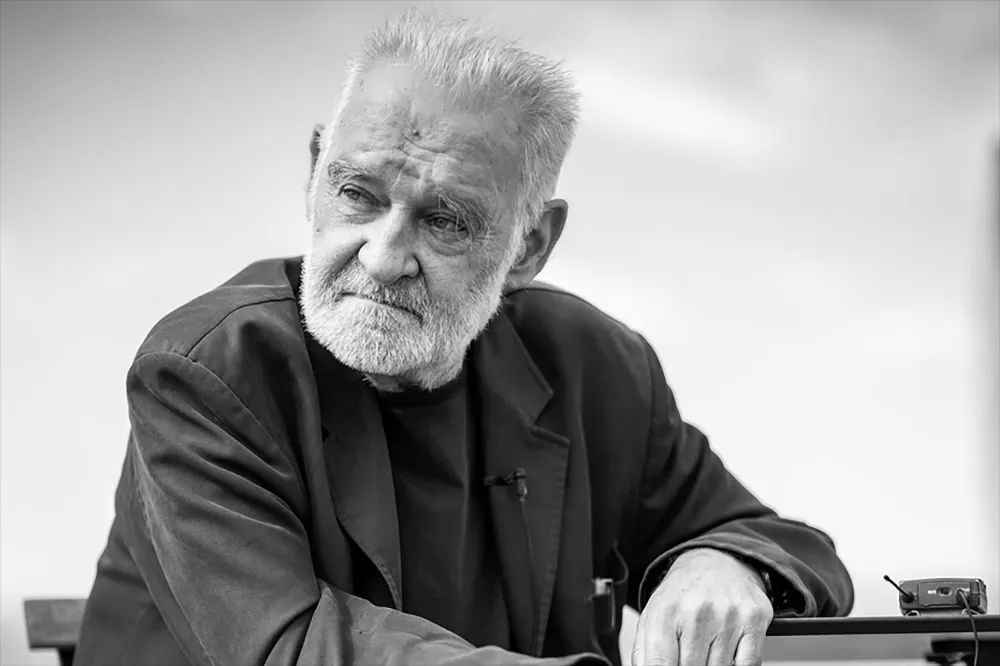
Legendary Hungarian filmmaker Béla Tarr, widely regarded as one of the most influential voices in world cinema, has passed away at the age of 70. The news was confirmed on Tuesday by the European Film Academy, which said Tarr died after a long and serious illness.
In a statement, the academy remembered him as “an outstanding director and a personality with a strong political voice,” noting that he was deeply respected by fellow filmmakers and celebrated by audiences across the globe. The family has requested privacy during this time.
A Filmmaker Who Redefined Cinema’s Rhythm
Béla Tarr was a defining figure of the slow cinema movement, a style known for its stark black-and-white imagery, extremely long takes, minimal dialogue, and meditative pacing. His films rejected conventional storytelling, instead focusing on the quiet despair, repetition, and moral exhaustion of everyday life — particularly in post-communist Eastern Europe.
His most famous work, Sátántangó (1994), became a landmark in film history. Clocking in at over seven hours, the film chronicled the collapse of a rural Hungarian village after communism’s fall. Despite — or perhaps because of — its length and rigor, it earned near-mythical status among cinephiles and is frequently cited among the greatest films ever made.
From Social Realism to Apocalyptic Vision
Born on July 21, 1955, in Pécs, Hungary, Tarr began making films as a teenager. His early works, including Family Nest (1979), The Outsider, and The Prefab People, leaned toward raw social realism, focusing on fractured families and systemic hardship.
A major artistic shift came with Damnation (1988), Hungary’s first independent film, which premiered at the Berlin Film Festival. With its slow-moving camera, bleak atmosphere, and hypnotic rhythm, it marked the arrival of Tarr’s fully formed cinematic language.
That vision continued with Werckmeister Harmonies (2000), co-directed and edited by his longtime collaborator and wife Ágnes Hranitzky. Built from just 39 meticulously composed shots, the film explored political unrest and collective paranoia, further cementing Tarr’s global reputation.
Final Film and Farewell to Filmmaking
Tarr’s last feature, The Turin Horse (2011), premiered at the Berlin Film Festival, where it won the Grand Jury Prize. The film — inspired by the story of Friedrich Nietzsche’s mental collapse — was a stark meditation on entropy, repetition, and the end of meaning.
Following its release, Tarr announced that he would no longer make films, believing he had said everything he wanted to say as a director.
Teacher, Mentor, and Lasting Influence
After stepping away from filmmaking, Tarr devoted himself to teaching. In 2012, he founded Film.Factory in Sarajevo, where he mentored a new generation of filmmakers until 2016. His guest lecturers included Tilda Swinton, Gus Van Sant, Juliette Binoche, Apichatpong Weerasethakul, and Pedro Costa — a testament to his influence across continents and generations.
A Legacy That Endures
Béla Tarr didn’t make films for easy consumption. He made films that demanded patience, reflection, and emotional endurance — and in doing so, he reshaped what cinema could be.
He is survived by Ágnes Hranitzky, his creative partner in many of his most celebrated works.
Though his camera has gone silent, Béla Tarr’s vision will continue to echo through world cinema for decades to come.