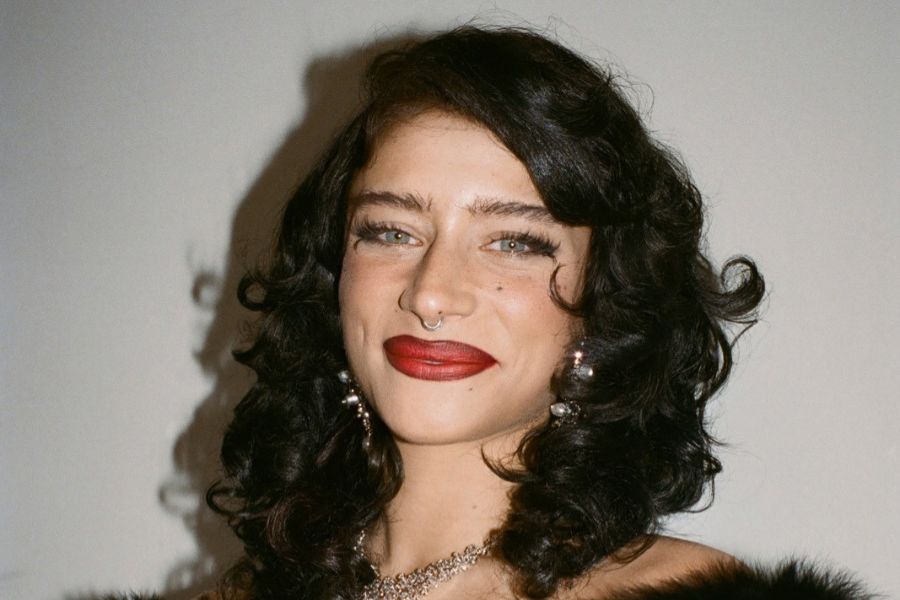
Hollywood’s long-running conversation around representation has found a fresh flashpoint. Odessa A’zion, who recently gained attention for her breakout turn in Marty Supreme, has officially stepped away from Deep Cut, an upcoming A24 project directed by Sean Durkin.
The exit came swiftly — just 48 hours after her casting was announced — following online backlash accusing the film of potential whitewashing. While the move has drawn widespread attention, it has also reopened a broader industry debate that refuses to go away.
Why the casting sparked backlash
The controversy erupted when A’zion was announced as Zoe Gutierrez, a character in Holly Brickley’s 2023 novel described as half Mexican and half Jewish. Readers and social media users were quick to criticise the casting choice, arguing that assigning the role to a white actress risked erasing the character’s cultural identity — a familiar complaint in Hollywood adaptations.
The backlash intensified after unverified screenshots circulated online, allegedly showing Brickley suggesting that the character might be rewritten for the screen. While never officially confirmed, the screenshots fuelled criticism that source material was being diluted to fit casting convenience rather than cultural authenticity.
A’zion’s decision to step away
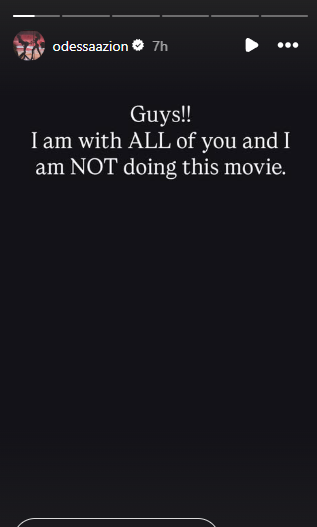
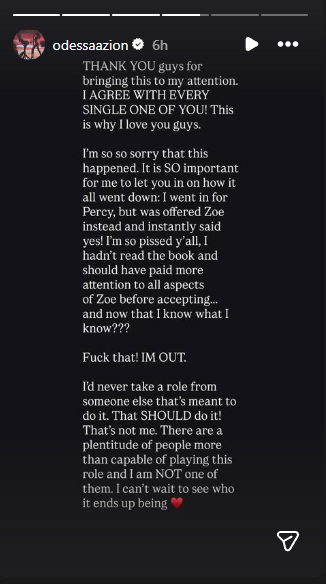
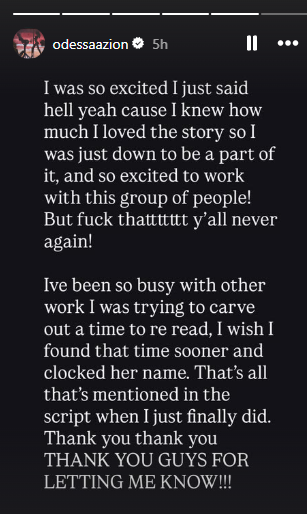
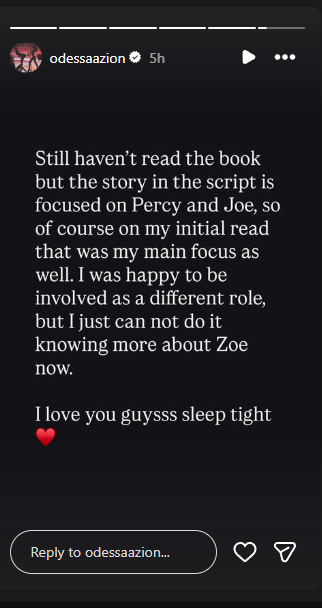
Amid the growing backlash, A’zion addressed the situation directly via Instagram Stories. In an unfiltered statement, she clarified that she was unaware of the character’s cultural background when she accepted the role. According to the actress, she initially auditioned for a different character and later agreed to play Zoe without having read the book.
Once she understood the context, A’zion said she reconsidered immediately — and walked away.
She made it clear that she did not want to take a role meant for someone with lived cultural ties to the character, stating that there were many capable actors who should be given that opportunity instead. Her exit was widely viewed as decisive and rare in an industry where backlash often fades without concrete action.

Not the first — but still uncommon
A’zion now joins a very small group of actors who have publicly exited projects over representation concerns. In 2017, Ed Skrein stepped away from Hellboy after being cast as a character of Asian heritage. A year later, Scarlett Johansson withdrew from Rub & Tug following criticism over casting a cisgender actor in a transgender role.
However, such decisions remain the exception. Hollywood history is still littered with examples — from Ghost in the Shell to Gods of Egypt — where studios moved ahead despite sustained criticism.
What Deep Cut is about
Deep Cut is set in the early 2000s and follows two music-obsessed young adults navigating ambition, identity, and adulthood. The film stars Cailee Spaeny as Percy, a music critic, alongside Drew Starkey as a songwriter and romantic interest.
The film is backed by A24, with original music composed by Blake Mills. Producers include Eli Bush, Ronald Bronstein, and Josh Safdie, placing the project firmly within A24’s prestige-drama lane.
With A’zion’s exit, casting for Zoe Gutierrez has reopened — and the spotlight is now firmly on whether the production chooses a Latina and/or Jewish actress for the role.
The larger conversation
The Deep Cut controversy underscores a persistent tension in film adaptations: marketability versus authenticity. Critics argue that altering character identities or sidelining culturally specific casting reinforces systemic underrepresentation, even when unintentional.
A’zion’s swift decision has earned praise from many online, seen as an acknowledgment that awareness and accountability matter — even when they come at a professional cost.
Final words
Odessa A’zion’s exit may not solve Hollywood’s whitewashing problem, but it has undeniably forced the conversation back into the spotlight. As Deep Cut moves forward, all eyes will be on how the filmmakers respond — not just in statements, but in casting choices that follow.