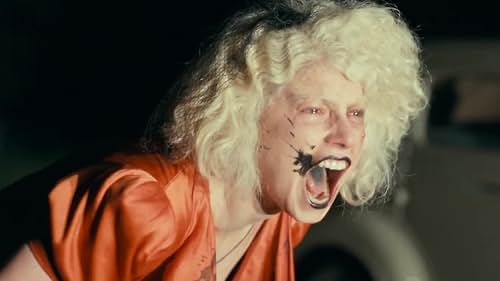
Filmmaker and actor Maggie Gyllenhaal has revealed that her new film The Bride! originally contained stronger scenes of sexual violence before studio feedback led to changes.
The director explained that the movie — her bold reinterpretation of the classic The Bride of Frankenstein story — went through multiple test screenings, and some of the darker moments were scaled back after concerns were raised by audiences and studio executives.
Test Screenings Sparked Concerns
Speaking in a recent interview, Gyllenhaal said the original version of the film included more explicit depictions of violence, particularly scenes involving sexual assault.
Because the project was backed by a major studio, Warner Bros., the film underwent several rounds of test screenings — including large public preview events where audiences watched the movie and shared feedback.
During those screenings, some viewers questioned whether the violence went too far.
As a result, Warner Bros. asked the filmmaker to remove or soften some of the scenes before the final theatrical version was completed.
According to Gyllenhaal, what audiences now see in theaters is slightly toned down compared to her original cut.
A Difficult but Deliberate Creative Choice
Despite the changes, Gyllenhaal defended the themes explored in the story. She explained that the film’s darker moments were meant to reflect real-world issues and were never included simply for shock value.
The director acknowledged that sexual violence is deeply uncomfortable to watch on screen, but she believes it’s also a reality that films sometimes need to confront honestly.
While discussing the studio’s reaction, Gyllenhaal also wondered whether the response might have been different if the film had been directed by a man.
The question, she said, came up during conversations with friends while she was working through the editing process.
Consent at the Heart of the Story
For Gyllenhaal, the topic of consent sits at the core of The Bride!.
At the film’s London premiere, she explained that it would be impossible to tell the story of Frankenstein’s bride without addressing the character’s lack of agency.
In the original myth, the bride is literally created for someone else — brought to life with the expectation that she will exist solely as a companion.
The director wanted to challenge that premise by asking a simple question: What does the bride want?
That idea became one of the film’s central themes.
A Gothic Love Story With a Punk Edge
Set in the 1930s, The Bride! follows a lonely man named Frank, played by Christian Bale, who travels to Chicago seeking help from a brilliant scientist.
The scientist, Dr. Euphronious — portrayed by Annette Bening — agrees to attempt something extraordinary: creating a living companion for him.
Using the body of a murdered young woman, the experiment brings a new being to life — the Bride, played by Jessie Buckley.
But the result is far from the obedient partner Frank imagined. What follows is a chaotic chain of events filled with crime, rebellion, and an unexpected cultural movement forming around the mysterious new figure.
What Makes ‘The Bride!’ Different
Rather than simply retelling the classic monster story, Gyllenhaal’s version takes a more radical approach. The film blends gothic horror, romance, and social commentary, while also injecting a rebellious, punk-inspired tone into the narrative.
The result is a Frankenstein tale that explores identity, autonomy, and the consequences of trying to control another person’s destiny.
Early reactions from critics have highlighted the film’s ambition, particularly the performances of Jessie Buckley and Christian Bale.
Final Words
With The Bride!, Maggie Gyllenhaal is attempting something bold: reimagining one of horror’s most famous characters through a modern lens focused on consent and personal agency.
Even though some of the film’s most intense moments were toned down after test screenings, the story still aims to confront difficult subjects head-on.
For Gyllenhaal, the goal was never to make viewers comfortable — it was to ask deeper questions about power, creation, and the voice of a character who, for decades, never had one.