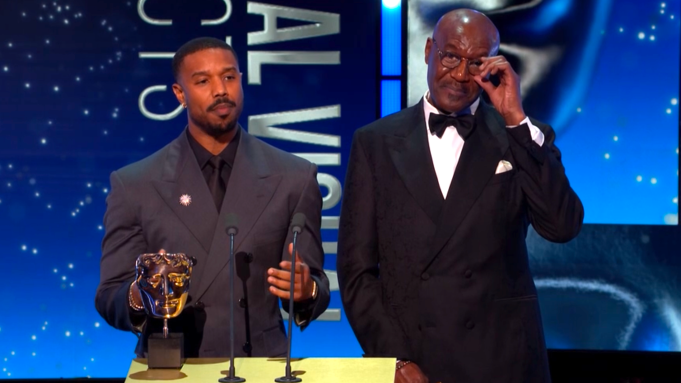
The fallout from this year’s BAFTA Film Awards is far from over. After a racial slur was heard during the ceremony while Michael B. Jordan and Delroy Lindo were on stage, new details suggest that Warner Bros. acted swiftly behind the scenes — and isn’t satisfied with how the situation was handled.
According to sources cited by Deadline, studio executives raised concerns within minutes of the incident, requesting that the outburst be removed from the delayed BBC broadcast.
What Happened Behind the Scenes
The disruption occurred during the 79th BAFTA ceremony when Tourette’s campaigner John Davidson shouted a racial slur while Jordan and Lindo were presenting an award. The show aired on a two-hour delay on BBC, which meant there was time to edit the footage before transmission.
Sources claim Warner Bros. immediately contacted BAFTA, asking that the moment be removed. The studio was reportedly assured that its concerns would be relayed to the BBC and production company Penny Lane TV during the live recording.
However, the slur ultimately aired on BBC One, sparking backlash across social media and the film community.
Conflicting Accounts
The BBC and Penny Lane have maintained that producers in the gallery were not aware of what had been said in time to cut it from the broadcast.
But that version of events is now being questioned.
Individuals present inside London’s Royal Festival Hall reportedly said the interruption was clearly audible in the auditorium. Critics argue that given the two-hour delay, there should have been sufficient opportunity to intervene — especially if Warner Bros. had flagged concerns during the ceremony itself.
A senior independent producer quoted by Deadline suggested that for the official explanation to hold, no one in the room would have had to communicate the issue to the broadcast team during the delay window — something they described as highly unlikely.
BAFTA’s Response — And What It Didn’t Address
In a statement released Monday, the British Academy of Film and Television Arts apologized for the “very offensive language” heard during the ceremony and took “full responsibility” for placing guests in a difficult situation.
However, the statement did not directly address why the racial slur remained in the BBC broadcast despite the delay.
Sources suggest Warner Bros. continued discussions with BAFTA leadership, including CEO Jane Millichip and chair Sara Putt, during the post-show dinner. The studio also reportedly sought talks with the BBC after discovering that the moment remained available on iPlayer.
The BBC later removed the ceremony from iPlayer approximately 15 hours after its initial broadcast and confirmed that edits were being made. In its own statement, the broadcaster apologized for failing to remove the language before transmission.
Political Pressure Mounts
The controversy has now extended beyond the film industry.
Labour MP Dawn Butler has reportedly written to BBC Director-General Tim Davie demanding clarity on how the incident aired despite the time delay. Lawmakers are calling for transparency, questioning whether editorial safeguards were sufficient given the gravity of the language involved.
As scrutiny grows, the issue has shifted from a single moment during an awards show to a broader debate about accountability, broadcast standards, and institutional response.
Final Words
What began as an uncomfortable interruption during a prestigious film ceremony has now turned into a multi-layered dispute involving a major Hollywood studio, a public broadcaster, and one of the UK’s leading arts institutions.
Warner Bros. appears unconvinced by the explanation offered. The BBC has apologized and is editing the footage. BAFTA has taken responsibility but left key questions unanswered.
For an awards night meant to celebrate cinema, the spotlight has now firmly moved backstage — where decisions made in minutes are being examined days later.