Apple is officially stepping deeper into the video era of podcasting — and this time, it’s not testing the waters. It’s diving in.
After years of being synonymous with audio-first podcasting, Apple Podcasts is set to roll out what it calls “advanced video capabilities” this spring, marking one of the biggest upgrades in the platform’s history. The move signals Apple’s intent to compete more aggressively with rivals like YouTube and Spotify, both of which have leaned heavily into video podcast consumption.
A Long-Awaited Evolution
For context, Apple helped push podcasts into the mainstream back in 2005 through iTunes. But while video podcasts technically existed on the platform, the experience never felt fully integrated. Creators who wanted to offer both audio and video versions often had to manage two separate show listings — a clunky workaround in a rapidly evolving digital space.
That’s about to change.
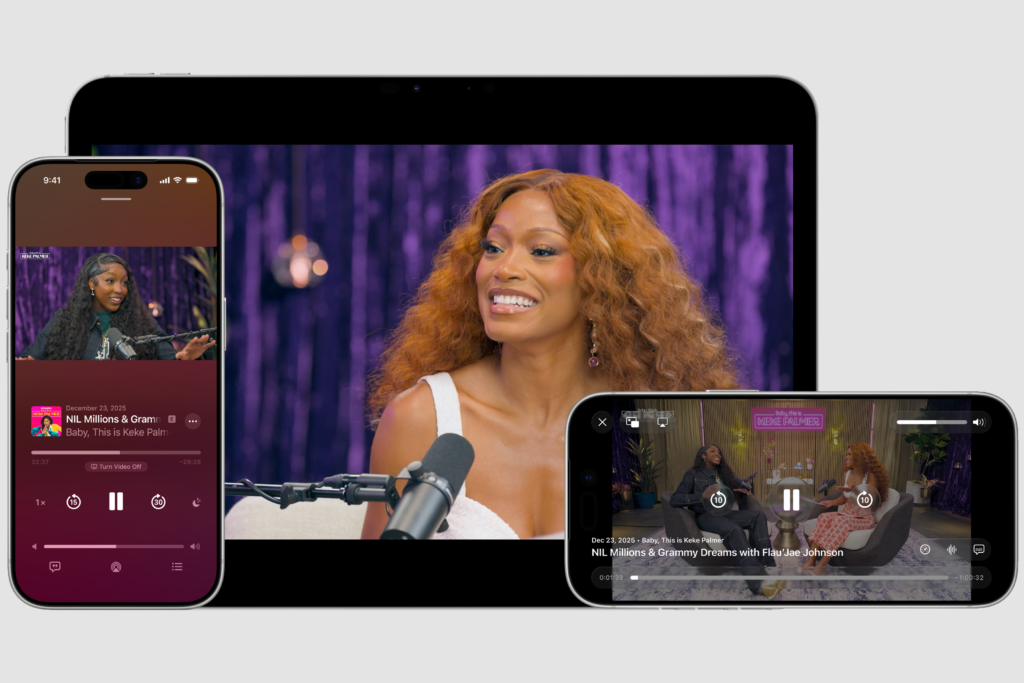
With the new update, users will be able to seamlessly switch between watching and listening within the app. Whether on iPhone, iPad, the web, or even Apple Vision Pro, viewers can move into horizontal full-screen mode, download episodes for offline viewing, and enjoy video integrated into the same recommendation and discovery ecosystem already powering Apple Podcasts.
In short: video is no longer an add-on. It’s becoming native.
The Tech Behind the Upgrade
The backbone of this transformation is Apple’s own HTTP Live Streaming (HLS) protocol. Unlike traditional RSS-based distribution, HLS allows adaptive streaming — meaning video quality automatically adjusts based on network strength.
More importantly for creators, HLS introduces dynamic ad insertion into video episodes. That includes host-read ads, opening new revenue doors as podcasting increasingly blends audio and visual storytelling.
HLS video support is currently available in developer beta versions of iOS 26.4, iPadOS 26.4, and visionOS 26.4. A wider public rollout is expected in spring.
Monetization and Creator Control
One of the major talking points here is monetization flexibility. Apple confirmed it won’t charge hosting providers or creators to distribute podcasts — whether through traditional RSS audio or HLS video. However, starting later in 2026, participating ad networks will pay an impression-based fee for delivering dynamic video ads.
Several major players are already onboard for the HLS launch, including Acast, ART19 (owned by Amazon), Triton Digital’s Omny Studio (part of iHeartMedia), and SiriusXM’s SiriusXM Media, AdsWizz, and Simplecast.
Executives across these companies have described the move as a natural next step, emphasizing flexibility, audience ownership, and revenue growth as podcasting’s audio and video formats increasingly merge.
Why This Matters Now
Video podcasting isn’t new — but its dominance is. Over the past few years, YouTube has quietly become one of the biggest podcast consumption platforms globally, particularly among younger audiences who prefer watching conversations rather than just listening.
Spotify has also aggressively invested in video features and exclusive deals to pull creators into its ecosystem. Apple, while still commanding a massive podcast footprint across 170+ countries, risked appearing conservative in comparison.
This update shifts that narrative.
By integrating video directly into its core podcast app — rather than creating a separate product — Apple is betting that convenience and ecosystem strength will keep both creators and audiences loyal.
Final Words
For nearly two decades, Apple has been at the center of podcasting’s evolution. But this spring’s video expansion feels like a defining moment.
Podcasting is no longer just about listening on the go — it’s about engagement, personality, and visual connection. By embracing video fully, Apple isn’t abandoning its audio roots. It’s acknowledging where the industry is headed.
And in a space where YouTube and Spotify have been gaining ground, this move makes one thing clear: Apple doesn’t plan to sit quietly on the sidelines.