Rating: 3/5
The Evil Dead franchise has never been shy about blood, broken bones or body horror, but it also used to have something equally important — a twisted sense of fun. Sam Raimi’s original films balanced terrifying moments with outrageous humour, making audiences laugh even while they looked away from the screen. Evil Dead Burn takes a very different route. It replaces the franchise’s wild personality with a much darker, more serious horror story, creating a film that is disturbing from beginning to end but rarely as entertaining as its predecessors.
Director Sébastien Vaniček clearly isn’t interested in recreating Raimi’s playful style. Instead, he delivers a bleak family drama wrapped inside a relentless supernatural nightmare. The result is a film that feels heavier, angrier and far more brutal than earlier entries. That approach works surprisingly well in places, although longtime fans may miss the chaotic energy that once defined the series.
Family trauma replaces campy horror
Rather than focusing on a group of unsuspecting friends trapped in a haunted cabin, Evil Dead Burn centres on a family already falling apart before the supernatural horror begins. Alice, played by Souheila Yacoub, is trapped in a deeply unhappy marriage with William, whose controlling behaviour has pushed their relationship to the edge. When William dies in a violent car crash, it appears to be the end of one nightmare. Instead, it becomes the beginning of something much worse.
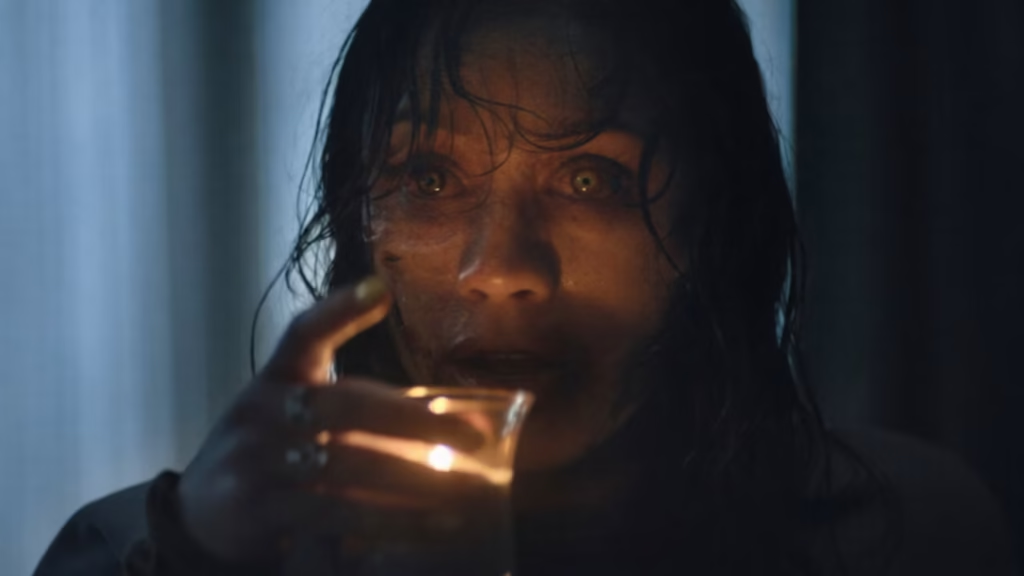
Following the funeral, an ancient evil once again finds its way into the living. The demonic force possesses Edgar, the troubled family patriarch, before spreading through the rest of the household gathered inside a decaying countryside estate. Long-buried resentment, jealousy and emotional scars quickly explode into terrifying violence as family members begin turning against one another in increasingly horrifying ways. The horror grows naturally from those damaged relationships, making the emotional conflict almost as uncomfortable as the bloodshed itself.
Gore takes centre stage
There is no shortage of graphic violence here, and fans of practical horror effects will have plenty to admire. Faces are crushed, limbs are ripped apart, bodies refuse to stay dead and almost every household object eventually becomes a weapon. The film constantly searches for new ways to shock the audience, often relying on elaborate practical makeup and prosthetics instead of digital effects. Those moments give the horror a physical weight that many modern horror films struggle to achieve.
At the same time, the endless brutality sometimes becomes exhausting rather than frightening. Earlier Evil Dead films mixed outrageous gore with absurd comedy, making even the nastiest scenes strangely enjoyable. Evil Dead Burn almost completely abandons that formula. The possessed characters behave more like the terrifying victims from The Exorcist than the mischievous Deadites fans remember, creating a darker atmosphere that never really allows the audience to breathe.
The mythology also feels less focused this time around. The film references familiar elements like the Book of the Dead and the Kandarian Dagger, but the rules surrounding the supernatural threat remain frustratingly vague. Characters survive injuries that should be impossible while others fall with little explanation, making the conflict feel inconsistent whenever the story needs another shocking moment.
Strong performances hold the chaos together
Souheila Yacoub delivers a committed performance as Alice, giving the audience someone emotionally grounded amid all the supernatural madness. She captures the frustration of an outsider trying to survive inside a family that never truly accepted her, making Alice far more than just another horror movie survivor. Even when the screenplay leans heavily into spectacle, Yacoub keeps the emotional stakes believable.
Erroll Shand is equally memorable as Edgar, transforming from a troubled patriarch into a terrifying force of destruction. Tandi Wright brings unsettling intensity to the family’s fiercely protective mother, while Maude Davey makes a lasting impression as the dementia-stricken grandmother whose unpredictable presence adds another unsettling layer to the story. Together, the cast commits fully to the film’s emotionally charged horror, helping elevate material that occasionally prioritises gruesome set pieces over character development.
Visually, Evil Dead Burn is atmospheric and confidently directed. The decaying woodland mansion creates an appropriately suffocating setting, while the sound design and practical creature effects help maintain tension throughout the film’s 110-minute runtime. Even so, there’s a lingering feeling that something essential has been left behind. The franchise’s trademark wicked sense of humour is almost entirely absent, leaving behind a technically impressive horror film that feels less distinctive than the classics that inspired it.
Evil Dead Burn succeeds as a vicious supernatural horror packed with memorable practical effects and committed performances. What it doesn’t quite capture is the gleeful insanity that made Evil Dead a genre-defining franchise in the first place. Fans looking for uncompromising gore will likely walk away satisfied, but those hoping for Raimi’s trademark blend of horror and outrageous fun may find this chapter a little too grim for its own good.