Director Yuichiro Sakashita’s latest film Blonde is stirring attention following its world premiere at the Tokyo International Film Festival. The movie uses satire to explore Japan’s rigid school system, generational tension and resistance through the lens of a hair-dye protest turned social movement.
🎞️ Film Overview

The story centers on Ichikawa, a 30-year-old junior high school teacher who finds his authority challenged when his students stage a rebellion — they dye their hair blonde in protest of strict school rules requiring black hair only. He is forced to confront his own insecurities, his role as an adult figure in a changing world, and the educational system’s resistance to change. The movie blends humour, social critique and character drama to present a contemporary commentary on Japan’s youth and institutions.
🎬 Director & Creative Intent
Yuichiro Sakashita — a filmmaker previously noted for his political farce The Sunday Runoff — sees Blonde as an “adult coming-of-age” story. While the students appear rebellious on the surface, Sakashita says the adults are the real ones struggling to grow up. He chose the visual symbol of blonde hair because it triggers strong reactions within the system and visually represents non-conformity. He remarks that the students in his film are “ironically quite mature,” even when the institutions around them are not.
📍 Festival Premiere & Reception
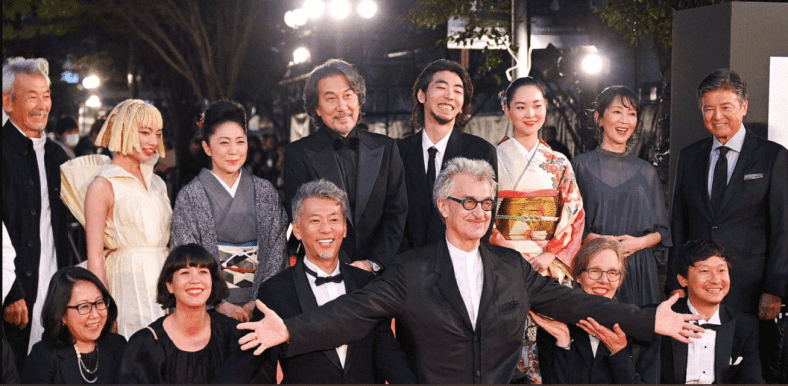
Blonde premiered in competition at the 38th Tokyo International Film Festival. It was included in the International Competition section and was selected for its bold thematic approach and innovative storytelling style. The premiere drew positive responses from critics who praised its sharp social commentary and fresh cinematic voice. However, some noted it may be polarising for audiences expecting a more conventional drama.
🔍 Why It’s Noteworthy
- The film tackles the rarely discussed topic of Japan’s “black kōsoku” (strict hair colour rules) in schools, using it as a metaphor for institutional rigidity and youth frustration.
- By turning the perspective on the adult protagonist, the movie shifts conventional rebellion narratives and asks who really needs to grow up.
- Sakashita’s work continues a trend in Japanese cinema of mixing social critique with accessible genre elements — in this case, school setting, protest cinema and satire — making the film relevant both domestically and internationally.
📝 Final Words
With Blonde, Yuichiro Sakashita steps into a broader international spotlight, offering a film that is as entertaining as it is thought-provoking. Its festival debut signals a director ready to move beyond niche comedy and make work that resonates across cultures — while holding a mirror up to ones that resist change.