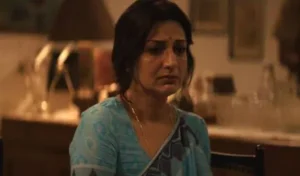
In a decision that quietly closes a chapter that dragged on for over a decade, the Bombay High Court has finally put an end to a 2010 case involving Shekhar Suman and Bharti Singh. The matter, which started from a comedy show segment, had snowballed into a legal dispute over hurting religious sentiments. Now, the court has made it clear — simply being offended doesn’t automatically turn something into a criminal act.
The ruling doesn’t just bring relief to the two performers, it also adds an important layer to how courts may look at comedy, expression, and intent going forward. Because somewhere between humour and law, this case had been sitting unresolved for years.
A Joke From 2010 That Refused To Fade Away
The controversy goes all the way back to an episode of Comedy Circus Ka Jadoo, where a comedic act triggered a complaint. The issue was linked to a line referencing a religious phrase, which some viewers found offensive. Soon after the episode aired, a complaint was filed by a representative of the Raza Academy.
What followed was a formal FIR registered under Section 295-A of the Indian Penal Code, a provision that deals with deliberate acts meant to outrage religious feelings. The case didn’t just target the performers, it also pulled in the channel and writers associated with the show. At that time, the situation even reached political corridors, showing how seriously the matter was taken. But what looked like a strong legal case on paper slowly turned into a prolonged courtroom journey, stretching far longer than anyone would have expected.
Court Focuses On Intent, Not Just Reaction
When the case finally came up for detailed consideration, Justice Amit Borkar took a step back and looked at the bigger picture. The court essentially asked a simple but crucial question — was there any real intention to insult? The answer, according to the judgment, was no. The court pointed out that a comedy show must be seen in its proper context. You cannot isolate a single line, ignore the overall tone, and then build a criminal case around it. That approach, the court suggested, misses how performance-based content actually works.
More importantly, the bench stressed that for Section 295-A to apply, there has to be clear and deliberate malicious intent. Not assumption, not interpretation — actual intent. And in this case, that element was missing completely. The observation was direct and quite telling — just because someone feels hurt doesn’t mean a crime has taken place.
Roles Of The Performers Also Came Under Lens
The court also broke down who did what, instead of treating everyone involved as equally responsible. Shekhar Suman was on the show as a judge, not as someone writing or performing the script. Bharti Singh, on the other hand, was delivering lines that were part of a scripted act. That distinction mattered. Because without proof that either of them intended to insult a religion or were part of a deliberate plan, the case started losing its legal ground. The court didn’t find any material suggesting a shared intention or a targeted act.
There was also a procedural gap that couldn’t be ignored. For cases under Section 295-A, prior sanction under Section 196 of the Criminal Procedure Code is required before prosecution can move forward. That step was missing here. And according to the court, a trial cannot fix a foundational legal flaw like that.
Bigger Message Around Comedy And Free Expression
What makes this ruling stand out is not just the relief it gives, but the broader message it sends. Over the past few years, debates around comedy, boundaries, and public sensitivity have become more intense. Performers often walk a thin line, unsure of where humour might suddenly turn into controversy.
This judgment indirectly addresses that tension. It doesn’t say anything goes, but it does underline that context and intent matter. Comedy, by nature, exaggerates, experiments, and sometimes even misfires. But unless there is clear evidence of harm done with intention, criminal law shouldn’t step in too quickly. That line is important, especially in an environment where public outrage can escalate fast and legal action often follows.
Why This Case Still Matters Today
Even though the incident happened in 2010, the timing of the verdict feels relevant now. The entertainment space has changed massively, with digital platforms, stand-up circuits, and viral clips shaping public reactions in real time. What once stayed within a TV episode can now spread instantly across the internet.
In that context, this ruling acts like a reference point. It reminds both creators and audiences that not every controversial moment is automatically a legal offence. There has to be intent, there has to be proof, and there has to be a proper legal basis. For Shekhar Suman and Bharti Singh, this brings long-awaited closure. But beyond them, it also quietly reshapes how similar cases might be viewed in the future — with a little more balance, and maybe a little more understanding of how humour actually works.