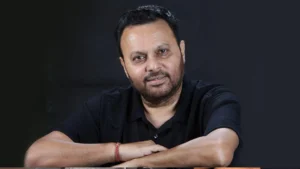
For years, the race to become India’s highest-paid actor was dominated by a familiar set of names. From the Khans ruling Bollywood to southern superstars commanding enormous salaries, the benchmark kept rising as Indian cinema expanded beyond regional boundaries and found audiences across the globe. Now, after the phenomenal success of the Dhurandhar franchise, a new name sits at the very top of that list.
Ranveer Singh has reportedly become the highest-paid actor in Indian cinema history thanks to the blockbuster performance of Dhurandhar and its sequel. The action franchise not only emerged as one of the biggest theatrical events the industry has seen in recent years but also transformed the economics of star remuneration. Instead of taking a conventional upfront fee, Ranveer is believed to have backed the project in a way that significantly increased his share of the profits once the films became massive hits.
How Dhurandhar Changed the Game
The Dhurandhar franchise was originally conceived as a single large-scale production before eventually being released as a two-part saga. That decision appears to have paid off in spectacular fashion. Together, the two films reportedly grossed around ₹3200 crore worldwide, making it one of the biggest Indian film franchises ever created.
The films generated exceptional business across domestic and overseas markets, with India alone contributing more than ₹1900 crore in net collections. The franchise also benefited from strong repeat viewership, premium-format screenings, and robust performance across multiple languages. Industry observers believe the success of the films reflects the growing appetite among audiences for large-scale cinematic universes that blend action, emotion, and franchise storytelling.
What makes Ranveer’s earnings particularly remarkable is the business model behind them. Reports suggest that the actor chose not to take his standard acting fee and instead opted for a profit-sharing arrangement. As production costs increased during filming, he reportedly invested additional funds into the project, further strengthening his financial stake in the franchise’s eventual success.
A Record-Breaking Payday
Trade estimates indicate that once theatrical revenue, distributor shares, performance bonuses, digital rights, satellite rights, and music rights are taken into account, Ranveer Singh’s earnings from the Dhurandhar franchise stand at approximately ₹325 crore.
While the majority of the franchise’s profits naturally flowed to the producers and studio partners, including Jio Studios and Aditya Dhar’s B62 Studios, Ranveer’s individual share is said to be the largest earned by any actor from a single Indian film production. The figure places him in an entirely new bracket and highlights how profit-sharing agreements are increasingly becoming more lucrative than traditional salary structures for top stars.
The achievement is significant because it comes at a time when the Indian film industry is witnessing a major shift in business models. Rather than demanding enormous upfront payments, some actors are choosing to align themselves with a project’s long-term success. When a film becomes a blockbuster, the rewards can be substantially greater than a fixed paycheck.
Surpassing Rajinikanth, Shah Rukh Khan and Allu Arjun
Before Ranveer’s reported earnings crossed the ₹300 crore mark, the record was widely believed to belong to Rajinikanth. The legendary superstar reportedly earned more than ₹250 crore from the massive success of Jailer, a film that reaffirmed his box office dominance and attracted audiences across generations.
In recent years, several other stars have also entered the ₹200 crore club. Allu Arjun’s Pushpa 2 became a nationwide phenomenon, while Prabhas continued his box office streak with Kalki 2898 AD. Both actors reportedly earned well over ₹200 crore from their respective blockbusters, further demonstrating how pan-India cinema has transformed star compensation.
Within Bollywood, Shah Rukh Khan had held the benchmark since his remarkable comeback year in 2023. The actor reportedly earned around ₹200 crore each from Pathaan and Jawan, two films that shattered multiple box office records and re-established him as one of the industry’s biggest commercial forces. Prior to that, Salman Khan and Aamir Khan had frequently occupied the top position thanks to their profit-sharing arrangements and blockbuster releases throughout the 2010s.
Ranveer’s latest milestone now places him ahead of all those names, at least in terms of earnings from a single production. It also signals a changing landscape where the biggest rewards increasingly go to actors willing to share both the risks and rewards of ambitious projects.
What This Means for Indian Cinema
The rise of pan-India blockbusters has dramatically altered the financial structure of the entertainment industry. A decade ago, a ₹100 crore film was considered a major achievement. Today, top productions routinely target global audiences and generate revenue from theatrical releases, streaming platforms, satellite television, music licensing, and international distribution.
As budgets continue to climb and franchises become more common, profit-sharing deals are likely to play a larger role in future negotiations between stars and studios. Ranveer Singh’s reported ₹325 crore payday may seem extraordinary today, but it could also be a glimpse into where the business of Indian cinema is headed next.
For now, however, the actor has achieved something few believed possible. In an era dominated by established superstars and powerful regional icons, Ranveer Singh has reportedly claimed the title of India’s highest-paid actor, powered by the unprecedented success of the Dhurandhar franchise.