Something unexpected just happened at the global box office, and honestly, not many saw it coming in this way. A film surrounded by mixed buzz suddenly turned into a full-blown theatrical event, pulling crowds from everywhere and dominating screens across continents. The biopic Michael, centered on the life of Michael Jackson, didn’t just open strong — it exploded with numbers that instantly changed the conversation around music-based films.
In its very first weekend, Michael stormed into cinemas with a massive $97 million in North America and a staggering $217 million worldwide. That kind of opening doesn’t just happen randomly; it signals something bigger — nostalgia, curiosity, and a fanbase that still hasn’t let go. What makes this even more interesting is that it didn’t just perform well — it rewrote the rulebook for biopics, comfortably beating the long-standing record held by Straight Outta Compton and even surpassing the early numbers of Bohemian Rhapsody, which later went on to dominate globally.
A Film Critics Didn’t Love — But Audiences Clearly Did
Here’s where things get a bit messy, and honestly, kind of fascinating. Critics weren’t exactly kind to Michael, with reviews leaning heavily on the negative side. Many pointed out that the film plays it too safe, avoiding some of the darker and more controversial chapters of Jackson’s life. But if you look at the audience reaction, it tells a completely different story.
Viewers walked out of theaters giving it an “A-” CinemaScore, which is no small feat, especially for a film dealing with such a complex figure. Theaters reported packed shows, people singing along, even dancing during iconic sequences. It wasn’t just a movie for them — it felt more like an experience, almost like reliving a concert. That emotional connection seems to have overpowered critical opinions, and that gap between critics and audiences is what’s driving this film forward right now.
The Story, The Casting, and What Was Left Out
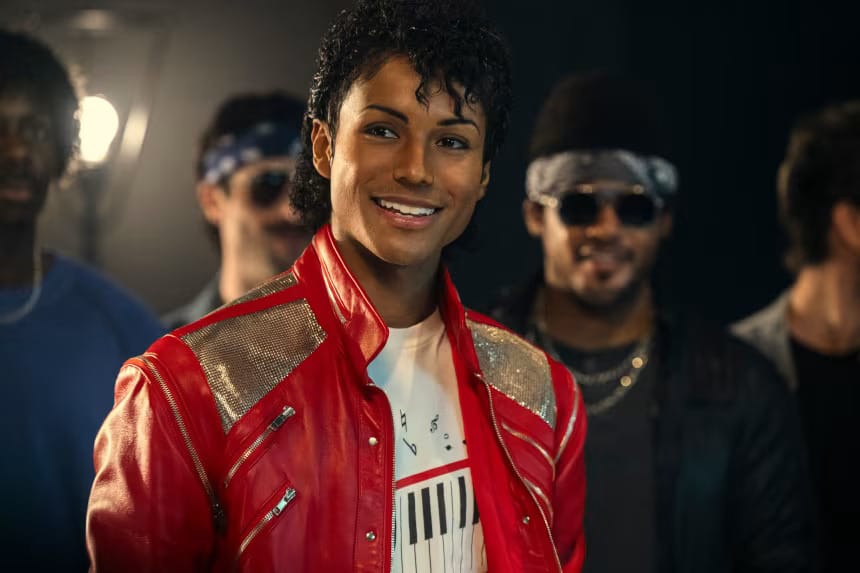
Directed by Antoine Fuqua, the film traces Jackson’s journey from his early days with the Jackson 5 to becoming one of the most influential entertainers ever. What adds another layer of curiosity is the casting — Jackson is portrayed by his real-life nephew Jaafar Jackson, making this not just a performance but something closer to a personal tribute. Supporting roles from Colman Domingo and Nia Long help ground the story emotionally.
But the film’s biggest talking point is what it chooses to leave out. Originally, the script included the 1993 allegations against Jackson, but those scenes were removed due to legal restrictions tied to past settlements. This decision reshaped the film’s narrative entirely, shifting it toward a more celebratory and less complicated portrayal. The story ultimately wraps up during the Bad tour era, leaving a noticeable gap that might get explored in future installments.
Big Budget, Bigger Risk — And It’s Paying Off
With a reported budget of nearly $200 million, Michael stands as one of the most expensive biopics ever made. That alone made it a risky bet for studios like Lionsgate and Universal Pictures, especially after a shaky run at the box office in recent years. But right now, it looks like that gamble is turning into a major win.
The film is already being called Lionsgate’s biggest success in over a decade, a much-needed comeback after a series of underwhelming releases. If the current momentum continues — and all signs suggest it will — the film could easily cross the $700 million mark globally, placing it among the studio’s biggest hits ever.
Why This One Clicked When Others Didn’t
Music biopics have been everywhere lately — from Elvis Presley’s cinematic revival to stories around artists like Bob Marley and Amy Winehouse. But not all of them have connected in the same way. What Michael does differently is lean heavily into spectacle.
The film recreates legendary performances like “Billie Jean,” “Thriller,” and “Beat It” with a scale that feels designed for the big screen. Premium formats like IMAX played a huge role here, contributing a significant chunk of the opening revenue. These sequences aren’t just nostalgic — they’re immersive, and that’s exactly what modern audiences seem to be responding to.
The Bigger Picture: Box Office Momentum Is Back
Michael didn’t just win the weekend — it dominated it. It comfortably pushed The Super Mario Galaxy Movie down to second place, even as that film continues its impressive global run. Meanwhile, Project Hail Mary is still holding strong weeks into release, showing that audiences are finally returning to theaters in a big way.
This comes at a time when the industry really needed a win. After a rough period filled with flops and uncertainty, the recent string of successful releases is slowly rebuilding confidence. With upcoming films like The Devil Wears Prada 2 and Mortal Kombat 2 lined up, the momentum doesn’t seem to be slowing down anytime soon.
What This Really Means Going Forward
The success of Michael says a lot about today’s audience. It shows that people are still willing to show up in huge numbers — but only when something feels worth experiencing on the big screen. It also highlights how powerful nostalgia can be, especially when tied to a global icon like Michael Jackson.
At the same time, it raises questions. Can a film succeed by avoiding controversy? Or is this just a unique case where legacy and music outweighed everything else? Either way, one thing is clear — Michael isn’t just another biopic. It’s now a benchmark, and the industry will be watching closely to see what comes next.