After a turbulent few years that saw Henry Cavill part ways with Superman and exit The Witcher, the actor needed more than just another role — he needed a flagship franchise. Enter Highlander, a long-awaited reboot that doesn’t just put Cavill back on the big screen, but positions him at the centre of a potential cinematic universe built on immortality, mythology, and steel-on-steel combat.
Directed by Chad Stahelski, the film marks Cavill’s most ambitious post-Superman move yet — and possibly his most defining.
What is Highlander actually about?
At its core, Highlander is a fantasy-action saga about Immortals — warriors who cannot die unless they are beheaded. Scattered across history, these Immortals are bound by an ancient rule: in the end, there can be only one.
The original Highlander followed Connor MacLeod, a Scottish Highlander born in the 1500s who discovers his immortality after surviving a fatal wound in battle. Trained by his mentor Ramírez, Connor learns that Immortals are destined to hunt each other down through centuries, absorbing their opponent’s power in violent duels, all in pursuit of “The Prize” — godlike power granted to the last survivor.
The story famously jumped between 16th-century Scotland and modern-day New York, blending sword fights, romance, tragedy, and myth — all backed by Queen’s now-legendary soundtrack.
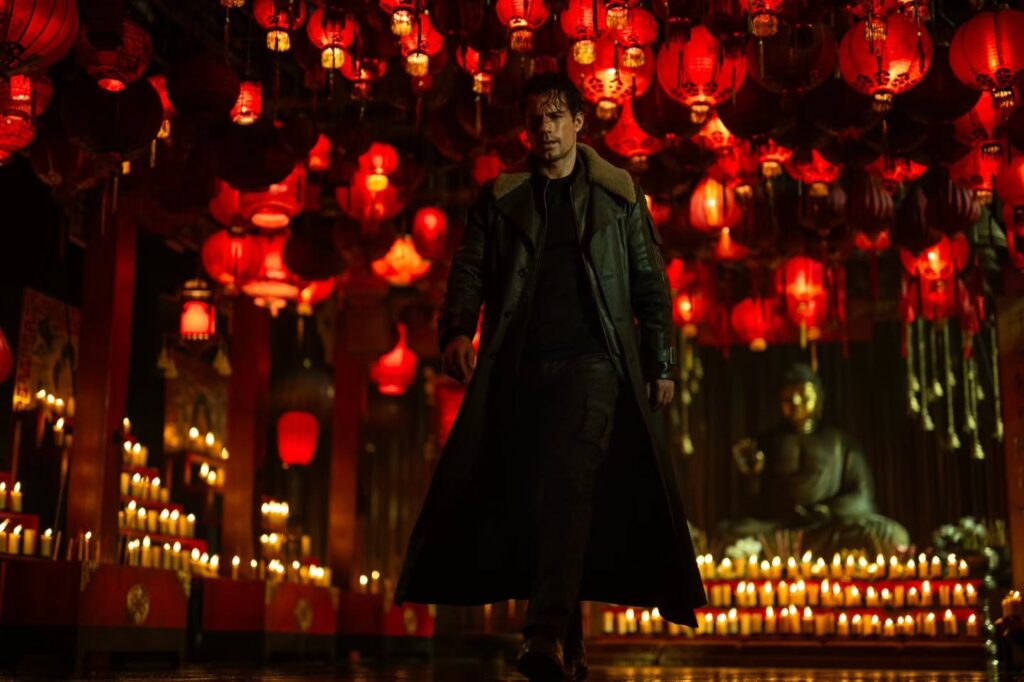
Henry Cavill as Connor MacLeod
In the reboot, Cavill steps into the role of Connor MacLeod, the immortal swordsman haunted by centuries of loss. For Cavill, this isn’t just another action role — it’s a character defined by longevity, burden, and emotional scars, something that plays directly to his strengths as a dramatic and physical performer.
Unlike Superman’s restrained morality or Geralt’s quiet detachment, Connor is expected to be more openly tragic — a warrior who keeps living while everyone he loves fades away.
Why Highlander is different from other action franchises
What has always set Highlander apart is its time-spanning storytelling. Immortals don’t just fight — they live through history. Wars, empires, revolutions, and personal love stories all shape who they become.
The franchise’s central idea is deceptively simple but emotionally heavy: immortality is not a gift, it’s a curse. Connor repeatedly falls in love, only to watch his partners age and die while he remains unchanged. Long before superhero fatigue set in, Highlander explored the cost of eternal life with surprising depth.
That mix of myth, melancholy, and action is exactly why the reboot matters now.
Chad Stahelski’s vision: swords, scale, and spectacle
With Chad Stahelski — the filmmaker behind John Wick — at the helm, expectations are sky-high. Stahelski’s signature style prioritises practical stunts, precise choreography, and brutal clarity, making him a natural fit for a sword-based franchise.
The reboot is expected to modernise the lore while expanding the world-building, potentially setting up sequels and spin-offs focused on other Immortals across different eras.
The reported supporting cast, including Russell Crowe, Dave Bautista, Karen Gillan, and Jeremy Irons, only adds to the sense that Highlander is being positioned as a premium, franchise-level event.
Why this film matters for Henry Cavill
After losing two high-profile roles, Cavill’s career narrative needed a reset. Highlander offers exactly that — a lead role with mythology baked in, sequel potential, and a character audiences can grow with over time.
More importantly, it allows Cavill to anchor a franchise without being boxed into a shared superhero universe or TV-first storytelling. If successful, Highlander could redefine him not just as a star, but as the face of a long-running fantasy-action saga.
Final words
Highlander isn’t just another reboot — it’s a strategic comeback. With Henry Cavill as Connor MacLeod and Chad Stahelski orchestrating the action, the film has the ingredients to revive a cult classic and launch something far bigger.
For Cavill, this may finally be the moment where the past is cut down — and a new immortal franchise rises in its place.