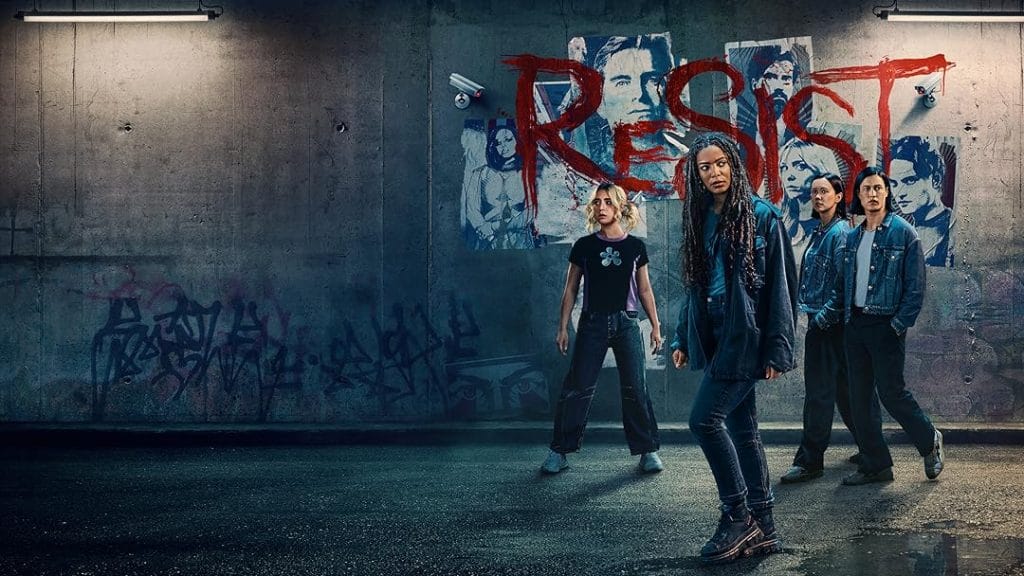
When Gen V came out as a spin-off to The Boys, fans didn’t expect it to hit so hard with its wild mix of blood, chaos, and surprisingly emotional college drama. Now, Gen V Season 2 takes that madness even further. It’s bigger, darker, and at times more confusing, but still manages to stay entertaining in that twisted, over-the-top way that this universe always promises.
Season 2 picks up right after the shocking ending of the first season, where Marie Moreau and her friends uncovered the dark truth behind Godolkin University — the so-called “school for superheroes” that’s actually more like a government experiment factory. The whole world now looks at the young supes differently, and Godolkin is no longer the cool, flashy place it pretended to be. The new season opens with tension and fear: the students are being watched, the administration is cracking down, and the heroes of tomorrow are being shaped into weapons whether they like it or not.
The Story So Far
Marie Moreau, still trying to deal with her traumatic past and her blood-based powers, becomes the emotional heart of Season 2. She’s haunted by what she did and what she saw. Her powers, which let her control blood, feel both like a curse and a miracle — and the writers use that as a metaphor for how power corrupts, even when your heart is in the right place.
The new dean of Godolkin University, Dean Cipher, is introduced as a mysterious and manipulative leader who seems friendly at first but quickly shows a cold, controlling side. He’s more political than evil at first glance — someone who understands that supes can be a business, a weapon, and a symbol all at once. He wants to rebuild the university’s image, but deep down, he’s continuing the same cruel experiments that caused so much pain before.
Emma Meyer (a.k.a. Little Cricket) also returns with her shrinking powers, but this time she’s struggling with identity more than size. Her storyline is more about mental health and body image, and there are moments where the show gets raw and uncomfortable. It’s messy, but in a human way.
Jordan Li remains one of the most interesting characters, switching between male and female forms depending on emotion and situation. Their internal conflict over who they are and who they’re supposed to be adds a unique emotional layer. Jordan also begins to question their loyalty — to the school, to their friends, and to the idea of heroism itself.
Meanwhile, Sam Riordan is fighting his own demons. He’s free now but deeply unstable, torn between revenge and redemption. His mental health storyline gets darker this season, showing how trauma can twist someone even if they mean well.
The group dynamic between these characters forms the heart of Season 2. There’s friendship, betrayal, trust, and a lot of heartbreak. The writers keep mixing humor and tragedy, which sometimes works and sometimes doesn’t. One minute they’re having awkward college moments, and the next minute someone’s head explodes — literally.
The Main Conflict
Season 2’s big story revolves around the creation of a new supe training program. Dean Cipher wants to transform Godolkin into a military academy that prepares “young heroes” to serve Vought’s global interests. Students are ranked, monitored, and sometimes secretly tested in labs for hidden potential. It’s like The Hunger Games meets The Boys — competitive, cruel, and full of lies.
Marie becomes the target of attention again because of her unique blood powers. Some see her as a weapon, others as a threat. She wants to expose the corruption, but she’s also scared — scared of losing control, scared of becoming what she hates. There’s one episode where she nearly kills someone accidentally, and the guilt eats her alive.
The show also dives deeper into the politics of supes. After the events of The Boys Season 4, public opinion of superheroes is fractured. Some people worship them, others fear them. Godolkin becomes the battleground where new ideologies are born. Some students support Homelander’s “supes are gods” idea, while others believe in peaceful coexistence. It’s basically the younger generation inheriting the sins of the old one.
And through all of this, there’s an underground movement forming — rebellious students trying to take down Vought from the inside. It’s messy, full of paranoia, and ends up causing more chaos than order.
Character Highlights
Marie Moreau – She’s still the best part of the show. Her emotional journey feels real. She’s not perfect, she makes mistakes, she loses her temper, and she struggles to trust anyone. In one scene, she screams that she doesn’t want to be a weapon anymore, and it hits hard because you know she’s speaking for all the young supes who never got to choose their fate.
Emma Meyer – She’s more confident now but still insecure about her powers and size. Her scenes are both funny and sad. She’s kind of the heartbreaker of the group, trying to hold everyone together while being broken herself.
Jordan Li – Their dual identity is explored more deeply, not just as a gimmick but as a reflection of how people live with multiple versions of themselves. Their storyline about acceptance and love is one of the strongest emotional beats of the season.
Sam Riordan – He’s chaotic but sympathetic. You never know if he’s going to hug someone or tear them apart. His trauma is written well, even though the show sometimes exaggerates it for shock value.
Dean Cipher – The new villain without wearing the “villain” label. He’s calm, articulate, and extremely dangerous because he believes he’s doing the right thing. He doesn’t scream or kill for fun; he manipulates people into believing they’re making their own choices.
Themes
The show continues to explore the same big ideas that make The Boys universe so disturbing and fascinating.
- Power and Corruption: Everyone in Gen V has power, but it’s not always physical. Some have emotional or social power, and the show keeps asking: what do you do with it? Can you be good when the system around you is rotten?
- Trauma and Identity: All of the main characters are messed up. They were experimented on, lied to, and raised in an environment where success means suppressing who you really are. The show doesn’t shy away from showing the psychological damage.
- Youth and Rebellion: The students want change, but they don’t know how. Their rebellion is unorganized, emotional, and sometimes stupid — but that’s what makes it human. They’re kids fighting gods.
- Society and Media: The show mocks how society consumes superheroes like pop stars. Social media, followers, and image manipulation become powerful weapons. It’s satire, but close enough to reality that it’s scary.
The Tone and Writing
Season 2 feels even more confident in tone. The writing is bold, funny, disturbing, and sometimes a bit too much. There are scenes that feel like a parody and others that hit surprisingly deep. The mix isn’t always smooth. Some jokes go too far, and sometimes the gore feels unnecessary. But that’s kind of the show’s identity — messy, loud, and unfiltered.
The emotional parts work best. When the characters talk about what they’ve lost or what they’re scared of, it feels raw. The dialogue sometimes sounds clumsy or overdramatic, but that’s also why it feels real. People don’t always say perfect lines when they’re in pain.
Visuals and Action
If you thought Season 1 was crazy, Season 2 says “hold my beer.” The special effects are bigger, the fights more brutal, and the creativity more insane. There’s a sequence where Marie uses blood from the air around her to create blades — it’s both beautiful and disgusting. Another scene shows a supe whose power backfires in the worst possible way, and you can’t decide whether to laugh or throw up.
The show still loves its shock value — exploding heads, twisted anatomy, disturbing experiments. But what makes it work is that it’s not just violence for fun. It reflects how broken the world is.
Emotional Core
Underneath all the craziness, Gen V Season 2 is a story about growing up in a system that doesn’t care about you. It’s about trying to be good when everyone expects you to be a monster. The characters are flawed, sometimes selfish, sometimes heroic, but they’re trying — and that’s what makes them relatable.
There’s also a sense of grief hanging over the season. One of the characters (Andre) is gone, and the absence is deeply felt. The show doesn’t ignore it; it becomes part of the story. The students carry his memory, and it pushes them to question whether being a hero is even worth it.
Weak Points
Of course, it’s not perfect. Some episodes drag, and some side characters feel underdeveloped. The pacing can be weird — slow in the middle, then rushing at the end. The moral lessons sometimes hit too hard, like the writers want to make sure you “get the point.”
Also, the tone swings a lot. One minute it’s emotional and deep, the next it’s gross or absurd. That inconsistency can be tiring. And while the show wants to be rebellious and shocking, sometimes it repeats the same tricks — another secret lab, another betrayal, another head blown up.
Still, even with all the flaws, there’s heart. You can feel the effort behind it.
The Ending (Spoiler-Free)
The finale ties together most of the threads while leaving enough for The Boys Season 5 and another possible Gen V season. There’s a big showdown that mixes chaos, tragedy, and some unexpected alliances. It’s not a happy ending, but it’s not hopeless either. The characters grow up a little — emotionally if not morally. The last few minutes remind you that in this world, victory always comes with a cost.
Final Thoughts
Gen V Season 2 is not a perfect show, but it’s brave. It’s not afraid to be messy, political, emotional, and violent all at once. It dives into young adult emotions but with adult consequences. The characters bleed, cry, make mistakes, and somehow keep fighting.
It’s the kind of series that makes you uncomfortable but also keeps you hooked. It’s about identity, power, and what it means to grow up in a world that uses you. It’s both a coming-of-age drama and a dark satire of modern society.
Yes, the pacing is off. Yes, some characters vanish for episodes. Yes, the gore sometimes feels like too much. But it still hits where it matters — the heart. It makes you care about these broken kids, even when they screw up.
By the time the credits roll, you realize Gen V isn’t really about heroes or villains. It’s about people who were never given a choice, trying to find one anyway. And that’s what makes Season 2, flaws and all, a strong continuation.
If Season 1 was about discovery, Season 2 is about consequences. It’s bloodier, sadder, funnier, and somehow more real. You might roll your eyes at some scenes, but you’ll also feel something — anger, empathy, maybe even hope.
In short: Gen V Season 2 is a chaotic masterpiece with scars. It’s imperfect, bold, and very human — just like the characters it follows.
Rating: 8/10 — with some blood, tears, and mistakes along the way.