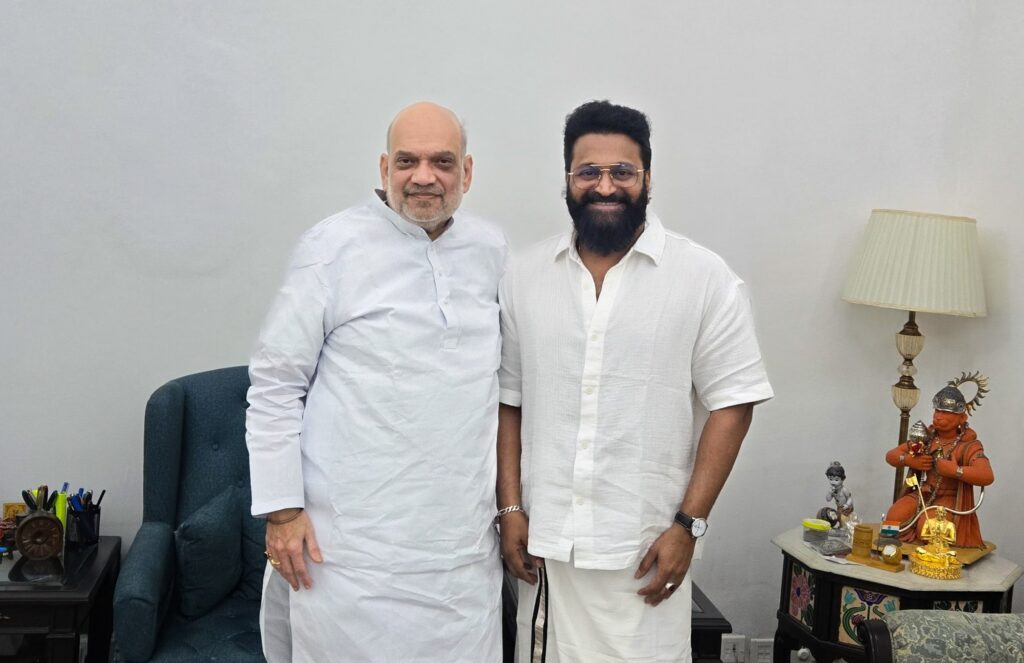
Rishab Shetty recently had a high-profile interaction with Amit Shah, and from the way he described it, the meeting clearly left a strong impression on him. The actor shared glimpses online, calling it one of those rare conversations that go beyond formal greetings and actually stay with you for a while.
According to Shetty, what stood out the most wasn’t just the appreciation for his work, but the depth of the discussion. He revealed that Amit Shah spoke in detail about Kantara and its upcoming prequel, showing a strong understanding of the film’s cultural roots. For Shetty, that seemed to matter more than anything — not just praise, but someone engaging with the story and its meaning.
He mentioned that the conversation naturally moved into broader topics like Indian history, culture, and the role of cinema in reflecting those elements. That’s something Kantara has always been associated with — blending folklore, tradition, and storytelling in a way that feels rooted yet cinematic. So the fact that the discussion went in that direction made the interaction feel more meaningful rather than just ceremonial.
The actor also hinted at discussions around his upcoming projects, though he didn’t go into too many specifics. Still, it’s clear that he’s currently working on an ambitious slate. The biggest focus remains Kantara Chapter 1, which is expected to explore the origins of the mystical world introduced in the original film. The story is said to move across timelines, diving into ancient legends, divine forces, and the roots of the sacred forest that played such a key role earlier.
Beyond that, Shetty is also stepping into a completely different space with Jai Hanuman, where he will portray Lord Hanuman. The film is part of a larger cinematic universe and has already generated attention, especially because of its mythological scale and timing around major cultural events. It shows that he’s not sticking to one kind of storytelling but is experimenting with both grounded folklore and larger myth-driven narratives.
What’s interesting here is how Shetty’s journey has evolved after Kantara. He’s no longer just seen as a regional filmmaker — his work has started conversations at a national level, even in spaces beyond cinema. And this meeting kind of reflects that shift, where discussions around his films are happening in a broader cultural context.
At the same time, moments like this also highlight how cinema, especially when rooted in tradition, can bridge different worlds — politics, culture, and storytelling. For Shetty, it seems less about the meeting itself and more about the kind of conversation it led to.
And if his upcoming projects manage to carry forward that same blend of culture and scale, this phase of his career could end up being even bigger than what came before.