There are very few shows that feel ahead of their time—and even fewer that prove it years later. That’s exactly the strange, fascinating journey of The Comeback, a show that once struggled to survive but has now returned for a final bow that feels more relevant than ever. Nearly two decades after its debut, the Lisa Kudrow-led series is closing its story with Season 3, and in doing so, it’s not just saying goodbye to a character—it’s reflecting on an entire industry that has changed dramatically since its early days.
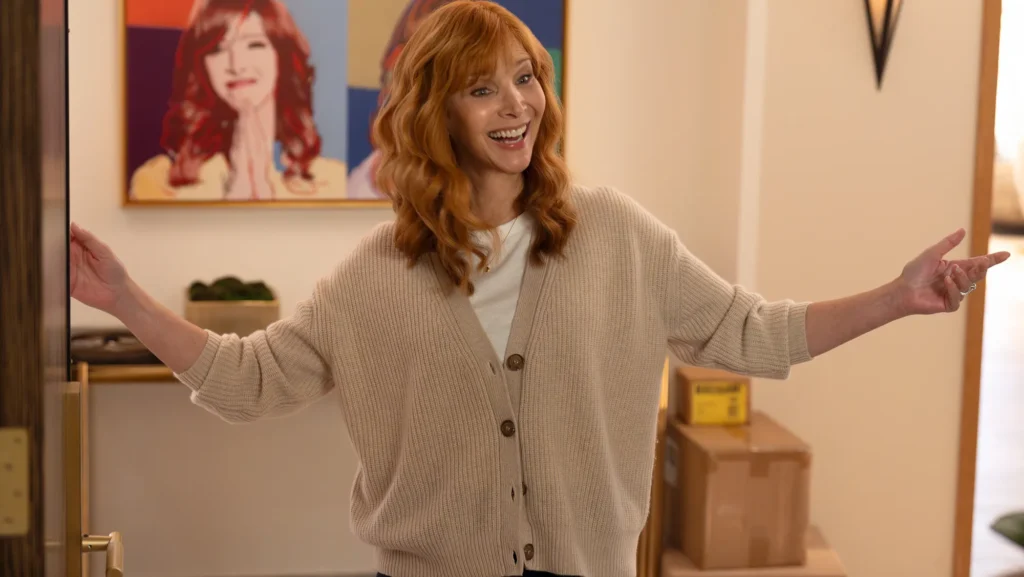
At the center of it all is Valerie Cherish, a former sitcom star desperately trying to reclaim her place in Hollywood. When the show first premiered in 2005, Valerie’s struggles felt exaggerated, even uncomfortable at times. But today, in a world dominated by reality TV, social media, and constant self-promotion, her story feels almost prophetic.
And that’s what makes this final season so compelling.
Season 3 arrives more than a decade after the show’s second season in 2014, picking up in a timeline that blends reality with satire. The story begins around 2023, during a period of industry-wide strikes, before jumping forward into a slightly exaggerated version of 2026. In this version of Hollywood, artificial intelligence has started creeping into the creative process, and the traditional structure of television feels increasingly unstable.
Valerie, however, is still standing—though not without her usual struggles.
This time, she finds herself leading a multi-camera sitcom titled How’s That?, a project with a surprising twist. Much of the show is written by AI, with human creators acting more like placeholders than actual storytellers. It’s a concept that feels both exaggerated and uncomfortably close to reality, reflecting ongoing conversations about technology’s role in creative industries.
Unlike earlier seasons, which focused almost entirely on Valerie’s personal journey, Season 3 expands its scope to include the wider entertainment ecosystem. Characters around her—whether it’s her husband trying to reinvent himself or her manager exploring his own creative ambitions—are all caught in the same cycle of reinvention and uncertainty.
In a way, everyone has become Valerie Cherish.
That shift is one of the most interesting aspects of the new season. What once made Valerie stand out—her desperation, her need for validation, her willingness to endure humiliation for relevance—now feels like a shared experience across the industry. Actors, producers, and creators alike are all navigating a system that demands constant visibility and reinvention.
And in that chaos, Valerie begins to look surprisingly grounded.
Lisa Kudrow’s performance remains the heart of the show. As both lead actor and co-creator alongside Michael Patrick King, she brings a depth to Valerie that goes beyond satire. Every awkward smile, every misplaced word, every moment of insecurity feels layered with both humor and vulnerability.
It’s this balance that has always set The Comeback apart.
But Season 3 doesn’t just rely on character—it also experiments with form.
The series, originally known for its mockumentary style, begins to step outside that format more frequently. While earlier seasons strictly followed an in-universe camera crew documenting Valerie’s life, the new season introduces more traditional cinematic scenes. This shift allows the story to explore new angles, but it also creates a slightly disorienting experience for longtime viewers who are used to the show’s signature style.
Still, the change feels intentional.
Just as Valerie is trying to adapt to a changing industry, the show itself seems to be evolving—sometimes awkwardly, sometimes effectively. The visual transition mirrors the thematic one, reinforcing the idea that nothing in Hollywood stays the same for long.
One of the standout elements of this season is its commentary on modern fame.
In today’s world, where social media has turned everyone into their own content creator, the line between personal and public life has blurred almost completely. The show leans into this idea, suggesting that we are all, in some way, living our own version of The Comeback—constantly performing, constantly curating, constantly seeking validation.
It’s a sharp observation, and one that feels especially relevant in 2026.
At the same time, the season introduces lighter, more reflective moments. Valerie explores new opportunities, including podcasting and reality TV appearances, while also stepping into a position of authority as an executive producer. For the first time, she has a certain level of control over her career—even if that control is shared with technology and corporate interests.
And interestingly, she handles it well.
Rather than repeating old patterns, Valerie begins to show growth. She supports her team, navigates conflicts with maturity, and even stands up to higher-ups when necessary. It’s a subtle but meaningful evolution, suggesting that her years of struggle have finally shaped her into someone more self-aware and capable.
However, the season isn’t without its contradictions.
While much of The Comeback has always thrived on its brutally honest portrayal of the entertainment industry, the final stretch leans toward a more optimistic tone. Valerie’s journey, which has often been defined by setbacks and awkward failures, edges closer to a traditional “happy ending.”
For some, this might feel slightly out of place given the show’s usual cynicism.
But in another sense, it works.
After years of watching Valerie fight for relevance, there’s something satisfying about seeing her find a sense of closure—even if it comes wrapped in a bit of Hollywood fantasy. The show acknowledges this tension, balancing its sharper critiques with moments of genuine warmth.
From an industry perspective, The Comeback’s final season arrives at an interesting time. With ongoing debates around AI, streaming platforms reshaping content consumption, and the increasing importance of personal branding, the show feels more like a reflection of the present than a satire of the past.
It’s no longer just ahead of its time—it’s right on time.
And that’s what makes this farewell so impactful.
What started as a niche, underappreciated series has evolved into a cultural touchpoint that captures the anxieties, absurdities, and realities of modern entertainment. Valerie Cherish, once seen as an exaggerated caricature, now feels like a mirror reflecting the industry—and perhaps even the audience.
As Season 3 unfolds, it becomes clear that this isn’t just the end of a show.
It’s the end of an era, a commentary on a changing world, and a reminder that sometimes, the stories we laugh at eventually become the ones we live.
And in true Valerie Cherish fashion, The Comeback exits with a mix of awkward charm, unexpected grace, and just enough self-awareness to leave a lasting impression.