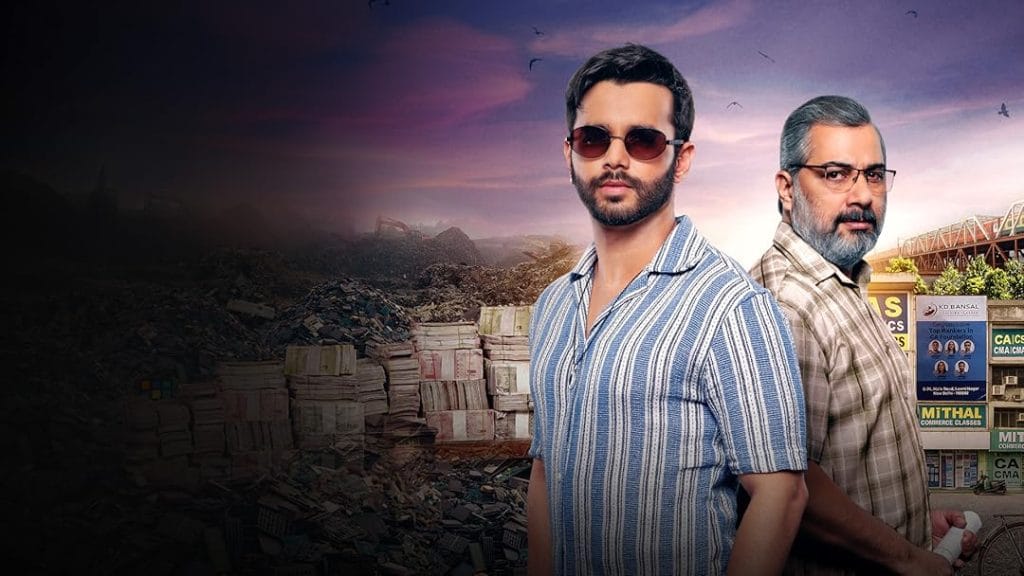
Jamnapaar Season 2 brings back the familiar chaos, dreams, and emotional warmth that made the first season so relatable for everyone who has ever tried to cross the invisible bridge between middle-class reality and high-class ambition. It’s a story that continues from where we left off — with Shantanu “Shanky” Bansal standing at the edge of his career, family pride, and self-worth, trying to find what really matters to him in life. While the first season showed his inner conflict between Jamnapaar roots and South Delhi dreams, Season 2 dives deeper into the aftermath of choices, failures, and redemption.
This season feels more grounded, more human, and more emotionally tangled. It’s less about the flashy side of success and more about facing the broken parts of your life when the world stops clapping. Let’s talk about the cast, story, and the soul of Jamnapaar Season 2 in detail.
🌆 The Cast That Feels Like Family
The heart of this show still beats through Ritvik Sahore, who once again steps into the shoes of Shantanu “Shanky” Bansal. Ritvik continues to shine in his own understated way — he doesn’t overact, he doesn’t dramatize emotions, but rather lets you feel them quietly. His eyes still carry that lost ambition mixed with guilt and love for his people.
Varun Badola as Shanky’s father gives the emotional weight the story needs. He’s strict yet sensitive, proud yet broken, especially after the downfall of his coaching institute. Their father-son chemistry is one of the strongest points of the show again. You can sense years of unspoken pain and expectations between them in every argument and every moment of silence.
A new and delightful addition is Vijay Raaz as Shaukeen Bhaiya. His role is powerful, street-smart, and full of wit. He brings an unpredictable layer to the show — a character who is both mentor and manipulator, both friend and foe to Shanky. Vijay Raaz’s voice and expression alone make every scene he’s in memorable.
Anushka Kaushik returns as Shanky’s supportive yet frustrated love interest. Her character finally gets more space to breathe this season. We see her balancing her own dreams while trying to understand a man who can’t seem to understand himself. Shrishti Ganguly Rindani, Inder Sahani, and Ankita Sehgal also continue to add charm and realism to the supporting cast, making the Jamnapaar universe feel alive and lived-in.
💭 The Storyline – Picking Up the Broken Pieces
Season 2 begins with Shanky trying to rebuild his life after being suspended as a Chartered Accountant. His dreams have taken a beating, his confidence is shaky, and his father’s once-successful coaching institute has burned down. The Bansal family, once hopeful of climbing up the social ladder, is now struggling to stay afloat emotionally and financially.
Shanky’s journey this time isn’t about proving himself to the world but proving to himself that he still has value beyond his failures. He joins his father’s small coaching institute, reluctantly at first, and soon finds himself surrounded by the same old world he once wanted to escape — narrow streets, nosy neighbors, and endless lectures about “izzat” (respect) and “sanskar” (values). But as time goes on, he starts seeing the beauty hidden behind these walls — the honesty, the love, and the resilience of Jamnapaar.
The emotional center of the season lies in Shanky’s moral struggles. Life offers him a tempting shortcut to success, but every time he steps closer, he’s reminded of his father’s ethics and his own conscience. He has to decide whether to rebuild his life the hard way or take the easy road filled with compromises.
Meanwhile, Vijay Raaz’s character Shaukeen Bhaiya enters the story like a storm. He’s streetwise and full of charm, a man who knows how to play both sides. Shanky gets drawn into his world — a world of quick money, street-level business, and smart manipulation. Their dynamic is fascinating because it’s not purely good vs evil; it’s more about temptation vs truth. Shaukeen Bhaiya shows Shanky the fast lane to success, but it comes with a price that’s far heavier than money.
Parallel to Shanky’s struggles, his father faces his own crisis. The fire that destroyed his coaching center also burned his confidence and pride. Watching him teach again, this time in a small rented room, with only a handful of students, is heart-wrenching. Yet, it’s also a reminder that dignity doesn’t come from how big your building is but from how strongly you stand after falling.
The show beautifully balances humor and heartbreak. There are scenes where Shanky jokes around with his friends in a tiny tea stall, followed by moments where he breaks down alone, wondering if he’s already lost his best years. It’s that balance between hope and exhaustion that makes the story so relatable.
🏠 The Essence of Jamnapaar
What made the first season connect with the audience was its deep portrayal of East Delhi life — the narrow streets filled with dreams, the loud relatives, the middle-class mentality of always saving and sacrificing, and the silent pride that hides behind ordinary faces. Season 2 keeps that same essence alive but adds more maturity.
This time, Jamnapaar is not just a place, it’s an emotion. It’s the feeling of home that you once wanted to run away from but later realize you can’t live without. The show cleverly uses local flavor — the language, the food, the streets, the small jokes — to make you feel like you’re part of that neighborhood.
It also explores the generational gap in an Indian family — how fathers and sons often love each other deeply but don’t know how to express it. Shanky’s father represents a generation that believes respect must be earned through suffering, while Shanky represents a generation that believes in dreams, shortcuts, and social validation. The clash between them gives the show its emotional depth.
❤️ Performances That Stay With You
Ritvik Sahore carries the entire series on his shoulders once again. He has that boy-next-door charm that never fades, but what’s impressive is his subtle emotional range. You can see the guilt, confusion, and hope playing across his face in every close-up. He makes Shanky real — not a hero, not a victim, just a young man trying to fix his life one small decision at a time.
Varun Badola is simply outstanding. His eyes carry the pain of a father who doesn’t say much but feels everything. His chemistry with Ritvik is the highlight — especially the argument scenes, which feel unscripted and raw. You can almost hear the sound of unspoken love hiding behind anger.
Vijay Raaz, as always, steals the show whenever he appears. His dialogue delivery, his sly smile, and his moral ambiguity make him one of the best-written characters of the season. He’s not a typical villain — he’s a survivor who knows how the world works. You might hate his actions but you understand his reasons.
The supporting cast, including Anushka Kaushik, also deserves praise. She portrays the struggle of loving someone who’s too caught up in his own battles. Her frustration feels real, not dramatic, and she adds the emotional warmth that balances Shanky’s darker journey.
⚖️ Themes and Emotions
Jamnapaar Season 2 is not just about one man’s comeback; it’s about the middle-class mindset — how we measure success by others’ approval, how we often forget that happiness doesn’t always come with a fancy job title or a South Delhi address.
It talks about the guilt of failure, the cost of ambition, and the healing power of family. The show’s writing may not always be perfect — some dialogues feel a little stretched, and a few scenes repeat similar emotions — but its honesty makes up for the flaws.
The show also explores the line between right and wrong in a very Indian way. It asks whether integrity is worth holding onto when the world rewards dishonesty. Shanky’s journey becomes a symbol of thousands of youngsters who dream big but end up fighting their own conscience.
🎬 Direction, Tone and Music
The direction of Season 2 feels tighter and more confident. The makers seem to understand the rhythm of the world they’ve created — there’s a strong sense of continuity. The camera work beautifully captures the soul of East Delhi — narrow lanes, rooftops filled with hope, chaotic markets, and peaceful evenings.
The background music, though simple, hits at the right moments. The theme tune plays whenever Shanky faces a turning point, and it sticks in your head long after the episode ends.
One of the best things about Jamnapaar is its tone. It never tries to be over-dramatic or overly polished. It accepts its rawness and lets emotions flow naturally. You can see imperfections in the characters, and that’s what makes them so believable.
⚠️ Where It Could Be Better
Despite its strengths, the show does stumble in a few places. Some episodes drag a little too much, especially in the middle of the season. A few subplots — like Shanky’s love life and his friends’ comedy bits — sometimes feel stretched just to fill time.
Also, the ending, while emotionally satisfying, might feel predictable for some viewers. You can sense where things are heading, and the final twist doesn’t surprise as much as it should. But again, the emotional impact remains strong because of the performances and honest storytelling.
⭐ Final Thoughts
Jamnapaar Season 2 is an emotional, heartwarming, and occasionally painful journey of a man rediscovering his roots. It’s a reminder that no matter how far you go, home has a strange way of pulling you back — not to trap you, but to remind you who you really are.
The show doesn’t rely on high-end glamour or big twists. Instead, it wins through small, genuine moments — a smile from a father, a word of encouragement from a friend, a shared cup of tea after failure. It’s in these moments that Jamnapaar Season 2 finds its soul.
If you’ve ever felt lost in life, failed after trying hard, or struggled to balance ambition with self-respect, you’ll see a bit of yourself in Shanky’s story. It’s not perfect, but it’s deeply human — and that’s what makes it beautiful.
Verdict: Jamnapaar Season 2 may not break new ground, but it strengthens the emotional connection with its characters. It’s a heartfelt tale about family, mistakes, and second chances — told with simplicity, honesty, and warmth that’s rare to find today.
Rating: 8/10 for emotions, 7/10 for writing, and 10/10 for relatability.