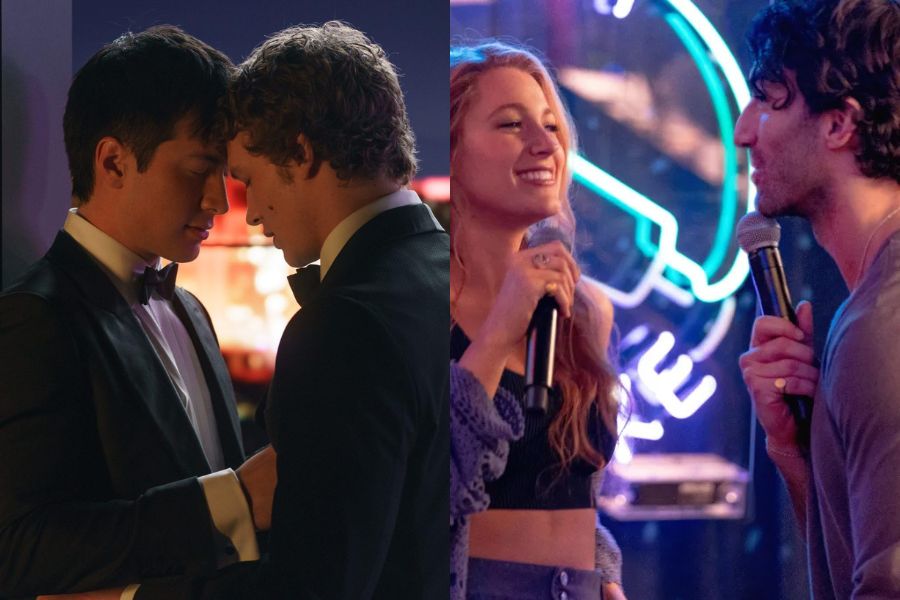
The legal clash between Blake Lively and Justin Baldoni has already produced enough twists to rival a Hollywood screenplay. But few expected a viral gay romance series to suddenly become part of courtroom arguments. Yet that’s exactly what happened when Baldoni’s lawyers referenced HBO Max’s Heated Rivalry while arguing for the dismissal of Lively’s sexual harassment and retaliation lawsuit.
The moment caught everyone off guard — including those inside the courtroom.
What’s the Case About?
Blake Lively has accused Justin Baldoni — her co-star and director on It Ends With Us — of harassment and retaliation during and after the film’s production. The lawsuit also names the film’s producers and Baldoni’s publicists, alleging a pattern of inappropriate conduct and professional backlash.
Baldoni has denied the allegations and is seeking to have the case dismissed entirely.
How Heated Rivalry Entered the Conversation
During a hearing in New York before Lewis Liman, Baldoni’s legal team argued that Lively’s claims stemmed from improvised physicality during emotionally and romantically intense scenes, not gender-based harassment.
At that point, Baldoni’s attorney Jonathan Bach made an unexpected move — he cited Heated Rivalry, the popular HBO Max series centered on a passionate relationship between two rival male hockey players, played by Connor Storrie and Hudson Williams.
“I don’t know if the court is familiar with the show Heated Rivalry,” Bach reportedly said — a remark that prompted laughter inside the courtroom, according to Variety.
Why That Comparison Was Made
Bach used Heated Rivalry as a hypothetical counterpoint to arguments made by Lively’s lawyer, Esra Hudson. Hudson had maintained that Baldoni’s on-set improvisation did not justify physical actions — such as kissing or close contact — that Lively allegedly did not consent to, and that such behaviour could amount to gender-based discrimination.
In response, Bach posed a broader question to the court:
If a male actor on Heated Rivalry improvised intimate contact with another male actor during a scene, would that automatically qualify as gender-based discrimination?
The reference wasn’t meant to trivialise the case, Baldoni’s team argued, but to challenge the legal framing of Lively’s claims. According to the defence, physical contact rooted in a scripted romantic relationship does not inherently become discriminatory simply because of the actor’s gender.
Baldoni’s Core Argument
Throughout the hearing, Baldoni’s lawyers emphasised that any physical interaction between him and Lively occurred within the context of their characters’ romantic arc, not as a result of Lively being a woman. They argued that the conduct in question was tied to storytelling, performance, and character dynamics — not harassment.
From their perspective, the lawsuit attempts to reframe creative decisions and improvisational acting as unlawful behaviour.
Why This Moment Went Viral
The sudden mention of Heated Rivalry — a gay sports romance far removed from Hollywood’s power dynamics — instantly made headlines. The irony of a same-sex love story being used as a legal analogy in a heterosexual harassment case proved too bizarre to ignore.
This came just days after the case had already grabbed public attention due to leaked private texts involving Taylor Swift and Blake Lively, in which the two friends allegedly criticised Baldoni. With emotions, celebrity names, and pop culture references colliding, the courtroom drama has spilled firmly into internet discourse.
What Happens Next?
The court has yet to rule on Baldoni’s motion to dismiss the lawsuit. Whether the Heated Rivalry analogy will carry any legal weight remains to be seen — but its presence has already ensured the case stays firmly in the public eye.
For now, one thing is certain: in a dispute already packed with celebrity intrigue, legal complexity, and media scrutiny, the last thing anyone expected was a gay hockey romance becoming a courtroom talking point.
And yet, here we are. 🍿