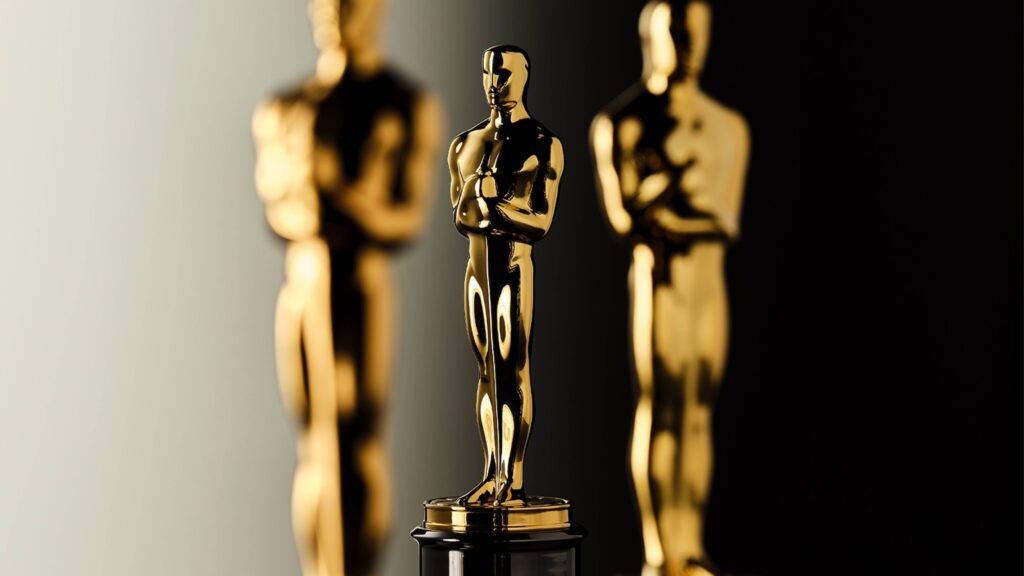
The Academy is quietly rewriting the way the Oscars will function, and this time the changes aren’t small tweaks — they actually change how awards could be won. For the 99th Academy Awards, scheduled in 2027, Academy of Motion Picture Arts and Sciences has approved a fresh set of rules that touch everything from acting nominations to AI usage and even how international films enter the race. And if you look closely, it feels like the Academy is trying to fix long-standing industry loopholes while also preparing for the future.
The biggest headline change comes from the acting categories, and this one could seriously shake nomination morning. Actors can now receive multiple nominations in the same category if both performances land in the top five votes. Earlier, even if someone had two strong performances, only the higher-ranked one would survive. That old system often forced studios into strategic category placements just to avoid vote splitting. Now, that pressure is gone, and it opens doors for situations where one actor could dominate a category with two performances in the same year.
This kind of rule actually revisits conversations from past Oscar seasons. Think of cases like Kate Winslet, who had a complicated awards run in 2008, or situations involving actors like Leonardo DiCaprio and Jessica Chastain, where multiple strong performances existed in the same year but didn’t translate into multiple nominations. Under the new system, those outcomes might have looked very different. It also quietly removes the idea of a “body of work” nomination, pushing everything strictly toward individual performances.
Another major shift comes with how the Academy is dealing with technology, especially AI. The rules now clearly state that performances must be done by real human actors with consent, and in writing categories, scripts must be human-authored to qualify. The Academy has also reserved the right to investigate how AI is used in films. This isn’t a complete rejection of technology, but it’s a strong line being drawn — human creativity still sits at the center of Oscar recognition.
Then comes the international feature category, and honestly, this is where things get more interesting. Earlier, countries could submit only one film, which often led to strong contenders being left out. Now, multiple films from the same country can qualify, especially if they win major awards at top festivals like Cannes Film Festival or Berlin International Film Festival. This change is already being called the “Anatomy of a Fall” effect, inspired by how Anatomy of a Fall managed to break through despite not being France’s official submission.
The Academy is also changing how international films are credited. Instead of countries being the main recognition point, the film itself will now be the official nominee, and the director will accept the award. That sounds small, but it actually shifts focus away from national identity and more toward the creators behind the film. In some cases, Oscar trophies might not even mention a country at all.
Other updates are more technical but still impactful. The casting category will now allow up to three winners instead of two, giving more recognition to the people behind assembling performances. Cinematography will have a fixed shortlist of 20 films, removing earlier flexibility. Even voting rules are getting stricter — members in categories like visual effects and makeup will now need to actively watch presentations or attend sessions to be eligible to vote. It’s basically the Academy pushing for more informed voting instead of passive participation.
There are also new campaign rules, including accessibility requirements for screenings and slight changes in how Q&A sessions are conducted. These may not grab headlines, but they show how the Academy is trying to modernize not just awards, but the entire process around them.
All these changes will come into play for films released between January and December 2026, leading up to the ceremony on March 14, 2027, at the Dolby Theatre. And looking at upcoming titles like Dune: Part Three and other big projects already in discussion, the impact of these new rules could be seen immediately.
Overall, this isn’t just a rule update — it feels like a reset. The Academy is trying to balance tradition with modern filmmaking realities, and while not every change will please everyone, it’s clear they’re trying to adapt before the industry forces them to. Whether it makes the Oscars more fair or just more complicated, that’s something we’ll only understand once the nominations roll out in 2027.