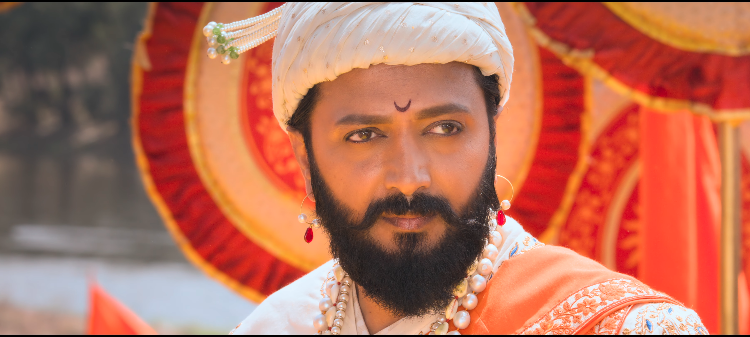
There’s a lot riding on Raja Shivaji right now, and not just because of its scale or cast. The film, directed by and starring Riteish Deshmukh, is gearing up for a May 1 release, and just days before it hits theatres, a rather unexpected detail has started getting attention. Unlike most bilingual releases, this one isn’t playing by the usual rules — the Hindi and Marathi versions won’t be the same length, and that alone is making people curious. This isn’t something we see often. Usually, films released in multiple languages keep everything identical except the dialogue track. But here, Riteish seems to have taken a different call, and honestly, it looks like a very deliberate decision rather than a random cut.
Two Versions, Two Experiences — And That Feels Intentional
The Marathi version of the film runs for about 3 hours and 15 minutes, which already tells you the kind of epic scale it’s aiming for. The Hindi version, however, trims that down slightly by around eight minutes. It’s not a massive difference, but it’s enough to suggest that the storytelling rhythm might feel a bit tighter for a wider audience. Reports suggest that this was done keeping audience behavior in mind. Marathi viewers, who are more culturally connected to the story of Chhatrapati Shivaji Maharaj, are expected to engage deeply with the longer narrative. Meanwhile, the Hindi version seems designed to feel more streamlined, possibly to hold attention across a broader national audience. Even the trailers quietly hinted at this difference. The Marathi promo runs slightly longer, giving a bit more breathing space to the storytelling, while the Hindi cut feels sharper and quicker in comparison.
A Passion Project With Personal Stakes
What makes Raja Shivaji stand out even more is how personal it is for Riteish Deshmukh. He’s not just directing or acting — he’s deeply invested in the story itself. Playing the role of Shivaji Maharaj is a huge responsibility, and you can sense that this project isn’t just another film for him, it’s something he has built with emotional weight. Adding to that personal layer, his son Rahyl Deshmukh plays the younger version of Shivaji in the film. That father-son connection on screen adds a different kind of authenticity, something you don’t usually get in big historical dramas.
A Massive Cast That Feels Like an Event Film
The film isn’t holding back when it comes to scale or star power. Sanjay Dutt steps in as Afzal Khan, while Abhishek Bachchan takes on the role of Sambhaji. Fardeen Khan appears as Aurangzeb, and Genelia Deshmukh plays Saibai. On top of that, the film brings together names like Bhagyashree, Vidya Balan, Mahesh Manjrekar, and Sachin Khedekar. There’s also a cameo from Salman Khan, which already has fans talking. It’s the kind of ensemble that instantly signals one thing — this isn’t just a film, it’s positioned like a full-scale cinematic event.
Budget, Scale, and Expectations Are Sky High
With an estimated budget of around ₹100 crore, Raja Shivaji is being called the most expensive Marathi film ever made. That alone sets expectations at a very different level. The makers are clearly aiming not just for regional success but for a nationwide impact. The release date also adds meaning. Hitting theatres on May 1, which is celebrated as Maharashtra Day, gives the film a strong emotional and cultural connection right from the start. It’s not just timing — it’s positioning.
A Risk That Could Redefine Regional Epics
What’s interesting here is not just the film itself, but the approach behind it. By offering two slightly different versions, Riteish Deshmukh is experimenting with how stories travel across audiences. If this works, it might actually influence how future big-budget regional films are edited and released for different markets. Because right now, Raja Shivaji isn’t just testing its box office strength — it’s quietly testing a new way of telling the same story to different audiences. And that’s where things get really interesting.