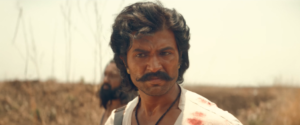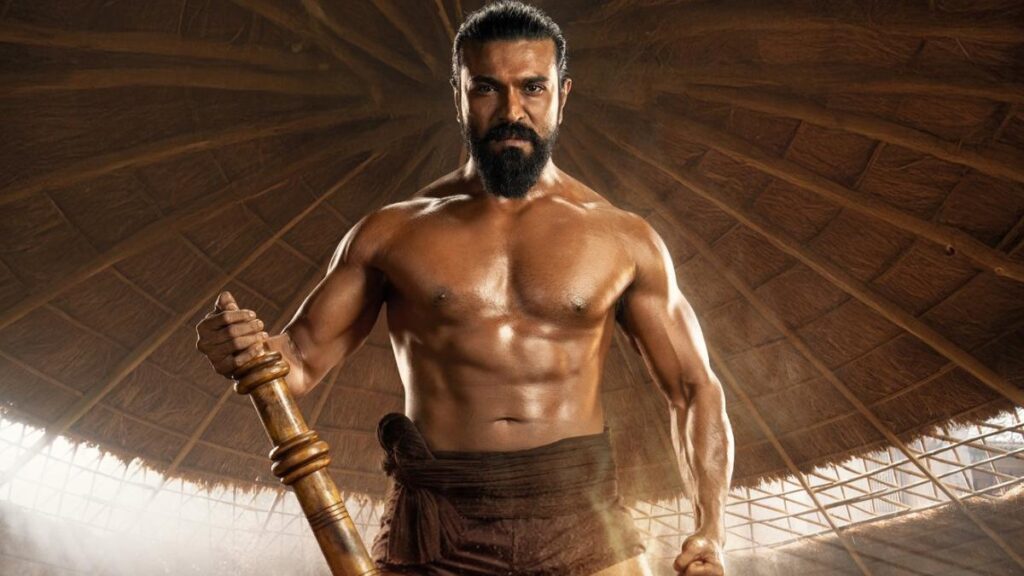
There are some films that survive because of their story, and then there are films that survive because one actor refuses to let them collapse. Peddi belongs firmly in the second category. Directed by Buchi Babu Sana, the sports drama arrives with massive expectations, a huge canvas, and a lead star willing to leave everything on the field. What unfolds is an emotional journey packed with struggle, caste barriers, sporting rivalries, and personal setbacks, though not every part of the ride lands with the same force.
Running for more than three hours, Peddi tries to tell the story of a man who refuses to surrender to circumstances. The ambition is visible in almost every frame. The film wants to be a sports drama, a social commentary, a survival story, and a tribute to an underdog all at once. Sometimes it succeeds brilliantly, and sometimes it gets trapped inside its own larger-than-life storytelling.
Ram Charan Carries The Film Through Its Highs And Lows
The story unfolds through the eyes of a sports official who arrives at a remote village while searching for answers about India’s sporting future. What he discovers instead is the legend of Peddi, a local hero whose reputation stretches far beyond the mountains surrounding his village. From cricket grounds to wrestling arenas, Peddi earns admiration because of his talent while simultaneously attracting hostility because of his social status. His life becomes a constant battle between recognition and discrimination.
What keeps the narrative moving is Ram Charan’s commitment. The actor throws himself completely into the role, making Peddi feel believable even when the screenplay asks viewers to accept situations that stretch logic. Whether he is wielding a cricket bat, stepping into a wrestling pit, or facing another life-changing challenge, Charan’s screen presence rarely allows the film to lose momentum. After the massive success of RRR, this feels like one of his most dedicated performances, and the physical transformation alone shows how much effort went into creating the character.
The film’s strongest portions arrive during the wrestling chapters. These sequences feel raw, energetic, and emotionally charged. The scenes shared between Ram Charan and Shiva Rajkumar bring an added layer of warmth and depth that the rest of the film occasionally lacks. Their relationship adds weight to Peddi’s growth and creates some of the movie’s most memorable moments. The large-scale presentation and visually rich songs also contribute to the film’s appeal, even if they occasionally distract from the central narrative.
Big Ideas Meet A Predictable Screenplay
Where Peddi struggles is in the writing. Despite dealing with themes like caste oppression, poverty, and social exclusion, the storytelling often follows a route audiences have already travelled many times before. Instead of building naturally from one phase of Peddi’s life to another, the film often feels like separate chapters stitched together. Every new challenge arrives with intensity, but the emotional connection between those chapters isn’t always strong enough.
The romantic track involving Janhvi Kapoor’s Achiyamma never receives the attention it deserves. Her character enters the story with promise but gradually fades into the background as the screenplay shifts focus toward bigger conflicts. By the time she returns later in the film, the emotional investment has already weakened. It’s disappointing because the character could have contributed much more to Peddi’s personal journey rather than existing mainly to support it.
The supporting cast, however, delivers solid work throughout. Divyenndu brings menace and unpredictability to Rambujji, creating a character audiences will genuinely enjoy disliking. Jagapathi Babu provides emotional grounding whenever the drama becomes excessively loud. Shiva Rajkumar leaves a strong impression despite limited screen time, while Ravi Kishan quietly supports the narrative without demanding attention for himself.
Another issue comes from the film’s tendency to prioritise emotion over realism. Peddi constantly asks viewers to accept dramatic turns without questioning them too deeply. For some audiences, that larger-than-life approach may work. Others may find themselves disconnected whenever the film pushes sentiment ahead of believable storytelling. The Hindi dubbed version also feels awkward in places, particularly because several characters speak in a dialect that feels completely disconnected from the film’s Andhra Pradesh setting.
In the end, Peddi works best when it focuses on its central character rather than its predictable plot mechanics. Ram Charan’s performance provides the energy, conviction, and heart that the screenplay sometimes lacks. While the film could have benefited from tighter editing and sharper writing, it remains watchable largely because its leading man refuses to deliver anything less than total commitment. Peddi may not reinvent the sports drama genre, but whenever Ram Charan steps onto the screen, the film finds the fighting spirit it desperately needs.